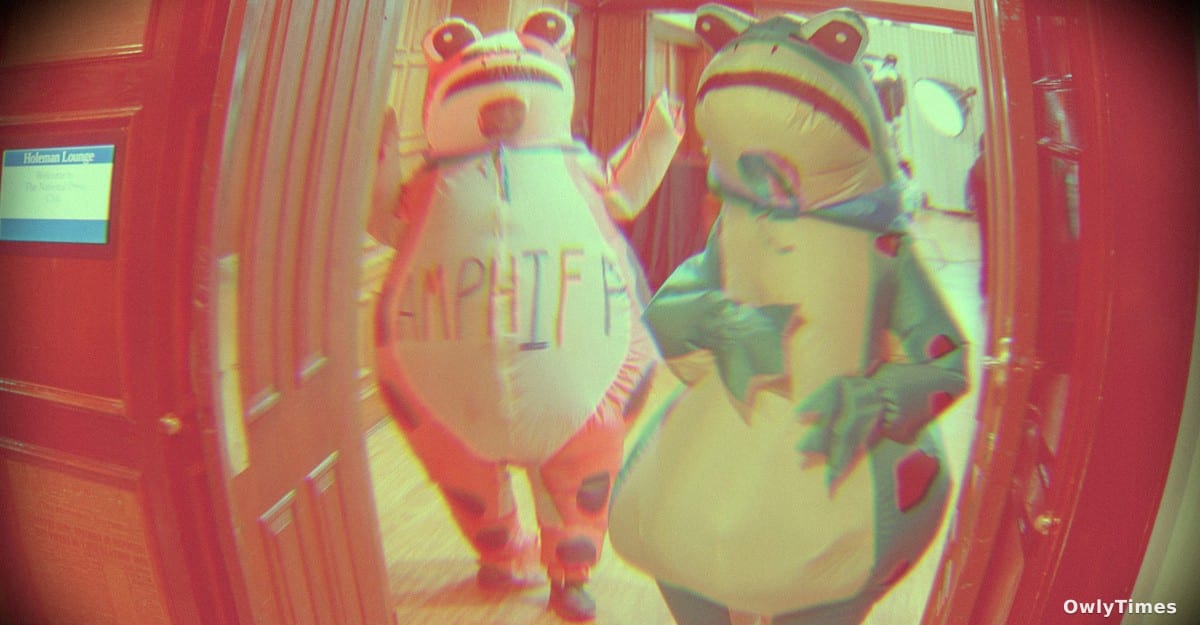

The strategic calculation was clear: neutralize Donald Trump not through direct opposition, but through a deliberate escalation of absurdity. While President Trump delivered his longest State of the Union address – a 108-minute performance – a counter-event, “The State of the Swamp,” unfolded at the National Press Club in Washington D.C., revealing a fractured opposition grappling with how to engage a political figure who thrives on norm-breaking. The event wasn’t about reasoned rebuttal; it was about mirroring and amplifying the perceived chaos of the Trump era, a gamble that the sheer spectacle of resistance could erode his support. Who benefits and who loses from this strategy is complex. The immediate beneficiaries are those within the “Resistance” seeking a cathartic outlet and a renewed sense of purpose. The potential losers are those seeking a return to traditional political discourse, and perhaps, the broader electorate turned off by the increasingly theatrical nature of American politics.
The evening, hosted by Miles Taylor, a former Homeland Security chief of staff who publicly broke with Trump, was a curated collection of figures emblematic of anti-Trump sentiment. Actors Robert De Niro and Mark Ruffalo, conservative-turned-critic George Conway, former national security official Olivia Troye, voting rights activist Stacey Abrams, and ex-CNN anchor Jim Acosta all lent their names – and in some cases, their physical presence – to the event. The attendance of several members of Congress, abandoning their seats in the House chamber despite Hakeem Jeffries’ call for “silent defiance,” underscored a growing willingness within the Democratic party to forgo traditional decorum in favor of more visible protest. This isn’t simply a reaction to Trump; it’s a symptom of a broader fragmentation of American political rituals, a trend foreshadowed by the rise of counterprogramming even for events like the Super Bowl halftime show, as evidenced by Turning Point USA’s protest against Bad Bunny’s performance.
This article draws on reporting from theatlantic.com.
The tactics employed at “The State of the Swamp” were deliberately provocative. A comedian, Rob Potylo (performing as “Robby Roadmaster”), delivered an earnest message about countering absurdity with more absurdity – while dressed as a giraffe and twerking. Attendees threw dildos at a screen displaying Trump’s speech. A mock press conference featured a woman impersonating Karoline Leavitt, the real White House press secretary, complete with a fake baby bump. This crude and confrontational approach reflects a strategic shift within the anti-Trump effort, a belief that matching – and exceeding – his skill at dominating the attention economy is the only viable path to victory. It’s a calculated risk, mirroring the “race to the bottom” dynamic often observed in escalating conflicts. The historical parallel is striking: the tactics echo the satirical broadsides and exaggerated caricatures used during the intensely partisan political battles of the 19th century, a period marked by similar anxieties about the erosion of civic norms.
The event’s financial structure also reveals underlying dynamics. Tickets ranged from $99 to $1,000 (including a full frog suit and VIP access), with proceeds earmarked for “pro-democracy efforts.” This monetization of resistance raises questions about the sustainability of such movements and the potential for co-option. While organizers frame it as funding peaceful protests and legal defense funds, the commodification of dissent risks turning political activism into another consumer experience. The presence of figures like Lev Parnas and Brian Karem – individuals with their own complex histories and motivations – further complicates the narrative. The event wasn’t simply a gathering of virtuous opponents; it was a convergence of individuals with varying degrees of credibility and agendas, all united by their opposition to Trump. Chicago Mayor Brandon Johnson’s assertion that Democrats must “use every single tool available” to combat a “tyrant” underscores the sense of urgency driving this increasingly unconventional approach.
However, the internal contradictions within the resistance were also on display. During a chant intended to combine defiance and patriotism, organizers struggled to find phrasing that didn’t sound awkward or self-defeating – ultimately settling on “We defy because we love America.” Robert De Niro’s closing remarks, questioning whether one could “love a country that had adopted so many of Trump’s policies,” exposed a deeper ideological rift. His sentiment, echoed by the audience’s resounding “No!” highlights the fundamental challenge facing the opposition: how to reconcile patriotism with opposition to a president they view as fundamentally undermining American values. The fact that De Niro himself admitted he “doesn’t want to be part of this” but feels compelled to speak out speaks to the profound sense of disillusionment and anxiety driving the resistance. The political chess move to watch next isn’t whether “The State of the Swamp” will become a recurring event, but whether this escalation of political theater will translate into tangible electoral gains – or further alienate moderate voters and solidify Trump’s base. Will this strategy of amplified absurdity prove to be a winning hand, or a self-defeating spectacle?





