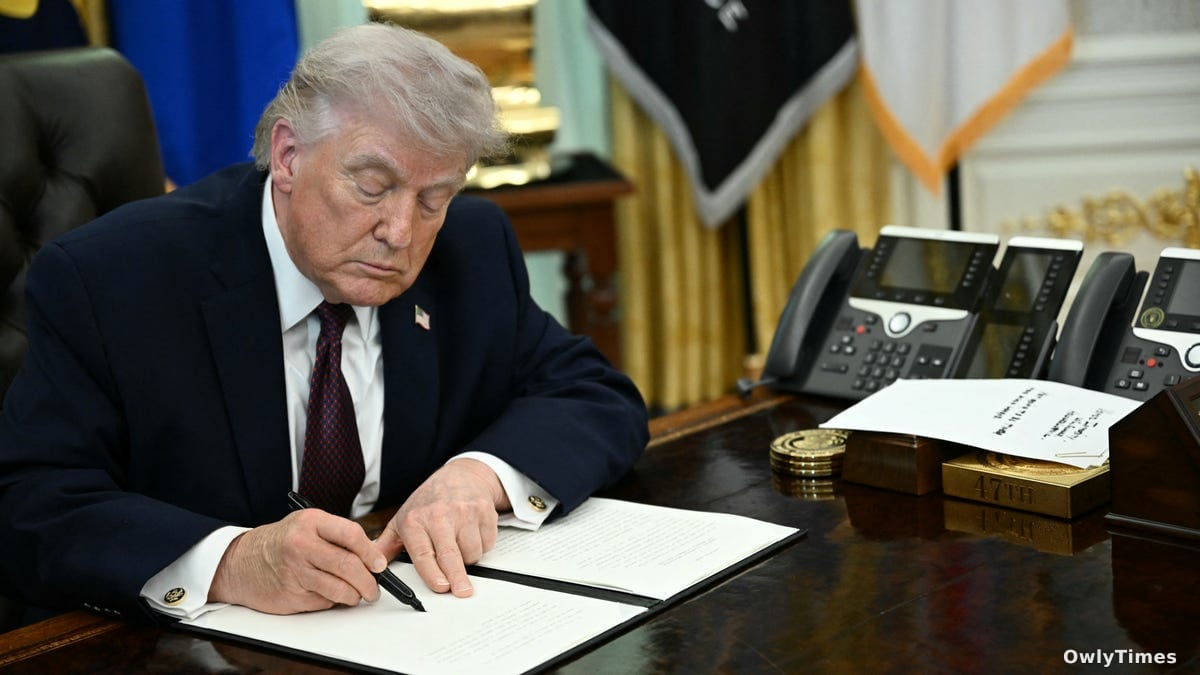

The Power Play Behind Trump’s Postal Service Directive
The latest legal challenge to President Trump’s executive order restricting mail-in voting isn’t simply about ballot access; it’s a calculated assertion of executive power over a traditionally state-managed function, and a preview of potential conflicts heading into the 2024 election. The March 31st directive, instructing the U.S. Postal Service to establish “uniform standards” for ballot transmission, isn’t a novel attempt to secure elections, as the White House claims, but a strategic maneuver to leverage federal authority over the electoral process – a power historically reserved to the states. This isn’t about preventing ineligible voters; it’s about establishing a mechanism for federal oversight, and potentially, intervention.
Source material: USA Today.
The lawsuit, filed April 3rd by over 20 Democratic state attorneys general and Pennsylvania Governor Josh Shapiro, hinges on the Constitution’s Article I, Section 9, which grants states the authority to determine the “Times, Places and Manner” of elections. While Congress can alter these regulations, the states argue – and the historical precedent largely supports – that the President lacks the constitutional authority to unilaterally impose changes to state electoral systems. The core of the argument isn’t about the legality of voter ID or ballot security measures, but about who gets to decide those measures. Attorney General Letitia James of New York succinctly framed the issue: “no president has the power to rewrite the rules on his own.” This isn’t a legal debate about election integrity; it’s a constitutional standoff over the balance of power.
Who benefits and who loses from this directive? The immediate losers are the states – particularly those with established mail-in voting systems – that now face the prospect of federal interference and potential legal battles. The directive’s requirement for the Postal Service to provide states with a list of “enrolled” voters, and to prevent transmission of ballots from those not on the list, introduces a new layer of bureaucracy and potential for disenfranchisement. The states argue this amounts to coercion, threatening investigation and prosecution for failing to comply with federal standards derived from “shadow voter eligibility lists.” The beneficiaries, at least in the short term, are those who believe – and have repeatedly alleged without evidence – widespread voter fraud, and who see federal oversight as a means of validating election outcomes. White House spokesperson Abigail Jackson’s statement, framing opposition as coming from “Democrat politicians and operatives,” underscores this partisan dimension.
This isn’t an isolated incident. The move echoes historical attempts by the federal government to influence state election administration. During Reconstruction, the federal government intervened in Southern states to protect the voting rights of newly freed slaves, deploying federal troops and registrars to oversee elections. However, this intervention was rooted in a constitutional amendment (the 15th) explicitly granting Congress the power to enforce voting rights. President Trump’s directive lacks such constitutional grounding, relying instead on a broader claim of authority to “secure” elections. The difference is critical: one was a constitutional mandate to expand access to the ballot box, the other is an executive action to potentially restrict it, framed as security.
The parallel to the 2020 election is unavoidable. Following widespread claims of fraud, President Trump repeatedly attacked mail-in voting, and his administration took steps to undermine the Postal Service’s ability to handle the surge in ballots. This latest directive can be seen as a continuation of that effort, a pre-emptive attempt to shape the electoral landscape for 2024. The legal challenges are likely to drag on, potentially reaching the Supreme Court. But the more significant question isn’t whether this particular directive will survive legal scrutiny, but whether this sets a precedent for future presidential interference in state elections. Will the next move be a push for a national voter ID law, or further attempts to leverage federal agencies to influence election administration? That’s the political chess move to watch next.





