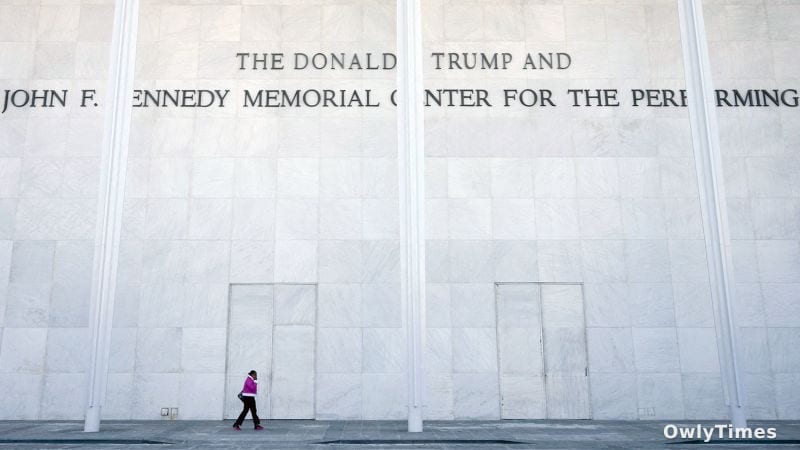

The strategic imperative behind Donald Trump’s push to overhaul the Kennedy Center isn’t about aesthetics; it’s about consolidating control over a cultural institution traditionally operating at arm’s length from direct presidential influence. The flurry of legal maneuvering culminating in Saturday’s ruling by US District Judge Christopher Cooper – mandating the release of documents to Rep. Joyce Beatty – reveals a power play extending beyond bricks and mortar. Trump isn’t simply renovating a building; he’s attempting to redefine the relationship between the executive branch and a nationally significant arts organization, and the legal battle is a proxy for a broader contest over cultural authority.
Beatty’s lawsuit, and Judge Cooper’s partial victory for the congresswoman, underscores the inherent tension in Trump’s approach. While the judge stopped short of granting Beatty a vote on Monday’s decision, the order to release documents is significant. Cooper explicitly dismissed the administration’s claim that plans were “preliminary,” a pointed rebuke that exposes the extent to which the renovation is already underway despite attempts to portray it as fluid. This suggests a deliberate strategy of presenting a fait accompli, minimizing opportunities for dissent or congressional oversight. The core question isn’t whether the Kennedy Center needs renovation, but who decides what that renovation looks like and how it’s funded – and whether the public has a voice.
Drawn from CNN.
The historical parallel here is instructive. Consider the Roosevelt administration’s creation of the Works Progress Administration (WPA) during the Great Depression. While the WPA also involved large-scale public works projects, it operated under a different principle: broad public benefit and congressional authorization. Trump’s approach, by contrast, relies on leveraging his position as chair of the Kennedy Center board – a position no president has held before – to bypass traditional checks and balances. The attempt to rename the venue the “Trump Kennedy Center” in December, a move Beatty is also challenging, is a blatant assertion of personal branding over a national institution, echoing historical examples of autocratic rulers attaching their names to public works to cement their legacy.
Who benefits and who loses in this scenario? Trump clearly benefits from the enhanced prestige and control. His loyalists, like outgoing president Richard Grenell, have been rewarded with positions of influence. But the Kennedy Center itself, and the broader arts community, stand to lose. Declining ticket sales and artist cancellations, as reported by CNN, are early indicators of the damage being done. The sworn declarations from arts management experts like Deborah Borda, president emerita of the New York Philharmonic, paint a grim picture of long-term consequences: lost relationships with performers, donor attrition, and a diminished reputation. Borda’s warning that reversing these harms will take “years of effort and investment” is a direct challenge to Trump’s narrative of improvement.
The timing of the latest developments – the document release, the replacement of Grenell with Matt Floca, and Trump’s continued public pronouncements – is also revealing. Despite “global conflicts,” as the article notes, Trump remains focused on the Kennedy Center, signaling its importance to his personal agenda. The frustration with “a slew of negative headlines” driving Grenell’s removal suggests a vulnerability: Trump is sensitive to public perception and willing to make personnel changes to control the narrative. This underscores the political calculation at play – the renovation isn’t just about the building; it’s about shaping public opinion and projecting an image of success.
The political chess move to watch next isn’t whether Beatty will be granted a vote on Monday – the judge’s ruling already suggests that outcome is unlikely. It’s whether the released documents will reveal further evidence of a deliberate effort to circumvent congressional oversight and push through the renovation regardless of opposition. Specifically, will the documents demonstrate a pre-determined financial plan, or a coordinated strategy to minimize public scrutiny? The answer to that question will determine whether this is simply a contentious renovation project, or a broader attempt to redefine the boundaries of presidential power over cultural institutions.





