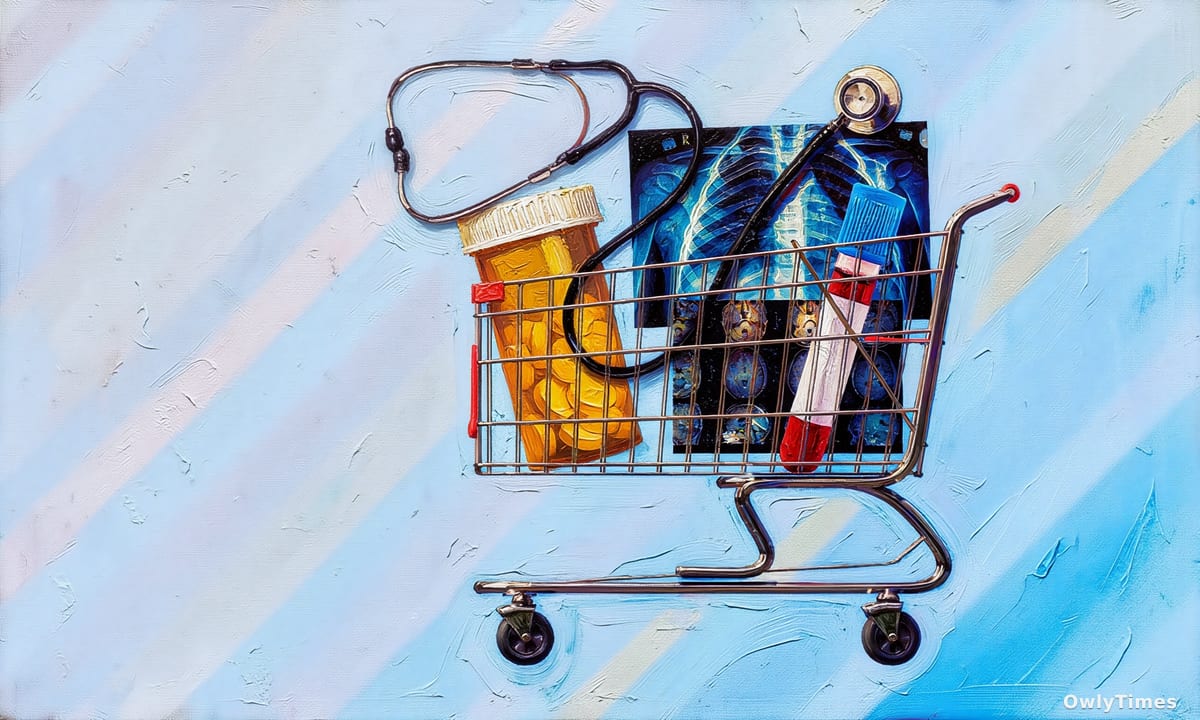

The central premise of modern conservative health policy is deceptively simple: if you put cash directly into the hands of patients, you can transform them from passive recipients of care into discerning shoppers. By decoupling health care funding from traditional employer-managed plans, proponents argue that individuals will naturally seek out the best value, forcing providers to compete on price and quality. While this vision of a consumer-driven marketplace has long been a staple of Republican platforms, the current political climate—marked by rising health costs and GOP control in Washington—has renewed the urgency to move these policies from theoretical frameworks into the mainstream.
To understand the mechanics of this shift, one must look at how these policies intend to change behavior. As detailed in the Tradeoffs report, the strategy relies heavily on tools like Health Savings Accounts (HSAs) and the newer Individual Coverage Health Reimbursement Arrangements (ICHRAs). The former acts as a tax-advantaged vessel for medical spending, while the latter aims to overhaul the employer-based insurance model by giving workers a set allowance to purchase their own plans on the open market. Avik Roy, a prominent policy advisor to multiple Republican presidential candidates, frames this as a necessary evolution in personal agency: "The more connected you are to what you’re spending, the more likely you are to care about the cost and the price and the value that you’re getting."
However, a critical distinction exists between the political narrative and the observable data. While proponents suggest that "more skin in the game" leads to better shopping, the evidence remains far more ambiguous. For instance, while nearly 40 million people now utilize plans with an HSA option, economic research suggests that the cost-consciousness generated by high deductibles often manifests not as smarter shopping, but as the total avoidance of care. According to research cited by Tony Lo Sasso, an economist at the University of Wisconsin-Madison, these financial structures act as a "blunt instrument." Instead of comparing blood labs or imaging centers, many consumers simply skip necessary procedures, including critical screenings like colonoscopies.
There are also significant limitations to consider regarding the human element of these financial instruments. Even when employers contribute funds to help cover deductibles, behavioral research indicates that individuals frequently struggle to manage these accounts in the way textbooks predict. A study by economist Adam Leive found that when lower-income workers received additional HSA funding, the balance was often depleted within a single year rather than saved for future medical emergencies. Furthermore, the lack of oversight in what can be purchased with these tax-free dollars—ranging from luxury mattresses to high-end fitness equipment—raises questions about whether these funds are truly lowering the cost of essential medical services.
The ICHRA model faces its own set of hurdles, most notably the lack of consumer appetite for the shopping experience itself. While Brian Blase, head of the Paragon Health Institute, remains optimistic about the potential for worker choice, the current adoption rates are modest, with industry estimates hovering around one million participants. Sherry Glied, a professor at New York University, suggests that the expectation for workers to act as insurance brokers ignores the inherent complexity of the market. "Shopping for dresses is fun," Glied noted. "Shopping for health insurance is not fun."
Looking ahead, the direction of these policies will likely be determined by the next reading of adoption metrics for ICHRAs and any potential legislative adjustments to the ACA exchanges. As the debate continues, the fundamental tension remains: whether a market-based, consumer-centric approach can actually lower prices, or if it simply shifts the burden of navigating a complex, expensive system onto individuals who are already struggling to afford care.