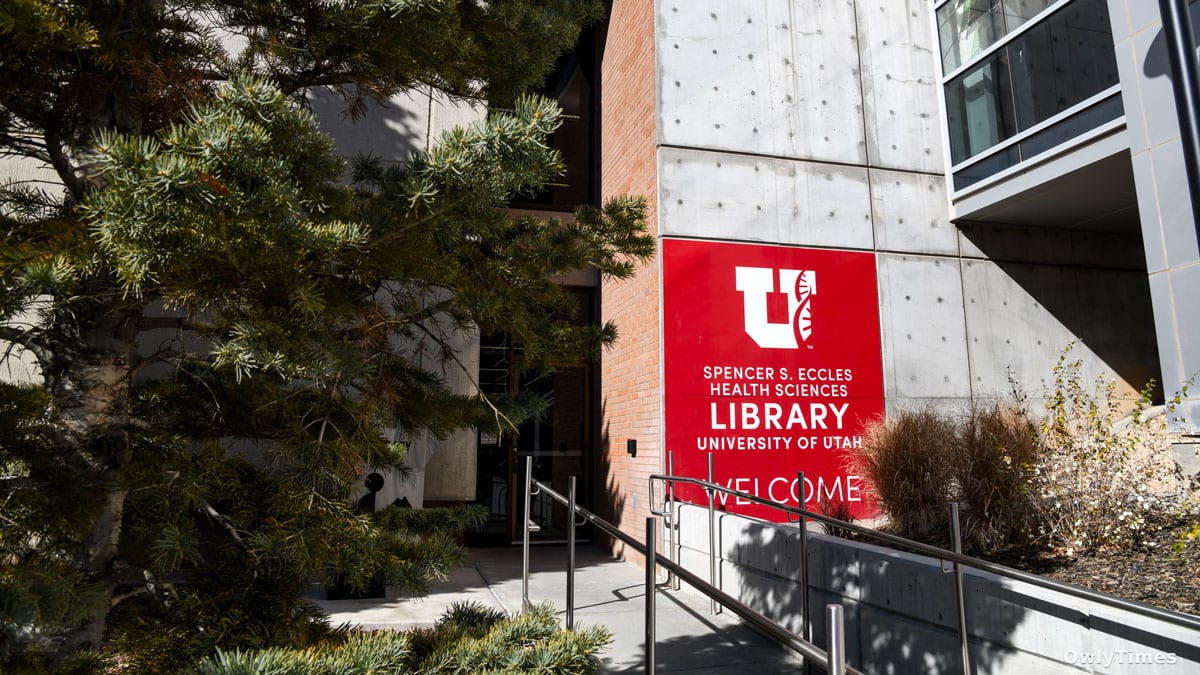

Beyond Earthquake Readiness: How the Eccles Library Retrofit Redefines Academic Space
The University of Utah’s Eccles Health Sciences Library (EHSL) recently completed a three-year seismic retrofit, a project initially framed as a necessary safety measure. However, to view this renovation solely through the lens of earthquake preparedness is to miss a more profound shift underway in how we conceive of academic library spaces – and what role they play in the demanding education of future healthcare professionals. While headlines focus on the building’s newfound stability, the completed project reveals a deliberate effort to address longstanding usability issues and, crucially, to integrate the library more fully into the daily lives of medical students. This isn’t simply a library that won’t fall down; it’s a library designed to be actively used.
Source material: attheu.utah.edu.
The impetus for the retrofit arose with the construction of the new Spencer Fox Eccles School of Medicine. Recognizing the interconnectedness of these facilities, and acknowledging the EHSL’s vulnerability in a seismic event, the University opted for a complete structural overhaul rather than demolition and rebuilding. This decision, as Catherine Soehner, EHSL Executive Director, explains, allowed for a unique opportunity. “The very first thing they’ll see is the beauty of the Core that we put in,” she said at the February 10th open house, referring to the central structure built to provide seismic stability. But the “Core” isn’t merely a functional support; it’s a design element, surrounded by hemlock wood and integrated display cases intended to showcase the library’s collections. This illustrates a key principle guiding the renovation: improvements weren’t bolted onto the existing structure, but woven into its fabric.
The practical implications of this approach are significant. Prior to the retrofit, the EHSL suffered from common library woes – insufficient study space and aging infrastructure. Students, often lacking dedicated office space, relied heavily on the library for quiet study, yet the original study rooms were perpetually overbooked. The renovation doubles the number of study rooms, a change Heidi Greenberg, EHSL Associate Director, rightly identifies as “especially exciting” for students. Beyond study spaces, the retrofit addressed basic but critical needs: modernized restrooms on every floor and replacement of frequently malfunctioning elevators. These aren’t glamorous upgrades, but they directly impact the daily experience of students and faculty, transforming the library from a resource accessed when necessary to a destination students might actively choose to visit.
The architectural firm Studio LP, led by Libby Haslam, prioritized preserving the library’s existing character. This wasn’t about nostalgia, but about recognizing the psychological impact of familiar surroundings on learning and well-being. Haslam’s team repurposed materials – doors, lettering – from demolished areas, ensuring a sense of continuity. This approach contrasts sharply with the often sterile aesthetic of new construction, and speaks to a growing understanding of the importance of “place” in fostering a sense of community and belonging. The interior design, Haslam notes, utilizes “tones, textures and patterns that evoke the familiar qualities of a library and draw from the existing unique characteristics of EHSL.” This deliberate curation of atmosphere is a subtle but powerful element of the renovation.
However, it’s important to acknowledge the limitations of this project. While the retrofit addresses many usability concerns, it doesn’t fundamentally alter the library’s role in the digital age. The EHSL, like all academic libraries, faces the ongoing challenge of balancing physical resources with the increasing availability of online materials. The new display cases, showcasing artifacts from the History of Medicine collection and student artwork from the Layers of Medicine course, represent a conscious effort to highlight the library’s unique holdings and foster a connection to the humanities. But the long-term success of this strategy will depend on continued investment in both physical collections and digital resources, and on demonstrating the value of both to a generation of students accustomed to instant access to information. The formal re-opening in August 2026 will be a crucial moment to assess how effectively the library is meeting these evolving needs.
Looking ahead, the question isn’t simply whether the EHSL is earthquake-safe, but whether it can become a truly integrated hub for medical education and research. The completion of the underground walkway connecting the library to the new medical school building will be a key test. Will this physical connection translate into increased collaboration and cross-disciplinary learning? And, perhaps more importantly, will the library’s redesigned spaces encourage students to view it not just as a repository of knowledge, but as a vital space for reflection, collaboration, and community? The University of Utah has invested significantly in the EHSL’s future; the next step is to observe how students respond and adapt to this reimagined academic environment.





