
The air smells like burnt sugar and anticipation on a November Saturday in Lexington. Not from the concessions stands, though they’re certainly contributing, but from the sheer kinetic energy of 60,000+ fans converging on Kroger Field. But what if that energy – that thrum of community, that economic boost, that feeling of something happening – didn’t vanish the moment the final whistle blew? That’s the question University of Kentucky officials are grappling with as they unveil plans for a year-round entertainment district adjacent to the stadium, a move that speaks to a larger shift in how universities are reimagining their roles as community hubs, not just centers of higher learning. It’s a gamble, but one that reflects a growing pressure to monetize campus assets and cultivate a more vibrant, connected student life.
Beyond Game Day: The University as Town Square
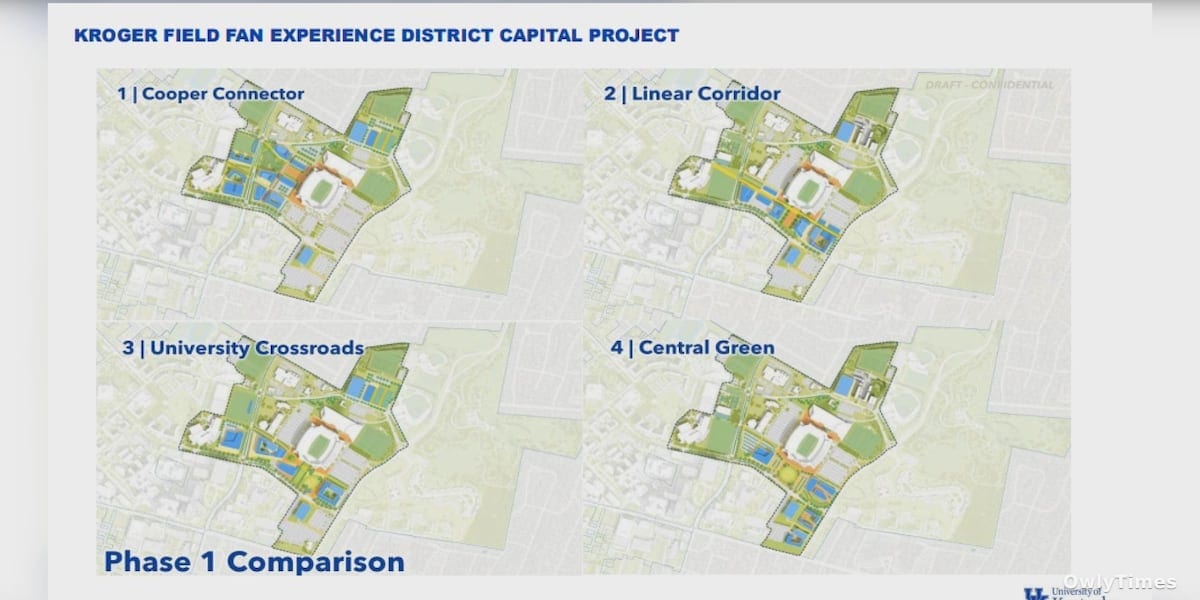
For decades, college towns have existed in a peculiar rhythm: explosive activity during the academic year, punctuated by relative quiet during breaks. But that model is cracking. Rising tuition costs, coupled with a demand for more immersive campus experiences, are forcing universities to look beyond the classroom and the football field for revenue and relevance. The UK project, currently in phase two with four concept designs under review, isn’t unique. Across the country, institutions are experimenting with mixed-use developments, retail spaces, and entertainment venues to draw students, alumni, and local residents alike. Kevin Locke, UK’s associate vice president for planning, design and construction, understands this imperative. “It’s gotta be 365 days a year otherwise this won’t work,” he stated to WKYT, a sentiment that cuts to the core of the project’s ambition. This isn’t about building a fancier tailgate; it’s about building a destination.
Source material: wkyt.com.
The renderings, which include green spaces, parking garages, and potential tenant spaces, suggest a deliberate attempt to mimic the success of entertainment districts surrounding professional sports venues. But the university context is fundamentally different. A stadium district thrives on a limited number of high-attendance events. A campus district needs to foster a constant, low-level hum of activity. That’s a significantly higher bar, requiring a careful balance of amenities that appeal to students – concerts, fitness facilities – and those that draw in the broader Lexington community. The challenge isn’t just attracting people; it’s creating a space where different groups want to interact.
Reconnecting Campus: A Physical and Social Bridge
Perhaps the most compelling aspect of the UK plan isn’t the entertainment component itself, but the stated goal of physically and socially reconnecting Kroger Field to the main campus. Currently, as Locke points out, the stadium feels somewhat isolated. This isn’t merely an aesthetic issue; it’s a reflection of a broader disconnect between athletics and academics that plagues many universities. The proposed pedestrian-friendly infrastructure aims to address this, creating a more seamless flow between the energy of game day and the intellectual life of the campus. This is a smart move, as universities increasingly recognize the value of leveraging the passion surrounding athletics to foster school spirit and alumni engagement.
But the success of this reconnection hinges on more than just sidewalks and bike paths. It requires a deliberate effort to integrate the district into the fabric of campus life. Will the concert venues host student performances alongside national acts? Will the fitness facilities be accessible to all students, regardless of their athletic affiliation? These are the questions that will determine whether the district becomes a genuine extension of campus or simply a commercial appendage. The university is also keenly aware of existing traditions, specifically tailgating, and intends to “enhance that but still retain that tradition” as the project moves forward. This careful consideration of established culture is crucial; alienating loyal fans would be a self-defeating move.
The Cost of Connection: Funding and Future Traditions
Phase three of the project, slated to begin next month, will focus on finalizing the plan and developing a cost estimate. This is where the rubber meets the road. Large-scale development projects are notoriously prone to cost overruns, and the UK district is likely to be no exception. The university will need to carefully weigh the potential economic benefits against the financial risks, and be transparent with the community about the project’s budget. Beyond the financial considerations, there’s the question of what new traditions might emerge from this connection. Locke himself suggests that “some new traditions…may be spawned.”
That’s a tantalizing prospect, but also a reminder that universities are, at their core, institutions of continuity. The challenge is to innovate without sacrificing the values and traditions that define the university’s identity. The UK entertainment district represents a bold attempt to navigate this tension, to create a space that is both modern and rooted in the university’s history. But the real test will come not in the renderings or the construction, but in the everyday life of the district – in the conversations that take place, the connections that are forged, and the traditions that endure. Will Lexington residents embrace this new space as their own? Will it truly become a 365-day destination, or will it remain a ghost town when the students go home? That’s the question everyone is watching closely.