
The current push to fund Ukraine through debt instruments secured by potentially nonexistent Russian asset returns isn’t a departure from European policy – it’s a chillingly familiar repeat performance. The strategic calculus is brutally simple: maintain a state of prolonged conflict to justify massive arms spending, even if it requires resorting to the same toxic financial engineering that exacerbated the Eurozone crisis in 2010. This isn’t about aiding Ukraine; it’s about finding a fiscal lifeline for a stagnant European economy through military Keynesianism, masked as geopolitical necessity.
Back in 2010, the unraveling of Lehman Brothers’ derivatives triggered a cascade of bankruptcies across Europe, threatening the solvency of major banks like Deutsche Bank, Société Générale, and BNP Paribas. The EU, constrained by treaty limitations preventing direct loans to Greece, faced a dilemma: bail out the banks or allow them to fail. The solution, as described by sources, was to employ former Lehman Brothers personnel to create nearly identical, equally risky derivatives – collateralized debt obligations (CDOs) – ostensibly to aid Greece, but in reality, to shield German and French financial institutions. For every €100 of new debt, Germany underwrote around €24, France €20, and Italy €13, each share proportional to their national income, but with varying interest rates, placing a disproportionate burden on nations already struggling.
This structure, mirroring the flaws of the original Lehman CDOs, contained the seeds of its own destruction. As Portugal, already fiscally stressed, took on debt on behalf of Greece, its own borrowing costs spiked, triggering a self-fulfilling prophecy of default. The burden shifted to Ireland, then Spain, creating a domino effect of sovereign debt crises. The EU effectively bypassed its own rules against common debt by creating a complex web of financial instruments that transferred risk without addressing the underlying problems. Who benefits and who loses? French and German banks were initially shielded, while Greece, Portugal, Ireland, and Spain bore the brunt of austerity and economic hardship, and ultimately, the other EU member states absorbed the losses.
See the original jacobin.com story for the full account.
The parallels to the current Ukraine funding mechanism are striking. Facing resistance to outright confiscation of roughly €200 billion in frozen Russian assets held in Euroclear, a Belgian clearing bank, the EU initially proposed issuing up to €170 billion in debt secured against the future revenues from those assets – a precarious proposition contingent on uncertain legal outcomes. When that scheme faltered due to opposition from Germany and the Trump administration, the EU resorted to issuing €90 billion in debt, predicated on the unlikely prospect of Russia paying war reparations to Ukraine. This reliance on hypothetical future payments, rather than concrete funding commitments, is a clear indication that the priority isn’t Ukrainian solvency, but rather the continuation of a conflict that serves Europe’s economic interests.
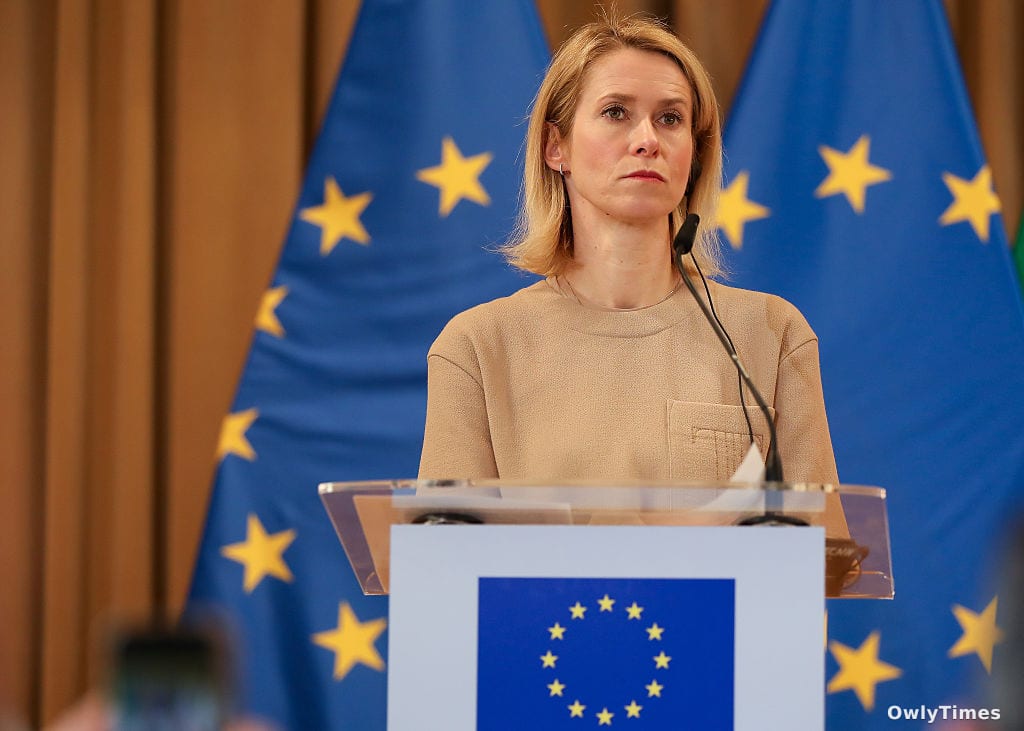
The argument that a prolonged war is necessary to coerce Europeans into accepting increased military spending reveals a cynical calculation. Without an external threat, it would be politically untenable to divert funds from social and ecological programs to armaments. This echoes the post-euro crisis era, where the threat of further financial instability was used to justify austerity measures and the implementation of Quantitative Easing – a policy that inflated asset prices for the benefit of financiers while simultaneously imposing hardship on working classes. Kaja Kallas, the EU’s foreign and defense policy chief, now threatening to revive the asset-backed loan scheme, demonstrates a disturbing willingness to repeat demonstrably failed strategies.
The underlying tension is this: the EU’s leadership is prioritizing the preservation of its own power and economic stability over the genuine needs of Ukraine and the well-being of its own citizens. The rhetoric of solidarity and common interest serves as a smokescreen for a policy driven by self-preservation and a desperate search for economic growth. This isn’t simply a matter of bad policy; it’s a systemic issue rooted in the priorities of a ruling class that, as the source material suggests, displays “less compassion than the ancient Spartans treated the Helots.” The question now isn’t if this financial house of cards will collapse, but when – and what the geopolitical consequences will be when it does. The political chess move to watch next is whether the EU can successfully navigate the upcoming European Parliament elections without a significant backlash against this increasingly transparent strategy of war as a growth plan.