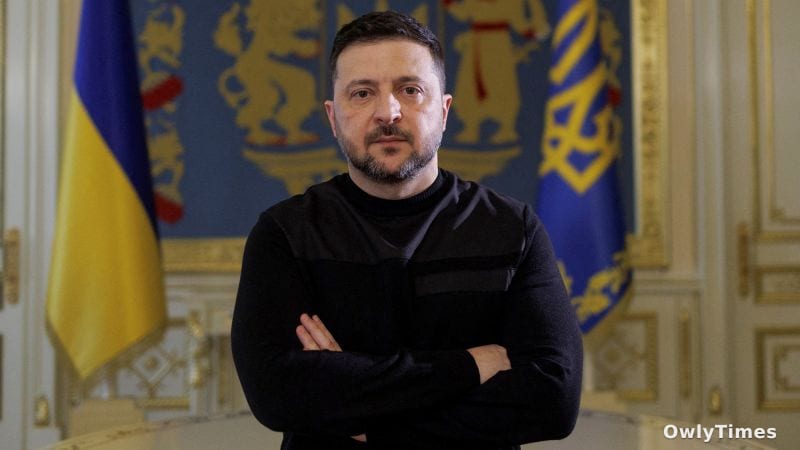

90 billion euros represents the fiscal lifeline currently sitting at the center of a geopolitical bottleneck, as Ukraine attempts to balance its own survival against the shifting priorities of its Western allies. For President Volodymyr Zelensky, this figure—approved by the European Union following the resolution of a prolonged blockade by outgoing Hungarian Prime Minister Victor Orbán—is the difference between stagnant defense lines and a fully mobilized domestic military industry.
The Cost of Divided Diplomatic Attention
Follow the money, and the current friction point is clear: the United States is running a single negotiation team for two distinct, high-stakes conflicts. Zelensky noted that the same group, led by US envoy Steve Witkoff and Jared Kushner, is managing both the ongoing war in Iran and the conflict in Ukraine. While technical discussions with Washington persist, the Ukrainian leader identified a critical misalignment in diplomatic bandwidth.
The risk, according to Zelensky, is that the "case of Iran" has become a prerequisite for progress in Ukraine. By his estimation, it is a "big risk" to assume that efforts to cease hostilities in his country must wait for the Iranian conflict to conclude. The consequence of this sequencing is tangible: Ukraine is currently experiencing a derailment of key weapon supplies, specifically anti-ballistic missiles, as U.S. production capacity remains constrained by competing global demands.
Production Gaps and Funding Realities
The direct impact of capital flow on military output is no longer theoretical for the Ukrainian government. Zelensky cited the production of drone interceptors as the primary metric for the country's current operational efficiency. While domestic facilities have the infrastructure to manufacture 2,000 units a day, current output is stagnating at approximately 1,000 units.
This 50% shortfall in potential output is attributed entirely to a lack of available funding. When viewed alongside the long-delayed EU loan, the data suggests that Ukraine’s defense manufacturing is not limited by technical capability, but by the timing of liquidity injections. The resumption of oil transit via the Druzhba pipeline—the final concession required to unlock the 90 billion euro package—was the necessary trigger to stabilize the nation’s immediate financial outlook.
Managing Parallel Priorities
The geopolitical tension lies in the attempt to synchronize these crises. Zelensky emphasized that Ukraine cannot afford to be treated as a secondary agenda item, despite the intensity of the war in Iran. The demand for a "parallel" management of these conflicts is an attempt to decouple Ukraine’s survival from the success of negotiations elsewhere.
For observers monitoring the stability of the region, the next reading of drone interceptor production levels will serve as the primary indicator of whether the newly approved EU funding is successfully closing the gap between potential capacity and actual output. Until those manufacturing figures climb closer to the 2,000-unit ceiling, the financial and logistical strain on Kyiv will remain a dominant variable in the ongoing war.




