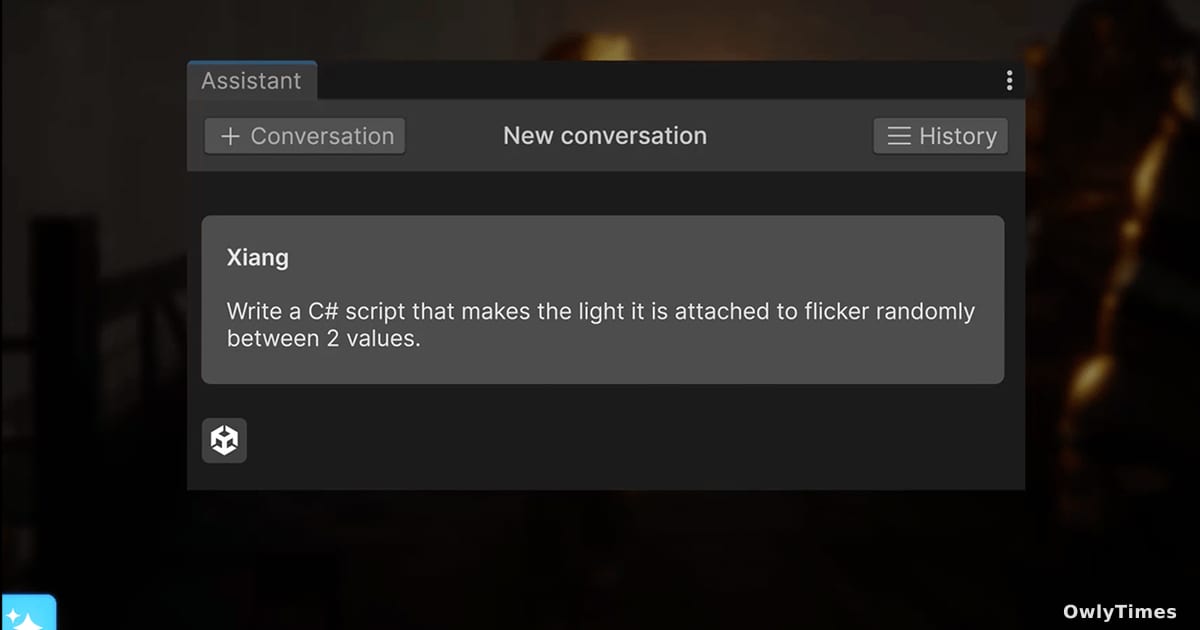

Is Unity about to solve game development, or just create a whole new class of problems? Matthew Bromberg, CEO of Unity, recently declared the company’s upcoming Unity AI beta – slated for unveiling at GDC in March – will allow users to “prompt full casual games into existence with natural language only.” The real story here isn't about a revolutionary tool for existing game developers—it’s about Unity’s bet that anyone with an idea can now become a game creator, and the implications that has for the entire industry, and for players. This isn’t about streamlining workflows; it’s about fundamentally altering who gets to make games, and what those games even are.
The Promise of No-Code, and the Ghosts of Past Promises
Unity’s pitch is familiar: democratize game development. For years, the industry has chased the dream of tools that lower the barrier to entry. But the history of game engines is littered with “easy” solutions that proved anything but. Remember the early days of RPG Maker, promising instant fantasy worlds? Or the explosion of mobile game builders that flooded app stores with low-quality clones? The problem isn’t the lack of tools, it’s the assumption that creativity alone is enough. A prompt, no matter how well-crafted, doesn’t replace game design, level design, or the countless hours of iteration that make a game fun. Bromberg’s claim of “tens of millions of more people creating interactive entertainment” feels less like a prediction and more like a desperate attempt to justify Unity’s heavy investment in generative AI, especially after previous AI-related missteps that, as Chris Kerr of GameDeveloper.com notes, have publicly embarrassed the company.
Based on the original gamedeveloper.com report.
Beyond the Hype: What’s Actually Under the Hood?
The Unity AI beta will leverage a combination of first-party models and partnerships with companies like Scenario and Layer AI, both built on foundation models like Stable Diffusion and FLUX. This isn’t a single, magical AI; it’s a patchwork of existing technologies repackaged for Unity’s platform. The key, according to Bromberg, is Unity’s “unique understanding of the project context and our runtime.” In other words, the AI isn’t just generating assets in a vacuum; it’s supposed to understand how those assets fit within the Unity ecosystem. This is a smart move. General-purpose AI tools like ChatGPT are impressive, but they lack the specific knowledge needed to create functional game elements. However, relying on partner models introduces another layer of complexity and potential instability. Scenario and Layer AI are still relatively new players, and their long-term viability remains uncertain. Unity is betting heavily on their success, and by extension, on the continued evolution of Stable Diffusion and other foundation models.
The Economic Earthquake: What Happens to Game Developers?
The most significant, and largely unaddressed, question is what this means for professional game developers. Unity insists AI will “raise productivity for all users,” but the implication is clear: fewer developers will be needed to create the same amount of content. While some argue AI will free developers from tedious tasks, allowing them to focus on higher-level design, the reality is likely more disruptive. The market for junior-level positions, already competitive, could shrink dramatically. The influx of “tens of millions” of new creators, as Bromberg predicts, will likely drive down the value of basic game assets and services. This isn’t a future of collaborative creativity; it’s a potential race to the bottom, where quantity trumps quality. The promise of democratization often comes at the expense of those who have already invested years honing their craft.
The Coming Flood: Prepare for a Lot of Very Simple Games
Unity’s AI push isn’t about making better games; it’s about making more games. The focus on “casual games” is telling. These are games that require minimal skill or investment, designed for short bursts of entertainment. Expect a flood of simple puzzle games, endless runners, and hyper-casual titles, all generated with minimal human input. This isn’t necessarily a bad thing – there’s a market for these types of games. But it also means the already overcrowded app stores will become even more saturated, making it harder for genuinely innovative and well-crafted games to stand out. The real test won’t be whether Unity can create games with AI, but whether it can help players find the games worth playing amidst the noise.
My prediction? By the end of 2026, we’ll see a significant backlash against AI-generated content, not because the technology is bad, but because the sheer volume of low-quality games will overwhelm the market. Players will actively seek out games “Made with Humans,” and developers who can demonstrate genuine artistry and craftsmanship will be rewarded. The question isn’t if AI will change game development, but whether it will ultimately empower creativity or simply drown it in a sea of mediocrity.





