
The Political Calculus of Paying to Pee: Cal State Monterey Bay’s “Urinetown” and the Limits of Access
The choice of “Urinetown: The Musical” as Cal State Monterey Bay’s spring production isn’t simply an artistic one; it’s a strategically resonant selection given the ongoing national debates surrounding infrastructure, public goods, and economic inequality. While seemingly a satirical take on restroom access, the musical – originally debuting on Broadway in 2001 – taps into a long history of civic unrest sparked by the commodification of basic necessities. The Performing Otters’ production, running April 10-18, arrives at a moment when access to clean water, affordable housing, and even healthcare are increasingly framed as privileges rather than rights, making its themes unexpectedly prescient.
The musical’s premise – a city crippled by drought where private toilets are outlawed and citizens must pay to use facilities controlled by a single, profit-driven corporation – isn’t far removed from real-world scenarios. Consider the ongoing water crises in cities like Jackson, Mississippi, or the escalating costs of public utilities in many American municipalities. The play’s central conflict, a “pee-for-free” movement led by Bobby Strong (played by Florian VanSickle), mirrors historical resistance to enclosure movements and the privatization of common lands. From the English Diggers of the 17th century protesting land ownership to contemporary movements fighting against water privatization in Bolivia, the impulse to reclaim essential resources from corporate control is a recurring theme in political history. VanSickle himself notes the character’s “earnestness” and relatable qualities, suggesting a deliberate attempt to connect with audiences on an emotional level.
Who benefits and who loses in “Urinetown’s” fictional world is starkly defined. Caldwell B. Cladwell’s company profits handsomely from the manufactured scarcity, while the impoverished citizens are forced to choose between basic hygiene and other necessities. This dynamic directly reflects the anxieties surrounding wealth inequality, a central theme highlighted by director Adrianna Dart. The production’s timing coincides with heightened public awareness of corporate influence in politics and the widening gap between the rich and the poor, making the musical’s critique particularly sharp. The fact that CSUMB’s Inter-Club Council mandates free access to performances – a policy Dart emphasizes as vital for accessibility “regardless of financial status” – creates a deliberate counterpoint to the play’s central premise, highlighting the university’s commitment to public good.
Source material: csumb.edu.
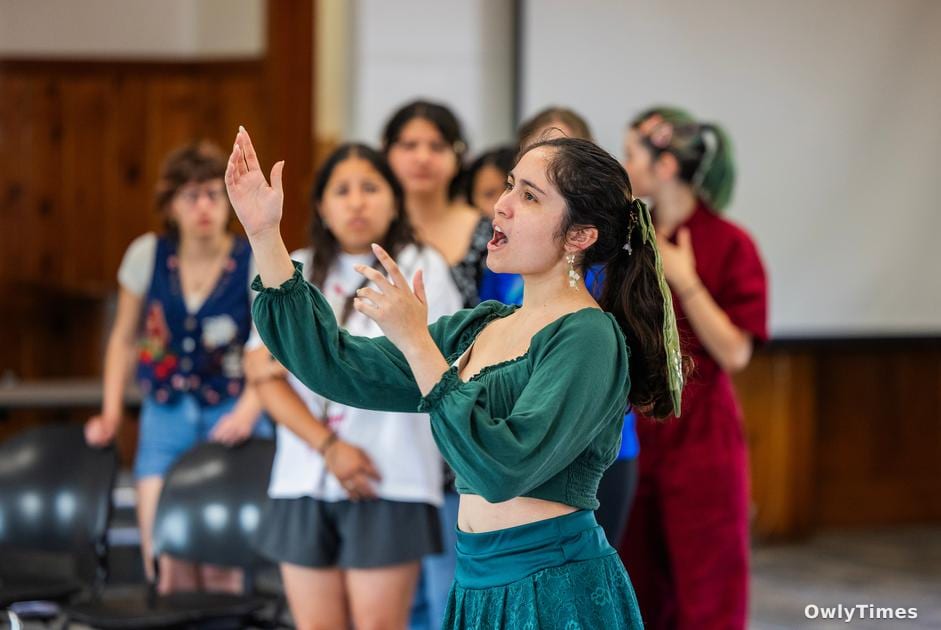
The logistical challenges of mounting a production with a larger-than-usual cast and crew – nearly 40 individuals, including 20 actors and 17 production staff – also reveal a subtle political statement. The willingness of cast members to take on double duty, volunteering as both performers and technicians, speaks to a collaborative spirit and a shared investment in the project. This echoes the mutual aid networks that have emerged in response to systemic failures, where communities step in to fill the gaps left by inadequate government or corporate support. Stage manager Bryce Minturn’s observation about the cast’s commitment, particularly from freshmen leads VanSickle and Adeline Voegels (as Hope Cladwell), underscores the power of grassroots participation in artistic endeavors.
The political chess move to watch next isn’t within the confines of the theater, but rather in the response to the production itself. Will “Urinetown” spark conversations on campus and in the wider Monterey area about the real-world parallels it presents? Will it galvanize students to engage with local political issues related to resource management and economic justice? The success of the play won’t be measured solely by ticket sales (or lack thereof, given the free admission), but by its ability to translate satirical commentary into tangible political awareness and action.





