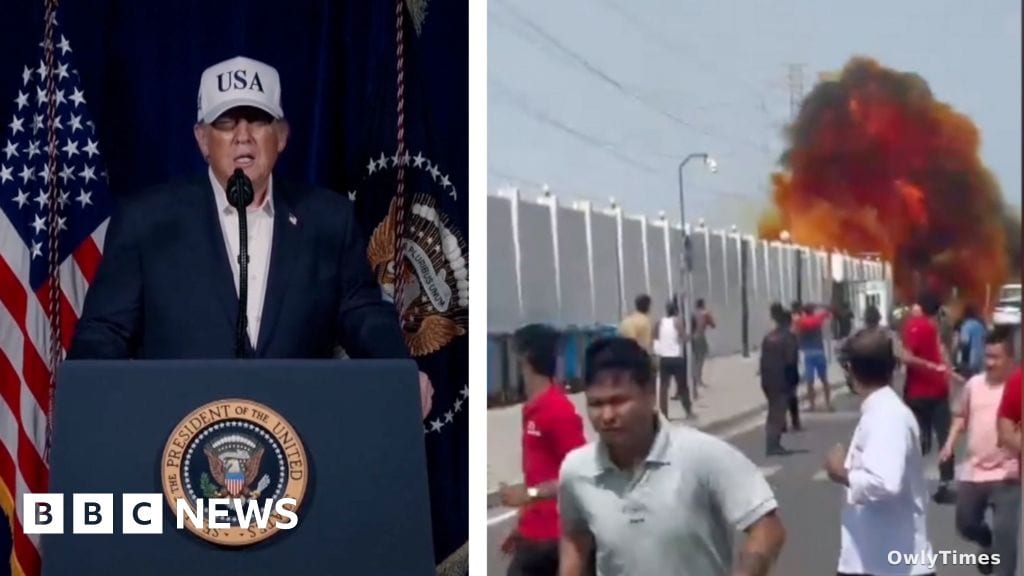

The escalation between the United States and Iran isn’t simply about retaliation for past grievances; it’s a calculated gamble by the Trump administration to reshape the geopolitical order of the Middle East, leveraging a perceived window of opportunity created by regional anxieties and domestic political considerations. The swift confirmation of Ayatollah Ali Khamenei’s death following the joint US-Israeli strikes, while initially met with skepticism, signals a willingness to escalate to a point of no return – a direct targeting of leadership, not merely infrastructure. This isn’t a measured response; it’s a regime-altering operation cloaked in the language of defense.
The Strategic Calculus of Eliminating Khamenei
The decision to reportedly eliminate Khamenei isn’t solely about responding to Iranian support for proxy groups or its nuclear program. It’s about exploiting existing fissures within the Iranian regime and potentially installing a leadership more amenable to US interests. The timing is crucial. Regional partners like Saudi Arabia and the UAE, long wary of Iranian influence, have been actively seeking stronger security guarantees from Washington. This operation delivers on that promise, demonstrating a commitment to containing Iran, even at the risk of wider conflict. The reported “powerful, surprise strike” described by Benjamin Netanyahu wasn’t just a military action; it was a signal to these allies – and to domestic voters – that the Trump administration is willing to take decisive action. The fact that the strike was a joint operation with Israel further solidifies the burgeoning strategic alignment between the two nations, a partnership increasingly focused on countering Iranian power.
Original reporting: the BBC.
Who Benefits and Who Loses in the Immediate Aftermath?
The immediate beneficiaries are, predictably, Israel and Saudi Arabia. Netanyahu’s government, facing domestic political challenges, gains a significant foreign policy win and reinforces its image as a staunch defender against Iranian aggression. Saudi Arabia, and the other Gulf states targeted by Iran’s retaliatory strikes – Bahrain, Kuwait, Qatar, and the UAE – now face an immediate security crisis, but one that simultaneously justifies increased reliance on US military protection. This dynamic strengthens US influence in the region, even as it escalates tensions. The clear losers are the Iranian people, facing potential instability and economic hardship, and any prospect of a negotiated resolution to regional conflicts. The European Union, which has consistently advocated for dialogue with Iran, finds its diplomatic efforts undermined and its influence diminished. The confirmation of Khamenei’s death by Iranian state media, while swift, suggests a pre-existing contingency plan within the regime, or a deliberate attempt to control the narrative.
Historical Echoes of Regime Change Operations
The US has a long history of intervening in the internal affairs of Middle Eastern nations, often with destabilizing consequences. The 1953 Iranian coup d'état, orchestrated by the CIA and MI6 to overthrow Mohammad Mosaddegh, serves as a stark reminder of the unintended consequences of regime change. While the current situation differs in its scale and complexity, the underlying strategic logic – the belief that altering Iran’s leadership will fundamentally alter its behavior – is strikingly similar. The 2003 invasion of Iraq, predicated on the false premise of weapons of mass destruction, further illustrates the dangers of miscalculation and the potential for prolonged instability. The key difference now is the directness of the action: a targeted assassination, rather than a protracted military campaign. This suggests a belief that a swift, decisive blow will be sufficient to achieve the desired outcome, a calculation that remains highly uncertain.
Iran’s Response and the Risk of Regional War
Iran’s retaliatory missile and drone attacks, while expected, represent a significant escalation. Targeting Israel directly, and extending the range to include US military bases in the Gulf states, demonstrates a willingness to risk a wider regional conflict. The scale of the attack – the number of missiles and drones launched – is a clear signal of Iran’s resolve, but also a calculated attempt to gauge the response of the US and its allies. The fact that these attacks were launched after confirmation of Khamenei’s death suggests a degree of internal cohesion within the Iranian regime, or at least a unified front presented to the outside world. The question now is not whether further escalation is possible, but inevitable.
The Next Chess Move: Succession and Internal Power Struggles
The immediate political chess move to watch isn’t a military counter-offensive, but the internal power struggle within Iran to succeed Khamenei. Who emerges as the new Supreme Leader will determine the future trajectory of the regime. Will it be a hardliner, committed to continuing the current confrontational course? Or a pragmatist, willing to explore avenues for de-escalation? The answer to that question will dictate whether this crisis spirals into a full-scale regional war, or settles into a new, albeit dangerous, equilibrium. The US and Israel will be actively working to influence this succession, but the outcome remains highly uncertain, and the potential for miscalculation is immense.





