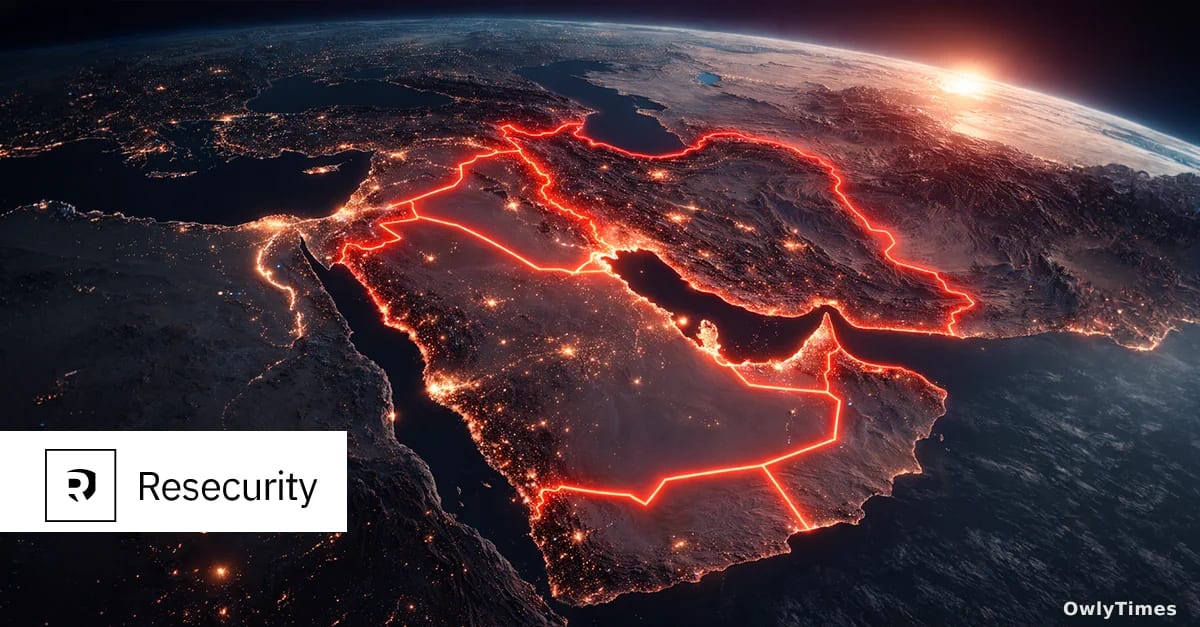

Is the current conflict in the Middle East truly about land and politics, or is it a dress rehearsal for a new kind of war – one fought as much in the cloud as on the ground? The recent escalation following the February 28th U.S.-Israeli offensive against Iran isn’t simply a kinetic response; it’s a full-blown digital brawl, and the real story here isn't the missile strikes – it's the chaotic, sprawling cyberwar unfolding alongside them. While headlines focus on geopolitical maneuvering, a parallel conflict is raging, fueled by hacktivist groups, opportunistic criminals, and increasingly sophisticated disinformation campaigns. And ordinary internet users, far removed from the physical battlefields, are already feeling the ripple effects.
New data from Resecurity paints a picture of a multi-domain confrontation where traditional warfare is inextricably linked with digital operations. This isn’t a future threat; it’s happening now. Hacktivist collectives aligned with both Iran and its adversaries are launching DDoS attacks, defacing websites, and conducting reconnaissance missions against critical infrastructure across the Middle East. These aren’t isolated incidents, but synchronized efforts designed to amplify the impact of physical operations and exert strategic pressure. The scale is significant: a 40% increase in observed cyber activity immediately following the strikes, according to Resecurity’s analysis, a jump far exceeding typical escalations in regional tensions.
Several key players are driving this digital escalation. On the Iranian side, groups like Cyber Islamic Resistance, Fatimion Cyber Team, and Cyber Fattah are actively engaged in reconnaissance, DDoS campaigns, and even data theft. Simultaneously, pro-Western hacktivists are targeting Iranian religious applications and news platforms, attempting to undermine state narratives and influence public opinion. But it’s not just about state-sponsored actors. Iranian opposition groups operating from countries like the U.S., UK, and Australia are also contributing to the cyber fray, launching attacks against the current regime. This fractured landscape means attribution is a nightmare, and escalation can occur through miscalculation or the actions of rogue actors.
Drawn from industrialcyber.co.
The targeting isn’t limited to symbolic gestures. A significant Iran-linked breach of Stryker Corporation, a major medical technology company, disrupted global operations, demonstrating the potential for real-world consequences. Coordinated attacks on Pakistani media platforms highlight the intent to control the narrative and sow discord. And the declaration by Iran that U.S. financial institutions and multinational tech companies are legitimate cyber targets signals a willingness to escalate beyond regional conflicts. This isn’t about disrupting a website; it’s about targeting the economic arteries of opposing nations. Consider the implications for your own bank, your healthcare provider, or the services you rely on daily – these are now potential collateral damage in a conflict unfolding thousands of miles away.
What’s particularly concerning is the integration of cyber operations with kinetic targeting. U.S. and allied forces are reportedly using cyber reconnaissance to facilitate strikes and assess battle damage, while Iranian hacktivists are exploiting vulnerabilities to strike at regional and Western targets. This blurring of lines between cyber and conventional warfare complicates defense postures and raises the stakes considerably. The use of AI-driven influence campaigns and social media manipulation further muddies the waters, amplifying misinformation and eroding trust. Resecurity notes the resurgence of the “Islamic Resilience Cyber Axis,” a network of ideologically motivated groups actively recruiting members and leveraging AI for influence operations. This isn’t just about technical skill; it’s about weaponizing information.
The tools being used are surprisingly accessible. Many DDoS attacks are being launched using readily available “stresser” services – essentially, DDoS-for-hire platforms – like Cosmic Network and SpaceStresser. While these attacks often generate more noise than actual damage, they force organizations to divert limited defensive resources. However, the threat is evolving. Resecurity predicts a shift towards ransomware-style operations, where critical data is held hostage for strategic leverage, extending beyond financial gain. This means hospitals, energy companies, and other essential services could be targeted, not for money, but to exert political pressure.
The situation is further complicated by the spread of misinformation. Pro-Iranian channels are circulating false claims, such as alleged strikes on the USS Abraham Lincoln, while simultaneously disseminating misleading data on Israeli military personnel. Clips from video games are being presented as real combat footage, designed to sow confusion and fear. This isn’t simply about propaganda; it’s about creating a distorted reality where trust in information itself is eroded. The emergence of groups like Cyber Isnaad Front and Handala Hack Team, focusing on data theft and ransomware, signals a growing sophistication and intent to inflict real damage.
The current cyber activity, while significant, is largely opportunistic and constrained by Iran’s limited resources and damaged infrastructure. However, this won’t remain the case. The question isn’t if cyberattacks will escalate, but when and how. Watch for a surge in sophisticated ransomware attacks targeting critical infrastructure in the U.S. and allied nations within the next six months – attacks designed not for financial gain, but to disrupt operations and exert strategic pressure. The battlefield has expanded, and the consequences will be felt far beyond the Middle East.