
The Calculus of Escalation: Trump’s Iran Strike and the Remaking of Middle East Security
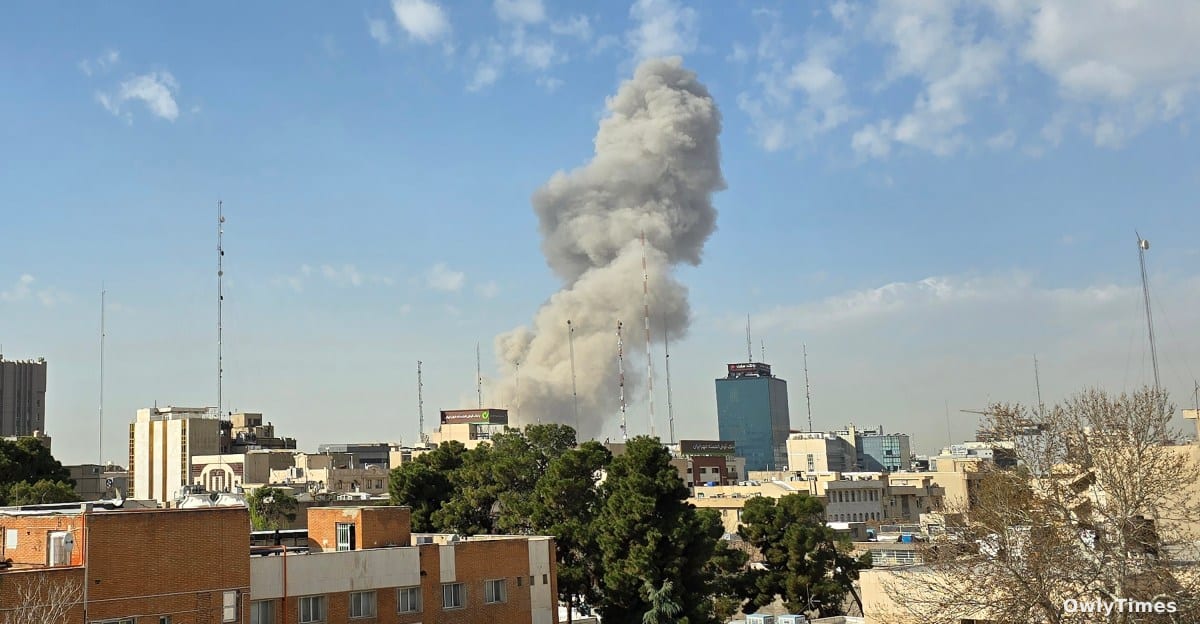
The decision by President Trump and Prime Minister Netanyahu to launch strikes against Iran wasn’t a spontaneous reaction to perceived threats, but a calculated gamble predicated on a shifting assessment of military readiness and a willingness to accept escalating risk. For months, the administration telegraphed its discontent with Iran’s nuclear program and regional activities, but the timing – following a substantial US military buildup and despite limited demonstrable change in Iranian behavior – reveals a strategic shift from deterrence to a demonstrably more aggressive posture. This isn’t simply about nuclear enrichment; it’s about reshaping the regional power balance and testing the limits of American military dominance. The subsequent Iranian missile strikes against US and allied targets confirm the escalation is now a two-way street, and the initial confidence displayed by both sides is a dangerous indicator of the potential for miscalculation.
The core question driving this conflict isn’t solely about preventing Iran from acquiring a nuclear weapon, though that remains a stated objective. It’s about leveraging military force to achieve broader geopolitical goals – namely, dismantling Iran’s ballistic missile capabilities, curbing its support for regional proxies like Hezbollah and the Houthis, and, as President Trump explicitly stated, instigating regime change. This ambition, however, dramatically raises the stakes. While the June “12-day war” saw limited Iranian retaliation, the current response – targeting US and Israeli interests alongside regional allies like Kuwait and the United Arab Emirates – demonstrates a heightened willingness to directly confront the US and its partners. Who benefits and who loses from this escalation is starkly defined: Israel gains a potential reprieve from the immediate threat of Iranian missiles, while the US seeks to reassert its influence, but both risk being drawn into a protracted and costly conflict. Iran, facing existential pressure, stands to lose the most, but also believes it can inflict unacceptable costs on its adversaries.
Source material: vox.com.
The deployment of two aircraft carrier strike groups, accompanied by destroyers and nuclear submarines, alongside dozens of fighter jets, represents the greatest concentration of US airpower in the Middle East since the 2003 invasion of Iraq. This wasn’t a reactive measure; it was a deliberate preparation for a large-scale operation. The fact that President Trump initially refrained from military action in January, despite protests in Iran, due to insufficient regional assets underscores the importance of this buildup. The contrast with the limited scope of the June strikes – largely an Israeli operation with belated US participation – is significant. This time, the US is leading, and the options presented to President Trump, including a campaign to overthrow the Iranian government, suggest a far more ambitious and potentially destabilizing undertaking. This mirrors, in its scale and ambition, the pre-invasion posturing of the Bush administration, though with a crucial difference: the lack of a clear international coalition or a compelling legal justification.
The administration’s justification for the strikes has evolved, shifting from the brutal suppression of protests to concerns about Iran’s nuclear program and, ultimately, to the claim that Iran is “just a week away” from having enough weapons-grade uranium to build a bomb – a claim disputed by many experts. This shifting narrative highlights a tension between stated objectives and underlying motivations. While the desire to prevent Iran from acquiring nuclear weapons is legitimate, the administration’s insistence on dismantling the entire enrichment program, coupled with demands to address Iran’s ballistic missile program and regional activities, suggests a broader agenda of regime containment, if not outright removal. This echoes the historical pattern of US interventions in the Middle East, where initial justifications often expand to encompass broader geopolitical goals, as seen in the lead-up to the Iraq War. The parallel is unsettling, particularly given the lack of a clear exit strategy or a realistic plan for stabilizing the region in the aftermath of a potential regime collapse.
The regional response is equally complex. While Prime Minister Netanyahu, facing domestic political challenges, likely welcomes the opportunity to focus public attention on Iran, other Gulf states, like Saudi Arabia and the UAE, are less enthusiastic about a wider conflict. Their reluctance to allow the US to use their airspace for attacks, despite their shared concerns about Iran, reflects a calculation of risk and a desire to avoid being drawn into a regional war. This divergence in interests underscores the inherent instability of the US-led security architecture in the Middle East. The UK’s initial resistance to providing airbases, and the tentative support from European allies, further illustrates the lack of a unified international front. The question now isn’t simply whether the US can inflict damage on Iran, but whether it can sustain a prolonged conflict without alienating key allies and triggering a wider regional conflagration.
The political chess move to watch next isn’t on the battlefield, but in the halls of Congress. Reps. Ro Khanna and Thomas Massie’s planned resolution to force a vote on military authorization represents a critical test of congressional oversight. Whether they can overcome the historical precedent of deferring to the executive branch on matters of war and peace will determine whether the US is embarking on a legally and politically sustainable course of action, or repeating the mistakes of past interventions. The outcome of this vote will signal whether the US is truly committed to a long-term strategy in the Middle East, or simply reacting to short-term political pressures.





