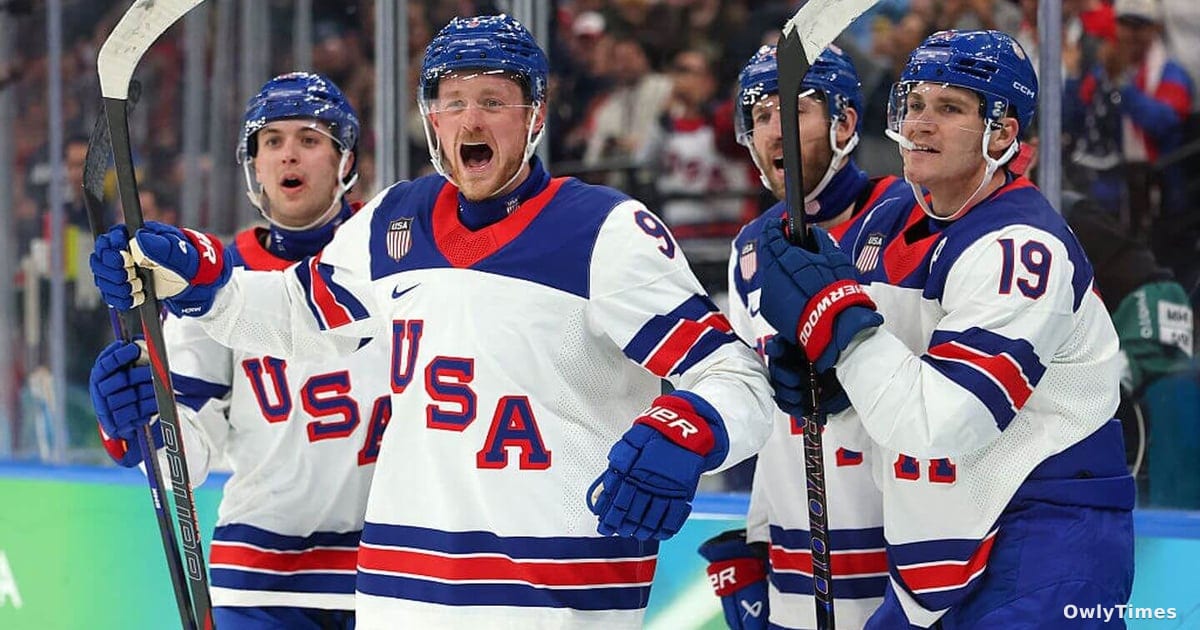

The air in Milan crackled with a tension I haven’t felt since Salt Lake City in 2002. Not the manufactured hype of a broadcast, but a raw, visceral energy radiating from the stands, from the players on the benches, and even, it seemed, from the ice itself. This wasn’t just a hockey game; it was a reckoning. The United States, leading Canada 1-0 in the first period of the gold medal game at the 2026 Winter Olympics, had done something almost unthinkable: they’d scored first, again, and were doing it while Sidney Crosby, the face of Canadian hockey for a generation, watched from the sidelines, sidelined by an injury sustained in Wednesday’s quarterfinal against Czech Republic. The goal, a dazzling solo effort from Matt Boldy just six minutes in, felt less like a play and more like a statement.
This isn’t simply about a potential third gold medal for the U.S. versus Canada’s quest for a tenth. It’s about a shifting power dynamic in a sport steeped in national identity. For years, Canada has held a near-mythical grip on men’s hockey, a cultural birthright. To see them trailing, to see their captain absent, to see them forced to play from behind – as they have in all three elimination games of this tournament, a statistic that feels particularly pointed – is a disruption of that narrative. It’s a crack in the foundation of a national pastime. The fact that Canada hadn’t trailed in an NHL Olympic game since 2010 until this tournament underscores just how unusual this position is for them.
The early minutes of the game were a furious display of speed and physicality, a clear indication that both teams had built their rosters with this very matchup in mind. The play involving Connor McDavid and Nathan MacKinnon, nearly resulting in a goal from Macklin Celebrini, was a breathtaking example of Canadian offensive firepower. But it was Auston Matthews, the American captain, who emerged as the early defensive star, consistently disrupting Canadian rushes with timely backchecks. It’s a reminder of what sets Matthews apart – his elite two-way game often overshadowed by his goal-scoring prowess. The fact that he’s showcasing this form now, after a period where his offensive output hadn’t quite reached its peak, feels significant.
See the original The New York Times story for the full account.
The Canadian coaching staff’s cautious deployment of Cale Makar and Tyson Toews alongside the “Mach3” line of Celebrini, McDavid, and MacKinnon speaks volumes. They’re holding back their most potent offensive weapon, saving it for a “nuclear option” later in the game. It’s a calculated risk, a tacit acknowledgement that this team, without Crosby, is built differently. It’s a team that needs to manage its resources carefully, to avoid burning out its stars too early. This is a departure from the traditional Canadian approach of overwhelming opponents with relentless offensive pressure. It’s a sign of a team adapting, perhaps even a team feeling vulnerable.
Beyond the scoreboard, the game is already rewriting the record books. Quinn Hughes’s six-game point streak is the first by an American player in an Olympics featuring NHL players, and his seventh assist of the tournament sets a new American record. These individual achievements are noteworthy, but they also reflect a broader trend: the rising talent pool within American hockey. The fact that three forwards were drafted before Boldy in his draft year, including Jack Hughes, highlights the depth of American talent now entering the NHL. This isn’t a flash in the pan; it’s a sustained investment in grassroots development that is finally paying dividends.
As I watched the first period unfold, the tension in the arena reminded me of the 2002 and 2010 Olympic gold medal games I covered. But this feels different. This isn’t just about gold; it’s about legacy. It’s about whether the United States can finally break Canada’s hold on the sport, and whether Canada can maintain its dominance in a world where the competition is fiercer than ever. The question now isn’t just who will win the gold medal, but what this game will signify for the future of international hockey. Will we see a continued shift in power, or will Canada reassert its dominance? And, crucially, will the absence of Sidney Crosby become a turning point, a symbol of a changing of the guard?

