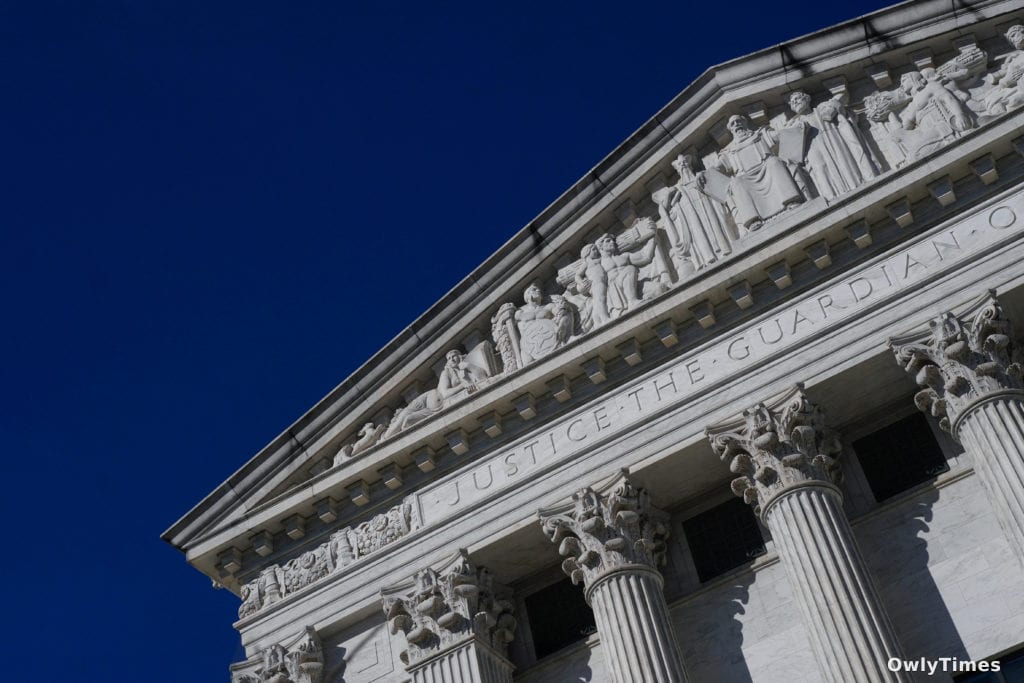

Is the Supreme Court about to declare a fundamental right to timely mail delivery—or dismantle a crucial safeguard for voter access? It sounds absurd, but that’s essentially what’s at stake in League of Women Voters v. Moore, a case the Court will hear next week that could drastically alter how mail-in ballots are handled in fourteen states. Everyone’s focused on the potential for chaos in the midterms, but the real story here isn't just about November 3rd—it’s about the creeping erosion of states’ rights to manage their own elections and the increasingly tenuous connection between our legal system and the realities of modern life.
The Rise of the Grace Period and Why It Matters
The context here is critical. Mail-in voting, once a niche practice, exploded during the pandemic. States like California, Colorado, and Vermont, which had already embraced widespread mail-in voting, saw record turnout. Others, responding to public health concerns and logistical challenges, implemented temporary expansions. As a result, many states established “grace periods”—allowing ballots received a few days, or even weeks, after Election Day to still be counted, provided they were postmarked by the deadline. This wasn’t some radical innovation; it was a pragmatic response to the fact that the USPS, despite its best efforts, doesn’t always deliver mail on time. Think about it: even Amazon Prime can’t guarantee next-day delivery to every address, and the USPS handles billions of pieces of mail annually.
Reporting from PBS informs this analysis.
The North Carolina Case and the Conservative Challenge
The current legal battle stems from North Carolina, where a state court ruled in 2019 that the state’s existing three-day grace period for mail-in ballots was unconstitutional, violating the right to vote. The state legislature then attempted to eliminate the grace period entirely, prompting the League of Women Voters and other voting rights groups to challenge the move. The North Carolina Supreme Court reversed the lower court’s decision, reinstating the grace period, arguing that it was necessary to ensure that all eligible voters had an opportunity to cast their ballots. This decision, however, was appealed to the U.S. Supreme Court, which agreed to hear the case. The conservative majority on the Court has consistently expressed skepticism about expanded mail-in voting and has been receptive to arguments about election integrity, making the outcome of this case particularly uncertain.
Why Memphis Manufacturers Are Watching Closely
You might be thinking, "Okay, North Carolina, that's a long way from Memphis." But the implications extend far beyond the Tar Heel State. The Supreme Court’s ruling will likely set a precedent for other states with similar grace periods, including Arizona, Florida, Georgia, Michigan, Nevada, Pennsylvania, and Wisconsin—states with significant manufacturing hubs and diverse populations. Consider this: a sudden elimination of grace periods could disproportionately impact hourly workers, shift workers, and those with unpredictable schedules, who may rely on mail-in voting to participate in elections. Disruptions to the electoral process, even seemingly minor ones, can create uncertainty and instability, which isn’t exactly conducive to a thriving business environment. Robert Johnson, CEO of a Memphis-based logistics firm, told me last week, "We need a stable and predictable system. Anything that makes it harder for people to vote ultimately impacts our workforce and our ability to operate efficiently."
The USPS's Perspective – and Its Own Reliability Issues
The U.S. Postal Service, unsurprisingly, has weighed in on the case, arguing that grace periods are necessary to account for mail delivery delays. However, the USPS itself has faced significant challenges in recent years, including staffing shortages, aging infrastructure, and political interference. Louis DeJoy, the current Postmaster General, has implemented a series of cost-cutting measures that have slowed down mail delivery in some areas, raising concerns about the agency’s ability to reliably deliver ballots on time. The irony isn’t lost on anyone: the very institution whose reliability is being questioned is also the one tasked with delivering the ballots that are at the center of the debate. This creates a feedback loop of distrust and uncertainty, further complicating the issue.
The Real Question: Federal Power vs. State Autonomy
The legal arguments in League of Women Voters v. Moore are complex, revolving around the Elections Clause of the Constitution and the 10th Amendment. But at its core, the case is about the balance of power between the federal government and the states. Conservatives argue that states should have broad authority to regulate elections, while voting rights advocates contend that federal oversight is necessary to ensure equal access to the ballot box. Striking down grace periods would represent a significant expansion of state power over elections, potentially leading to a patchwork of rules across the country that could disenfranchise voters in states with more restrictive policies. This isn’t about election integrity; it’s about who gets to decide what constitutes a fair and accessible election.
What happens next? Watch closely for the Court’s questioning during oral arguments. Specifically, pay attention to how the justices address the USPS’s reliability and the potential impact on voters with unpredictable schedules. If the Court signals a willingness to prioritize state autonomy above all else, expect a ruling that significantly restricts grace periods, potentially triggering a wave of litigation and legislative action across the country. If, however, the justices acknowledge the practical realities of mail delivery and the importance of voter access, they may uphold the grace periods, at least in some form. The decision, expected by late June, will not only shape the landscape of the 2024 elections but also set a precedent for the future of voting rights in America.





