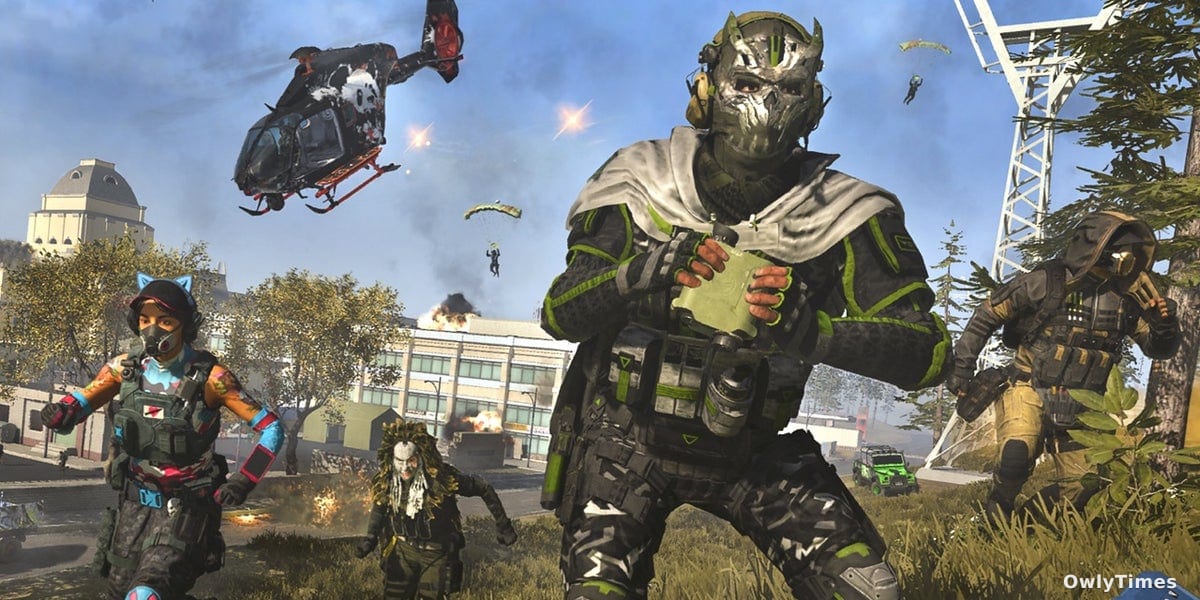

Is the mobile gaming gold rush already over? Activision Blizzard’s abrupt decision to pull the plug on Call of Duty: Warzone Mobile less than a year after its launch isn’t just a setback for fans of the franchise; it’s a flashing warning sign for the entire industry. The narrative being spun is about unmet expectations and a failure to attract “mobile-first” players, but the real story here isn’t a flawed game – it’s the increasingly difficult economics of replicating blockbuster console experiences on smartphones.
A Rocky Launch and Rapid Decline
The demise of Warzone Mobile was swift. Launched with considerable fanfare, the game stumbled out of the gate, plagued by technical issues and a lukewarm reception compared to its console counterpart. While Activision Blizzard touted bringing the “authentic” Warzone experience to mobile, the reality was a compromised version that failed to capture the same magic. The numbers tell a stark story: in its first four days, Warzone Mobile generated $1.4 million, a respectable sum for a new mobile title, but significantly less than the $4.2 million racked up by Call of Duty Mobile in the same timeframe. This isn’t a case of a bad game failing to find an audience; it’s a case of a game failing to justify its existence in a fiercely competitive market.
This article draws on reporting from eurogamer.net.
The company’s statement, acknowledging the game “did not meet our expectations with mobile-first players,” feels like a carefully worded admission of a miscalculation. Mobile gamers aren’t simply looking for scaled-down versions of console titles. They want experiences designed for mobile, with gameplay loops tailored to shorter sessions and intuitive touch controls. Warzone Mobile attempted to transplant a complex, demanding game onto a platform with different expectations, and it predictably faltered. The removal from app stores planned for May 2025, followed by the complete server shutdown on April 17th, underscores the speed with which Activision Blizzard is cutting its losses.
The Cost of “Authenticity” in a Mobile World
The problem extends beyond Call of Duty. The pursuit of “console-quality” graphics and gameplay on mobile is a costly endeavor. Developing and maintaining these games requires significant investment, and the return on that investment is increasingly uncertain. The mobile gaming market is saturated, and user acquisition costs are soaring. Players are less willing to spend money on games that demand hours of commitment or offer a pay-to-win experience. Warzone Mobile’s reliance on in-app purchases, while common in the mobile space, likely contributed to its negative perception among players who felt pressured to spend money to remain competitive.
The fact that existing Activision accounts will still grant access to Call of Duty Mobile and the console/PC versions is a telling detail. It’s a clear signal that the company is prioritizing its established player base and core franchises, rather than chasing the elusive “mobile-first” demographic with a resource-intensive spin-off. Unspent CoD points becoming useless after April 17th is a minor inconvenience for players, but a symbolic gesture of closure – a digital shrug from a company moving on to its next project.
Beyond Battle Royale: What This Means for Mobile Gaming
This isn’t just about Call of Duty. The failure of Warzone Mobile highlights a broader trend: the limitations of simply porting successful console franchises to mobile. The mobile market demands innovation, not imitation. Developers need to focus on creating original experiences that cater to the unique needs and preferences of mobile gamers. The industry is already seeing a shift towards hypercasual games, shorter-form content, and subscription-based models.
The shutdown also raises questions about the future of cloud gaming on mobile. While services like Xbox Cloud Gaming and GeForce Now promise to bring high-end console games to smartphones, they rely on a stable internet connection and a powerful processor. The success of these services will depend on overcoming these technical hurdles and offering a compelling value proposition to consumers.
Here’s what to watch for: over the next six months, expect to see a slowdown in announcements of AAA mobile ports. Instead, the focus will shift towards smaller, more focused mobile titles designed from the ground up for the platform. The question isn’t if the mobile gaming market will mature, but when the industry will fully embrace the fact that mobile isn’t just a smaller screen – it’s a fundamentally different gaming ecosystem.