
Beyond the Sound of “CK”: Why a Kindergarten Lesson Reveals a State’s Literacy Reckoning
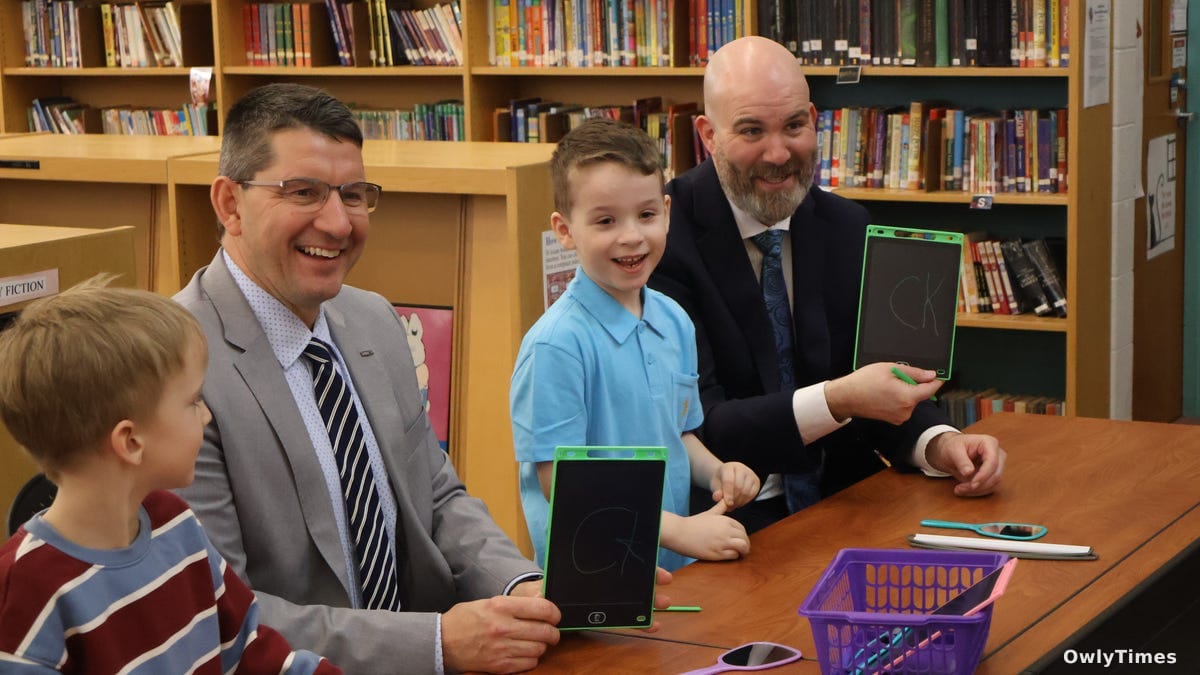
The image was striking: Adam Martin, Superintendent of Waterford School District, gently corrected by a five-year-old, Gloria DesJardin, during a public demonstration of early literacy techniques. Gloria, with the assuredness of a seasoned educator, explained that the “ck” sound requires two letters, not one. While the moment garnered local headlines as a charming display of student success, it underscores a far more significant, and often fraught, shift happening in Michigan’s approach to reading instruction – a shift driven by neuroscience, fueled by pandemic-era funding, and now poised for potential statewide mandate. This isn’t simply about teaching children to sound out words; it’s about acknowledging decades of pedagogical approaches that, despite good intentions, left too many students behind.
For generations, many schools, including Waterford until recently, relied on “balanced literacy,” a method often characterized by “whole language” principles and reading workshops. Programs like Units of Study, developed by Lucy Calkins at Columbia University’s Teachers College, were commonplace. Darin Holley, Waterford’s Assistant Superintendent for Pre-K-5 Instruction, acknowledges the system “worked, until it didn’t.” As district demographics shifted towards a lower socioeconomic population, data revealed a growing number of students struggling with foundational reading skills. The issue wasn’t a lack of effort, but a disconnect between the teaching method and how the brain actually learns to read. This realization wasn’t born of data alone; the podcast “Sold a Story,” which critically examined programs like Units of Study, played a pivotal role in prompting Waterford educators to “self-assess and check our own beliefs about reading,” as Holley described.
This article draws on reporting from The Detroit News.
The district’s response was a wholesale adoption of HMH Into Reading, a curriculum rooted in the “science of reading” – an approach grounded in decades of cognitive research detailing how the brain processes language. But simply changing the curriculum wasn’t enough. The real catalyst for change, and the key to the success Waterford is now experiencing, was the LETRS (Language Essentials for Teachers of Reading and Spelling) training. This intensive, two-part program, totaling 120 hours, equips teachers with a deep understanding of phonetics, phonological awareness, and the neurological underpinnings of reading. Alyssa Korzym, a kindergarten teacher who facilitated Gloria’s lesson, stated that LETRS “changed the way of my instruction,” and that her students’ growth has been “incredible.” The district has invested heavily in this training, putting over 400 staff members through the program.
However, the path to this progress wasn’t without resistance. The sheer length and intensity of LETRS initially sparked pushback from teachers, with some expressing frustration and even “gnashing of teeth,” according to Holley. The logistical challenges of providing the training – balancing it with classroom responsibilities and securing substitute teachers – also loomed large. Mary Craite, a reading intervention teacher and president of the Waterford Education Association, highlights that stipends, funded by federal stimulus dollars and state resources, were crucial in incentivizing participation and alleviating the burden on teachers. Without financial support, Adam Martin believes the district “would have never got it past our union.” This underscores a critical tension: the desire for improved literacy outcomes versus the practical realities of teacher workload and compensation.
Now, Glenn Maleyko, State Superintendent of Michigan, is advocating for mandatory LETRS training for all kindergarten through fifth-grade teachers statewide. Gretchen Whitmer’s proposed budget allocates $625 million for literacy initiatives, including funding for this training. While Waterford serves as a successful model, Maleyko acknowledges the need for resources to support widespread implementation, stating, “We can do anything, but without the resources, no, I do not believe the states should mandate anything.” He also proposes a curriculum mandate, requiring schools to adopt programs vetted and approved by the state. This raises questions about local control versus standardized approaches, and whether a “one-size-fits-all” curriculum can adequately address the diverse needs of Michigan’s students.
The success in Waterford, and the state’s push for broader adoption of the science of reading, isn’t a guarantee of immediate, universal improvement. The long-term impact of this shift remains to be seen, and the challenges of implementation – particularly in districts lacking Waterford’s financial resources and proactive leadership – are significant. But the conversation has fundamentally changed. The focus is no longer on how reading is taught, but why certain methods are more effective than others. As Michigan moves forward, the crucial question isn’t simply whether to mandate training or curriculum, but how to ensure equitable access to high-quality literacy instruction for all students, and how to monitor the impact of these changes on student outcomes over the next five to ten years. Will we see a sustained reduction in literacy gaps, and will the gains made in Waterford be replicated across the state? That’s the metric by which this ambitious initiative will ultimately be judged.





