
Is the White House’s grand AI strategy actually about helping the world, or simply securing American dominance disguised as altruism? The narrative coming out of Washington focuses on democratizing access to artificial intelligence, bridging the gap between developed and developing nations. But the real story here isn't benevolent global leadership – it’s a calculated play to establish the “American AI stack” as the global standard, leveraging economic and technological influence in a way that hasn’t been seen since the early days of the internet.
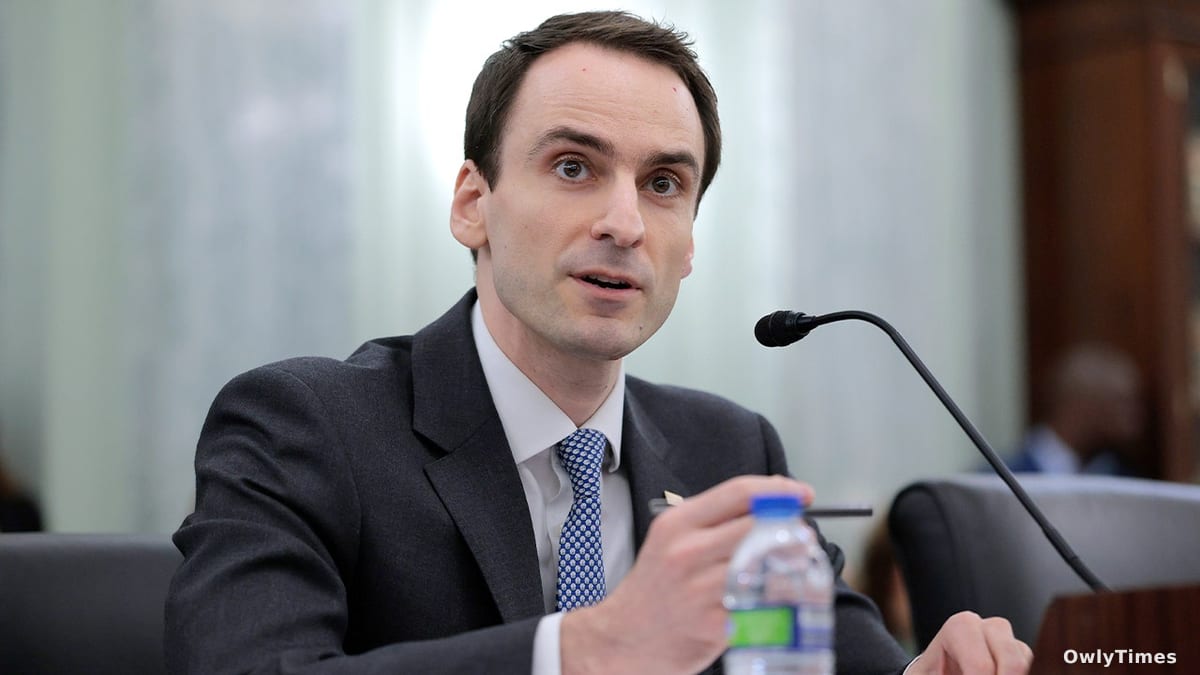
During an exclusive interview, Michael Kratsios, assistant to the president and director of the White House Office of Science and Technology Policy, laid out the administration’s multipronged approach. The core concern, as Kratsios explained to Tanvi Ratna, is the “divergence in AI adoption” – the widening chasm between countries that can afford to integrate AI and those that risk being left behind. This isn’t framed as a humanitarian crisis, but as a strategic vulnerability. A world bifurcated by AI capability isn’t a stable world, and the US intends to be on the leading edge of whichever world emerges.
Drawn from Fox News.
The centerpiece of this strategy is the American AI Exports Program, unveiled last July. It’s not simply about selling American-made AI products, though that’s certainly part of it. It’s about offering a complete package: technology, financing, and crucially, deployment support. For decades, developing nations were presented with a limited menu of options, often tied to specific geopolitical agendas. Kratsios argues this presented a “false choice.” The US is positioning itself as offering a third way – access to “trusted, best-in-class technology” without strings attached, or at least, strings that benefit American interests. This is a subtle but critical distinction. The program isn’t about charity; it’s about creating a global market dependent on American infrastructure.
The scale of the financial commitment is noteworthy. The administration is mobilizing resources through the U.S. International Development Finance Corporation, the Export-Import Bank, the Millennium Challenge Corporation, and even a new World Bank fund. This isn’t pocket change. It’s a deliberate attempt to overcome the biggest hurdle to AI adoption in the developing world: cost. As Kratsios pointed out, the “AI stack is expensive,” requiring significant investment in data centers, semiconductors, and power production – all tangible, resource-intensive components. The program acknowledges that AI isn’t just code; it’s a physical reality demanding real-world investment.
But the financial incentives are only half the equation. The creation of the U.S. Tech Corps, modeled after the Peace Corps, is arguably the more innovative – and potentially impactful – element. Sending American technologists to assist with AI implementation isn’t just about technical expertise; it’s about building relationships and fostering dependence. These “volunteers” will be on the ground, shaping how AI is integrated into everything from agriculture to healthcare, ensuring that the American approach becomes deeply embedded in the fabric of these nations. It’s a long-term investment in influence, disguised as humanitarian aid.
The emphasis on “AI sovereignty” is also revealing. The administration isn’t pushing for global governance of AI, but rather for nations to develop their own “sovereign infrastructure, sovereign data, sovereign models and sovereign policies.” This sounds empowering, but it’s carefully calibrated. The goal isn’t complete self-sufficiency, but rather “strategic autonomy alongside rapid AI adoption.” The implication is clear: build your own AI capabilities, but do it on top of the American AI stack. The National Champions Initiative, designed to integrate partner country technology companies into the American ecosystem, reinforces this point. It’s not about replacing the American stack, but about augmenting it – on American terms.
This approach represents a sharp departure from previous US policy, which Kratsios criticized for being overly restrictive and limiting opportunities for both partners and American companies. The Trump administration is betting that a more open, collaborative approach – one that prioritizes economic dynamism and mutual benefit – will ultimately strengthen American leadership in the AI space. The administration’s framing consistently avoids direct comparisons to China, but the subtext is unmistakable. This isn’t just about technological advancement; it’s about winning a geopolitical competition.
The focus on AI agents and interoperability, with the National Institute of Standards and Technology (NIST) leading the charge on developing unified standards, is a particularly forward-thinking element. The next wave of AI innovation will be driven by these autonomous systems, and controlling the standards that govern their communication and coordination will be crucial. It’s a preemptive move to shape the future of AI, ensuring that American technology remains at the forefront.
The success of this strategy hinges on execution. The financing mechanisms need to be streamlined, the Tech Corps needs to attract qualified personnel, and the National Champions Initiative needs to deliver tangible benefits to partner countries. But the underlying logic is clear: the US is leveraging its technological and economic power to establish a global AI ecosystem centered around American innovation. The question isn’t whether this will benefit the US – it almost certainly will. The real question is whether it will genuinely empower developing nations, or simply create a new form of technological dependence.
Watch for this: in the next 18 months, we’ll see a surge in US investment in AI infrastructure in key developing nations, particularly in India. The critical indicator won’t be the amount of money spent, but the degree to which those investments lead to genuinely independent AI capabilities, or simply reinforce reliance on the American AI stack. If the latter prevails, we’ll know this wasn’t about bridging the AI gap, but about widening the American lead.




