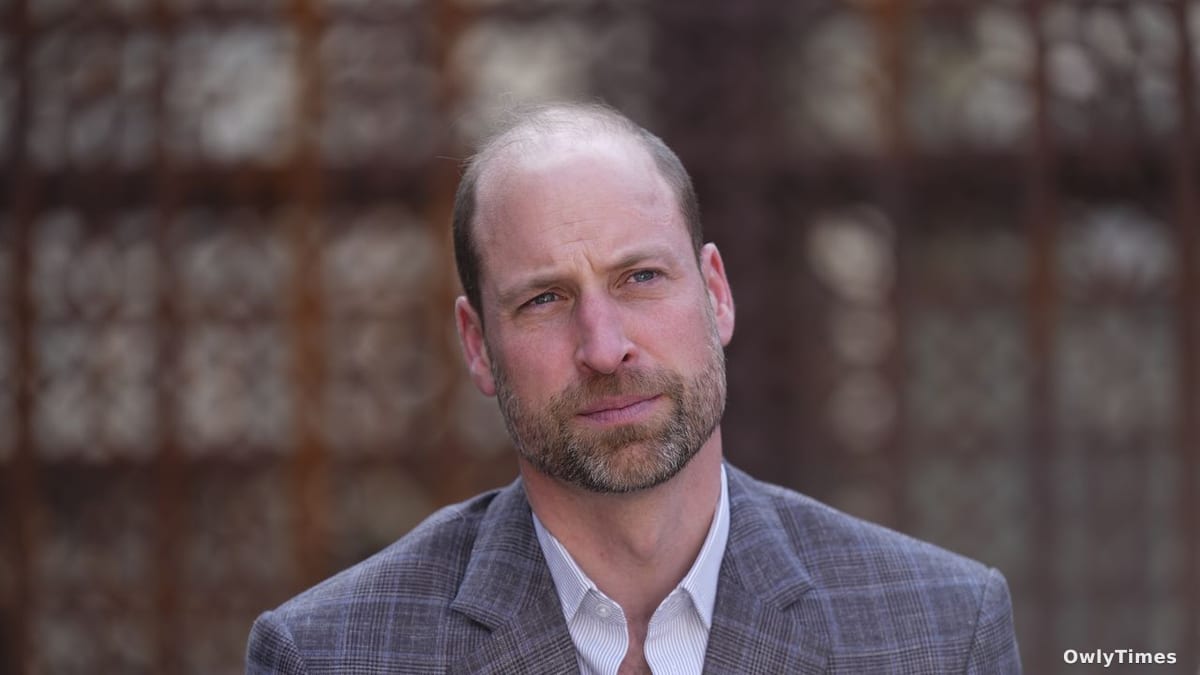

The increasing visibility of mental health struggles among high-profile figures isn’t simply a trend; it reflects a fundamental shift in how we understand emotional wellbeing, and crucially, how we talk about it. While headlines have focused on Prince William’s recent candid discussion of his own emotional journey on BBC Radio 1’s Life Hacks, the significance lies not just in what he said, but in how he said it, and the context of a broader, and increasingly urgent, public health conversation. The Prince’s openness isn’t a celebrity endorsement of therapy, but a carefully considered intervention into a cultural expectation of stoicism that demonstrably harms individuals, particularly men.
Prince William’s reflections, shared alongside rapper Professor Green, musician Guvna B, clinical director Allan Brownrigg of James’ Place, and a young man named Nathan, centered on the importance of self-awareness and emotional processing. He described a deliberate practice of “checking in with yourself and working out why you’re feeling like you do,” framing this not as a weakness, but as a sign of maturity. This is a nuanced point, and one often lost in simplified reporting. The Prince isn’t advocating for constant self-analysis, but for a periodic, intentional assessment of one’s emotional state – a practice he explicitly linked to recognizing that emotions are transient, “like clouds in the sky.” This acknowledgement of impermanence is a core tenet of many therapeutic approaches, offering a counterpoint to the tendency to become overwhelmed by difficult feelings. The discussion also touched on the vital role of fathers in modeling emotional literacy for their children, a point underscored by the shared experiences of the panel.
Based on the original vanityfair.com report.
The Prince’s willingness to discuss the impact of his time as a pilot for the East Anglian Air Ambulance between 2015 and 2017 is particularly revealing. He described a gradual realization that he was “carrying everyone’s emotional baggage,” a phenomenon known as vicarious trauma. This isn’t simply empathy; it’s the psychological toll of repeatedly witnessing suffering, and the tendency to suppress one’s own emotional response in a high-pressure environment. His admission that he initially downplayed the impact on his mental health, even to himself, is a powerful illustration of how easily trauma can be normalized, particularly within professions that prioritize resilience and composure. This resonates deeply with research on first responders and healthcare workers, who consistently report higher rates of PTSD and burnout. The Prince’s experience highlights the importance of acknowledging the emotional cost of caregiving, even – and perhaps especially – when providing that care is considered a duty.
The timing of this conversation is critical. The Royal College of Psychiatrists has described a “silent mental health pandemic” in England, with 4.1 million people, including 1.2 million children and adolescents, in contact with mental health services as of 2024/25 – a 56% increase in eight years. More alarmingly, suicide was the leading cause of death among young men aged 20 to 34 in England and Wales in 2024, a statistic Prince William rightly called “a real national catastrophe.” This isn’t simply a matter of increased awareness; it’s a demonstrable crisis demanding systemic solutions. The Royal Foundation’s £1 million investment in a new national suicide prevention network, led by Professor Ann John, is a concrete step, but the network’s stated goal of investigating root causes and building more accessible support systems acknowledges the complexity of the problem. Simply increasing access to existing services isn’t enough; we need to understand why so many individuals are reaching a point of crisis.
However, limitations to consider exist. While Prince William’s advocacy is undoubtedly valuable, it’s crucial to remember the inherent power dynamics at play. His position affords him access to resources and platforms unavailable to most. The effectiveness of his message hinges on translating that visibility into tangible improvements in mental health services and a reduction in societal stigma, particularly for those from marginalized communities who face additional barriers to care. Furthermore, the very nature of royal communication – carefully managed and often focused on broad messaging – may limit the depth of engagement with specific mental health challenges. The parallel efforts of Prince Harry, who has been more openly critical of the institutional structures that contributed to his own struggles, and his current legal action against social media companies regarding their impact on youth mental health, offer a contrasting approach, and highlight the ongoing tensions within the family regarding how best to address these issues.
Looking ahead, the crucial next step isn’t simply more awareness campaigns, but rigorous evaluation of interventions. We need to know which programs are demonstrably effective in reducing suicide rates and improving mental wellbeing, and which are simply well-intentioned but ultimately ineffective. Specifically, researchers should focus on identifying the early warning signs of suicidal ideation in young men, and developing targeted interventions that address the specific factors contributing to their distress. Will the new national suicide prevention network prioritize data collection and outcome measurement, or will it primarily focus on expanding existing services without a clear understanding of their impact? The answer to that question will determine whether this moment of heightened awareness translates into meaningful change, or remains simply another fleeting trend.