
Why are we so obsessed with digitizing the ghosts of our gaming past? The real story here isn’t just the nostalgia-fueled resurrection of a 1995 arcade title—it’s the fundamental shift in how "perfect" software is now defined by the quality of the invisible cables connecting us.
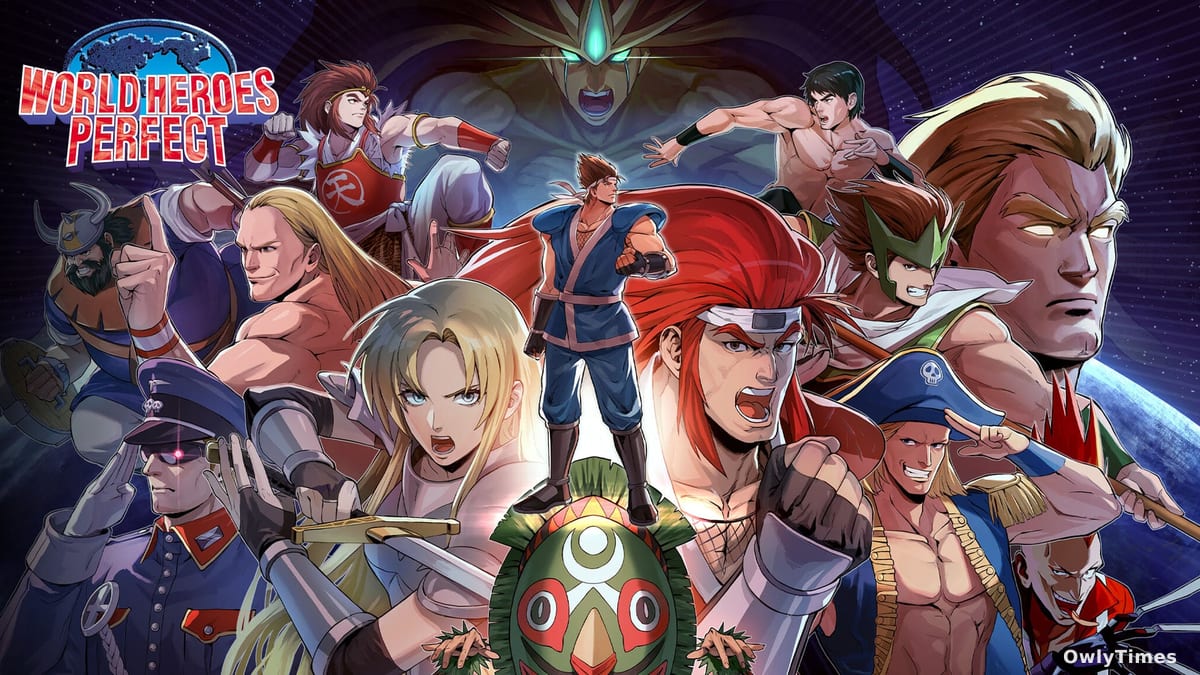
SNK has officially announced that World Heroes Perfect, the final entry in its legendary fighting game series, is headed to Steam as part of its “NEO GEO Premium Selection.” While the industry often treats legacy titles as static museum pieces, this release treats the 1995 source code as a living framework, retrofitting it with infrastructure that didn't exist when the game first hit cabinets.
The Architecture of Modern Competition
The headline feature here is the integration of rollback netcode. For the uninitiated, playing an old fighting game online used to feel like trying to have a conversation while someone repeatedly pulls the plug on your phone line. Rollback technology solves this by predicting player inputs and correcting them on the fly, effectively smoothing over the jagged reality of internet latency.
This isn't just a minor technical patch. By pairing this with nine-player lobbies and robust tournament modes, SNK is acknowledging that the value of a 29-year-old game is no longer in the code itself, but in the community's ability to compete without the interference of lag. If the game’s original 1995 release was about the spectacle of the local arcade, this Steam version is about the democratization of high-level play.
Mastering the Mechanics of 19 Fighters
The roster includes all 19 characters, a total that notably includes previously restricted hidden bosses like Zeus, NEO-DIO, and Son Goku. It is a rare instance of a publisher unlocking a vault that has been partially boarded up since the mid-nineties.
However, the addition of a comprehensive Practice Mode—complete with hitbox displays and speed adjustments—changes the stakes for the player. In the original arcade iteration, you learned by losing quarters. In this version, you learn by analyzing frame data. It transforms a game once defined by its eccentric picks like Rasputin and Mudman into a disciplined laboratory for mastery, powered by the game's signature Hero Gauge system.
Performance as the Ultimate Metric
We are seeing a trend where classic gaming is being measured not by how well it emulates the past, but by how well it survives the transition to modern hardware. The inclusion of a Gallery Mode and achievement support signals that this is intended for a persistent ecosystem, not a quick, one-off download.
The success of this endeavor will hinge on how the community perceives the implementation of these modern features against the backdrop of the original game's engine. The next reading of the player sentiment within the Steam community hub will show whether these technical upgrades provide the stable, responsive experience required to justify the "Perfect" moniker in a modern, hyper-competitive landscape.