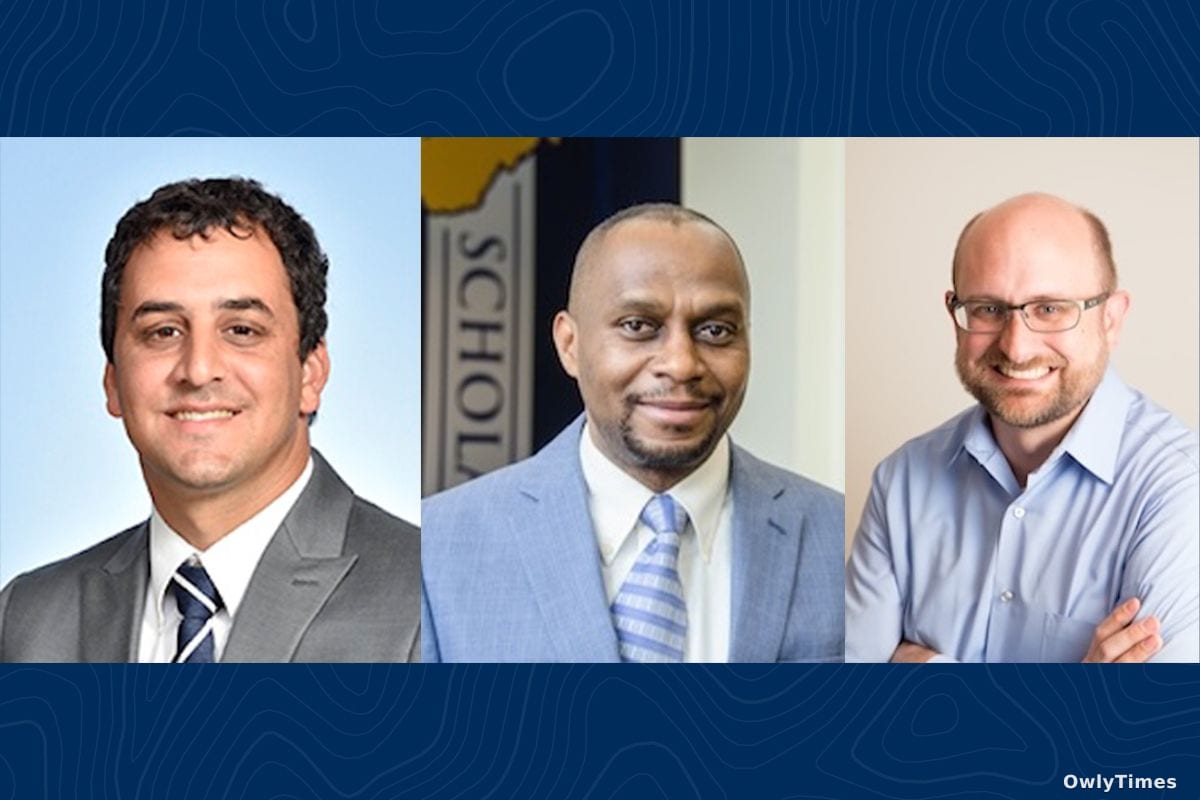

The pursuit of "creative research"—a standard that demands both intellectual rigor and tangible societal impact—is the benchmark for the 2025-26 Benedum Distinguished Scholars. Selected by the Claude Worthington Benedum Foundation, this year’s honorees represent a cross-section of inquiry that spans the molecular mechanics of oncology, the mathematical architecture of artificial intelligence, and the sociological complexities of religious life in America. As Interim Provost and Vice President for Academic Affairs Paul Kreider noted, these selections are intended to reflect the highest ideals of discovery, yet the true weight of these awards lies in the sustained, multi-year labor behind each recipient’s portfolio.
Decoding the Immunological Fortress of Cancer
For Brian Boone, an associate professor of surgical oncology, the recognition highlights a critical shift in how we approach pancreatic cancer. The medical challenge here is that pancreatic tumors create a highly immunosuppressive environment, effectively cloaking themselves from the body’s natural defenses and conventional therapies. Boone’s research has specifically interrogated neutrophil extracellular traps—web-like structures released by immune cells that paradoxically aid tumor progression by increasing fibrosis and suppressing immune responses.
The study findings suggest that these traps are not merely biological debris but active drivers of metastasis and treatment resistance. In collaboration with Slawomir Lukomski, a professor in the Department of Microbiology, Immunology and Cell Biology, Boone has moved beyond observation to intervention, utilizing engineered bacteria to deliver proteins that block these trap formations. While the data from animal models shows a reduction in tumor growth, it is crucial to distinguish this from clinical success; the transition from these promising lab-based models to human application remains the primary hurdle for the next phase of his work. Boone’s research, supported by a $2.25 million grant from the Lustgarten Foundation, signals a move toward more precise, biologically informed surgical and therapeutic strategies.
The Architectural Foundations of Modern AI
In the realm of physical sciences and technology, Donald Adjeroh is being honored for work that predates the current generative AI boom but remains central to its functionality. His contributions to transfer learning—the ability of an AI system to apply knowledge gained in one domain to another—and the development of adversarial autoencoders provide the mathematical scaffolding for tools like ChatGPT and Gemini. Unlike the common perception that AI progress is a recent phenomenon, Adjeroh’s career illustrates a long-term trajectory of foundational development.
His work extends into the practical application of machine learning within digital health, where he has pioneered methods to measure health and aging that move beyond the limitations of the body mass index. With his research cited over 4,000 times since 2021 and his involvement in over $11 million in competitive research grants, Adjeroh’s career highlights the bridge between abstract computational theory and concrete clinical utility. The limitation here is the pace of technological adoption; while his methods offer superior metrics, the integration of such advanced data representations into routine medical practice remains dependent on regulatory and institutional shifts.
Mapping the Intersection of Faith and Science
Chris Scheitle, a professor of sociology, provides a distinct lens on contemporary society by investigating the often-fraught relationship between religion and scientific progress. His work, which has secured over $3.6 million in grants, including multiple awards from the National Science Foundation, quantifies the tension between the necessity for security in places of worship and the impulse toward communal openness. Scheitle is ranked in the top one percent of social scientists for productivity, having published over 100 peer-reviewed articles.
His research into religious discrimination and victimization has transitioned from academic theory to public discourse, appearing in outlets ranging from Nature to USA Today. While his metrics indicate high scholarly impact and productivity, the next steps for his research will involve assessing how these documented social dynamics shift as public attitudes toward both institutional religion and scientific authority continue to evolve in real-time.
Each scholar will receive a $5,000 professional development honorarium and will be formally recognized at a reception at Blaney House this April. The ongoing trajectory of their respective fields will be measured by the successful translation of Boone’s microbiome therapies into clinical trials, the continued scaling of Adjeroh’s AI health models, and the longitudinal data collected on religious bias, which will serve as the next indicator of how these societal tensions are shifting.





