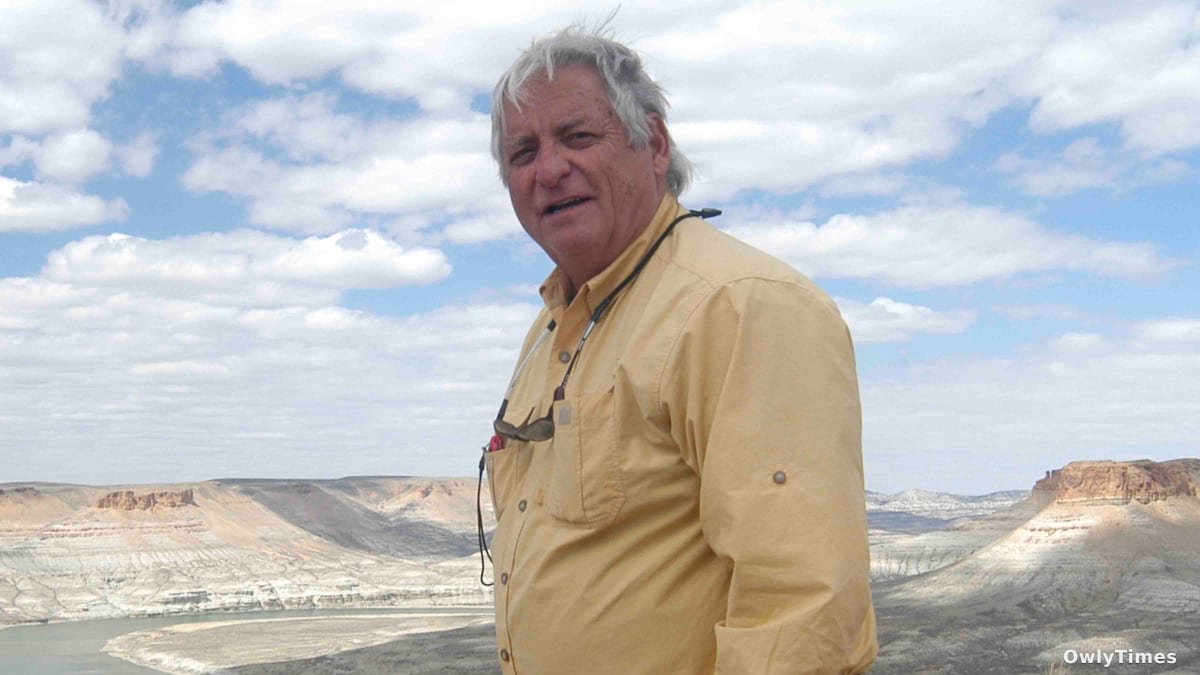

The escalating cost of political access in Wyoming isn’t a story about inflation; it’s a story about the changing calculus of power and who can afford to buy a seat at the table. The seemingly quirky detail of a 2002 gubernatorial candidate distributing 10,000 rebranded Snickers bars – “Sniffin Bars,” as they were known – reveals a fundamental truth about Wyoming politics: it’s always been intensely personal, and increasingly, prohibitively expensive. While Bill Sniffin’s candy-fueled campaign cost roughly $10 per vote, the current landscape, evidenced by the 2022 House primary, demands over $163 per vote, a tenfold increase in just four election cycles. This isn’t simply about rising campaign costs; it’s about the commodification of access in a state defined by vast distances and a small electorate.
Wyoming’s unique political geography – 580,000 people spread across 97,000 square miles, equating to one person per seven square miles – dictates a campaign strategy rooted in direct engagement. As Sniffin notes, you “don’t just advertise, you show up. Everywhere.” This necessitates a level of personal outreach that is inherently costly, but the recent trajectory suggests something more systemic is at play. The shift from a $10 per vote environment in 2002, where Eli Bebout secured victory with $400,000 and 44,417 votes, to Liz Cheney’s $163 per vote in 2022, despite losing to Harriet Hageman, demonstrates a willingness to spend exponentially more to achieve the same, or even diminished, returns. Who benefits and who loses in this scenario? Clearly, established donors and those with pre-existing wealth benefit, while genuine grassroots challengers are increasingly priced out of contention.
The 2022 U.S. House primary serves as a stark case study. Hageman’s $4 million war chest, bolstered by Donald Trump’s endorsement, was dwarfed by Cheney’s $13 million expenditure. While Cheney ultimately failed to retain her seat, her willingness to spend $8 million on 49,000 votes – and her father, Dick Cheney’s, campaign appearances for Democrat Kamala Harris – underscores the degree to which ideological battles are now fought with financial firepower. This echoes historical precedents, though on a smaller scale. Consider the “Cross of Gold” speech by William Jennings Bryan in 1896, a populist appeal funded by relatively modest sums compared to today’s standards, yet it fundamentally reshaped the Democratic Party. Today, the equivalent requires a multi-million dollar investment just to gain a foothold. The willingness of Cheney to deploy such resources, even in defeat, signals a new era where simply having a message isn’t enough; you must be able to amplify it through sheer financial force.
This article draws on reporting from cowboystatedaily.com.
The increasing cost of campaigning isn’t merely a Wyoming phenomenon, but the state’s small size and concentrated power dynamics make it particularly acute. The dominance of the Republican party, turning the August primary into the decisive election, further exacerbates the issue. This creates a closed system where access is largely determined by existing networks and financial capacity. Foster Friess’s $90 per vote in 2018, and Sam Galeotos’s staggering $137 per vote, demonstrate that even significant investment doesn’t guarantee success. The implication is that money is becoming a necessary, but not sufficient, condition for victory. This trend raises serious questions about the future of representative democracy in Wyoming, and whether the voices of ordinary citizens are being drowned out by the din of big money.
Looking ahead to the 2026 elections, the critical question isn’t simply who will run, but who can afford to run a viable campaign. The political chess move to watch is whether a candidate emerges who can successfully leverage a small-dollar donor base to offset the advantages enjoyed by well-funded opponents. Can a challenger replicate the grassroots energy of figures like Bernie Sanders on the Wyoming plains? Or will the state continue to be governed by those who can write the biggest checks? The answer will reveal whether Wyoming’s political landscape is truly open to all, or increasingly reserved for the financially privileged.





