
Is the future of gaming just…more? More games, more updates, more choices, all flooding the same subscription services? This Tuesday’s Xbox Game Pass drop feels less like a curated selection and more like a firehose aimed at your free time. While the sheer volume is impressive – and undeniably attractive to the average gamer – the real story here isn't the quantity of titles arriving, it’s the increasingly blurred line between ownership, access, and the very definition of a “new” game.
Today brings Aerial_Knight’s DropShot, a high-speed FPS/racer with a delightfully bizarre premise – a protagonist bitten by a radioactive dragon. It also delivers Avatar: Frontiers of Pandora, finally available on Game Pass after a somewhat lukewarm initial reception, now bolstered by a third-person perspective update. And let’s not forget Avowed, receiving a substantial year-one update package. These aren’t necessarily bad games, but they represent a trend: titles arriving on Game Pass not as exclusive premieres, but as additions to an already crowded ecosystem, often with significant post-launch patching and feature additions. The promise of a polished, complete experience at launch feels increasingly distant.
Reporting from news.xbox.com informs this analysis.
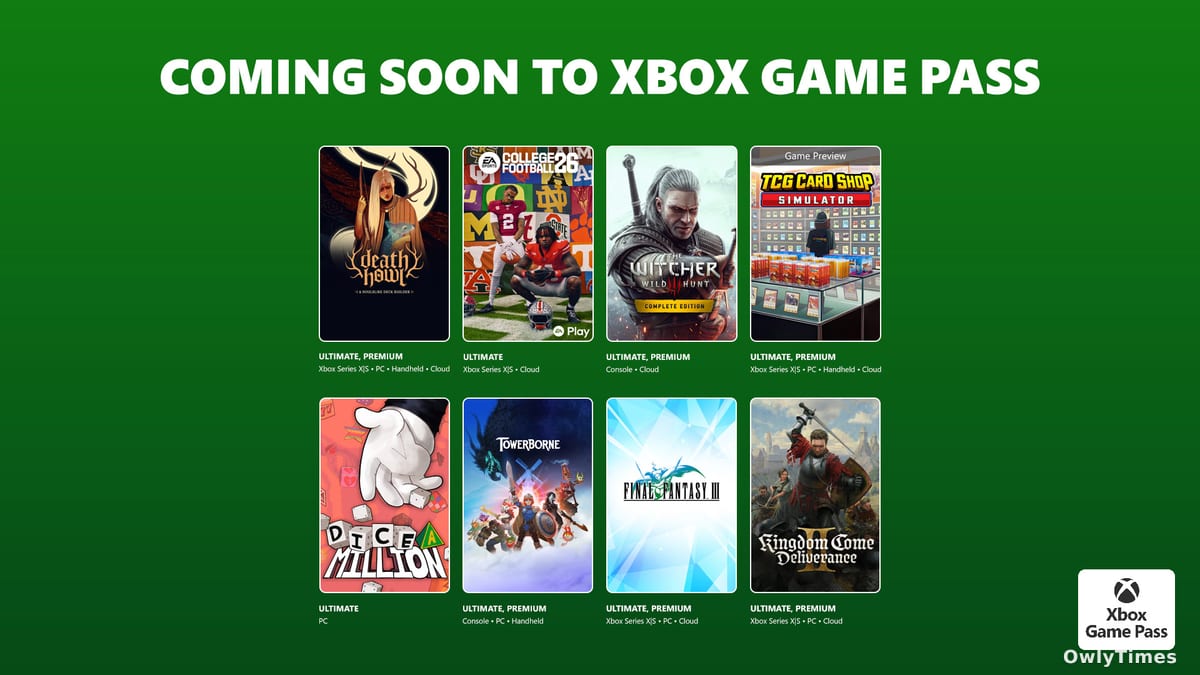
The upcoming additions further illustrate this point. EA Sports College Football 26 is a massive draw, promising 136 FBS schools and 10,000 athletes. But it’s arriving on The Play List, meaning access is tied to an existing EA Play subscription within Game Pass Ultimate. It’s layers of subscription upon subscription, a model that benefits publishers and Microsoft, but leaves the consumer navigating a complex web of access rights. The 10% discount on EA digital purchases feels less like a perk and more like a nudge towards further spending within the ecosystem. This isn’t about owning the game; it’s about maintaining access.
Then there’s the curious case of Towerborne. Launching as a “complete game” after a prolonged preview period, it’s essentially a re-release of a game players have already been sampling. The developers tout more story, areas, and enemies, but the core question remains: why wasn’t this content present at the initial launch? This practice, while not unique to Game Pass, is becoming increasingly common. Games are shipped as “early access” or “preview” titles, then repackaged as full releases, effectively charging players twice for the same core experience. The industry is leaning into iterative development, but the consumer is footing the bill for the iteration.
The departures, announced at the end of the list – Monster Train, Expeditions: A MudRunner Game, Injustice 2, and Middle Earth: Shadow of War – are a stark reminder of the ephemeral nature of Game Pass. These titles aren’t being “removed” in the traditional sense; they’re simply reverting to their pre-subscription status, requiring a separate purchase to continue playing. This creates a constant sense of urgency, a fear of missing out, that subtly encourages players to prioritize quantity over quality. You’re not building a library; you’re renting access.
Even the inclusion of established titles like The Witcher 3: Wild Hunt – Complete Edition and Diablo II: Resurrected feels less like a celebration of gaming history and more like a strategic move to bolster the perceived value of the subscription. These are games you likely already own, or have at least considered purchasing. Their presence on Game Pass isn’t necessarily a compelling reason to subscribe, but it does add to the overall impression of abundance. The constant influx of content is designed to drown out the nagging questions about long-term value.
The updates to Overwatch and the inclusion of relaxing titles like Microsoft Mahjong demonstrate a broadening of Game Pass’s appeal. It’s no longer solely focused on AAA blockbusters; it’s attempting to become a one-stop shop for all gaming needs, from competitive shooters to casual puzzle games. This is a smart move, but it also reinforces the idea of gaming as a service, rather than a hobby.
Looking ahead, expect to see even more games arriving on Game Pass after their initial release, often with significant updates designed to entice subscribers. The trend of “preview” games being repackaged as full releases will likely continue, and the subscription model will become even more complex, with tiered access levels and bundled services. The question isn’t whether Game Pass will remain popular – it almost certainly will. The question is: will players eventually realize they’re paying for access, not ownership, and will that realization fundamentally change the way we consume games? I predict that by the end of 2024, we’ll see a significant backlash against subscription fatigue, with players actively seeking out games they can own outright, even if it means paying a higher upfront cost. The pendulum will swing back, but not before the industry has fully exploited the convenience of the all-you-can-eat model.