
The Security Calculus in Yemen: Beyond Politics, a Fragile Order
The recent shifts in southern Yemen aren’t about political negotiations; they’re about a fundamental re-ordering of power based on who controls the guns. While diplomatic efforts continue, the decisive factor determining Yemen’s trajectory is now security control and the painfully slow process of unifying fractured military commands. The January 3, 2026, dissolution of the Southern Transitional Council (STC) in Hadhramaut and al-Mahra wasn’t a political victory, but a symptom of a deeper strategic recalibration – one driven by the escalating rivalry between Saudi Arabia and the United Arab Emirates. This isn’t a civil war being negotiated to an end; it’s a complex security architecture being painstakingly, and precariously, rebuilt.
Who benefits and who loses from this shift? Initially, the internationally recognized government in Aden appears to gain, theoretically consolidating its authority. However, this “gain” is entirely dependent on its ability to overcome the deeply entrenched networks of power that predate and outlast any political decree. The real beneficiaries are likely Saudi Arabia, seeking a stable buffer state along its southern border, and, paradoxically, the UAE, which despite accusations of continued support for the STC, maintains significant influence through the units it previously funded and trained. The losers are the Yemeni people, caught in a protracted period of instability, and any faction hoping for a swift, decisive political resolution. The STC itself, despite formally dissolving its presence in some areas, remains a potent force, its fighters redeployed or simply unaccounted for, a latent threat ready to be reactivated.
Original reporting: Al Jazeera.
This situation echoes the post-colonial struggles across the Middle East and Africa, where the imposition of state authority often failed to eclipse pre-existing tribal, regional, and externally-backed power structures. Consider Lebanon in the 1980s, where successive attempts to build a centralized army were consistently undermined by the strength of sectarian militias. Or Somalia in the 1990s, where the collapse of central authority led to the rise of warlords and a fragmented security landscape. Yemen is following a similar pattern, where the absence of a strong, unified state has allowed a patchwork of armed groups to flourish, each with its own agenda and external backers. The current government’s attempts at integration – relying on redeployment rather than decisive action – are a clear indication of this fragility.
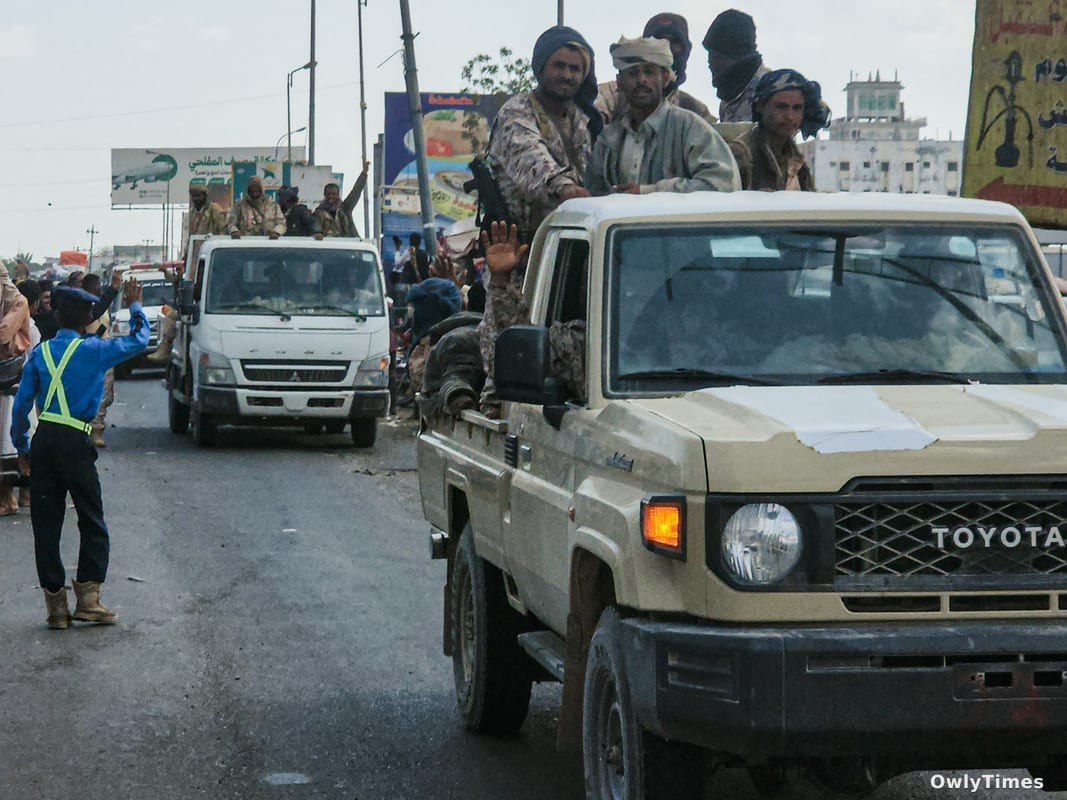
The complexity is further compounded by the uneven security control across the southern governorates. In Aden, the temporary capital, the situation is particularly opaque. Units formerly linked to the STC have seemingly vanished, been renamed, or been shuffled around, but the underlying networks of influence remain intact. This isn’t a dismantling of power; it’s a reshuffling, a calculated attempt to rebalance forces without triggering open conflict. Similar patterns are emerging in Lahij, Abyan, Dhale, Shabwah, and Hadhramaut, where the state’s authority is tenuous and coordination between official forces and emergent formations is limited. The integration of these formations into the Ministries of Defence and Interior is stalled by practical challenges – differing funding sources, political loyalties, and fears of losing local influence – but also by a fundamental lack of trust.
The regional dimension is critical. Saudi Arabia’s view of Yemen as vital to its national security is unwavering, and its accusations against the UAE – specifically, continued support for the STC – highlight the depth of the rift. This Saudi-Emirati dispute isn’t merely a bilateral issue; it’s playing out on Yemeni soil, exacerbating existing tensions and hindering any genuine progress towards stability. Yemen is now inextricably linked to broader Red Sea dynamics, competition for influence in the Horn of Africa, and the wider geopolitical struggles stretching across the Gulf. The United States, recognizing the potential for a security collapse to trigger intra-Gulf conflict or threaten international shipping, is keen to maintain a degree of control, but its leverage is limited.
The government’s current strategy – consolidating security control in Aden and Hadhramaut while gradually integrating military units – is a calculated gamble. It’s a slow, incremental approach designed to avoid reigniting conflict, but it’s also vulnerable to disruption. The key political chess move to watch next isn’t a peace conference or a political agreement, but the fate of the STC’s remaining forces. Will they be fully integrated, neutralized, or remain a shadow army, poised to exploit any weakness in the government’s security apparatus? The answer to that question will determine whether Yemen moves towards a fragile stability or plunges back into a new cycle of violence.





