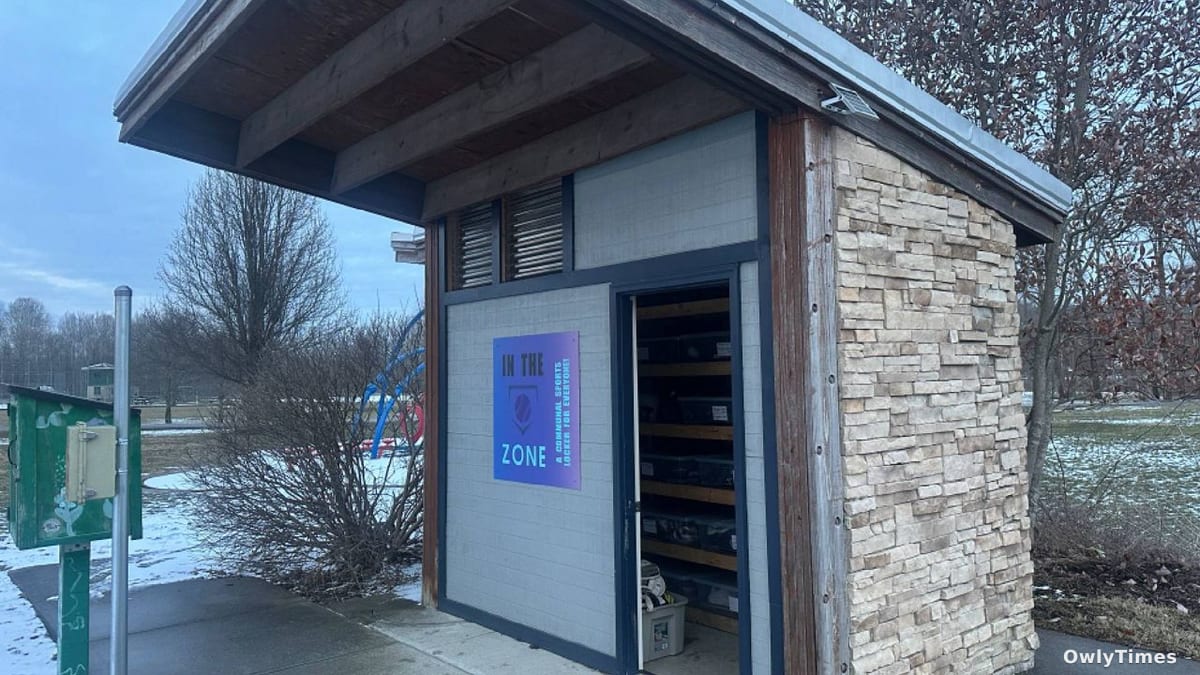

The chipped paint on the shed barely registers against the vibrant green of Granville’s park, but on Saturday mornings, it’s the epicenter of a quiet revolution. Before the official start time, families gather, not for a game, but for access – access to a chance. Adam Schmidt, a sophomore at Granville High School, didn’t set out to challenge the economics of youth sports, but that’s precisely what he’s doing with “In the Zone,” a self-serve shed brimming with donated equipment. It’s a simple solution to a rapidly escalating problem, and a potent reminder that the barriers to entry in youth athletics are often less about skill and more about a family’s bottom line.
The numbers are stark. A recent national survey reveals the average family now spends just over $1,000 on a child’s primary sport in 2024 – a nearly 50% jump from the $679 average reported in 2019. This isn’t just about travel teams and specialized coaching; it’s the cost of cleats, bats, protective gear, and uniforms that are increasingly pricing kids out of the game. The survey also found that roughly half of all adults with experience in youth sports, either as participants or parents, have struggled to afford the associated costs. This isn’t a niche issue; it’s a growing crisis that threatens to exacerbate existing inequalities, limiting opportunities for children from lower-income families. Schmidt’s initiative, born from observing teammates without proper equipment during tryouts, directly confronts this reality.
This article draws on reporting from spectrumnews1.com.
“Every year at, like, tryouts or whatever, there’s always kids who don’t have equipment,” Schmidt explained, a casual observation that sparked a remarkably proactive response. He didn’t wait for a systemic fix; he built his own. Securing a $1,400 Change-Maker grant, he and his father, Mike Schmidt, repurposed an existing structure in the park, transforming it into a haven for affordable access. “The frame for the shed was here,” Mike Schmidt said, emphasizing the resourceful nature of the project. “It was a utilized part of the park, and we were able to repurpose it and bring it to life with the Granville District Partnership.” This isn’t just about providing equipment; it’s about community collaboration and recognizing existing resources.
What’s particularly striking about “In the Zone” is its simplicity. It operates on an honor system – families take what they need and leave the door secured. Schmidt estimates over 100 families have already benefited this spring alone, with a consistent stream of hopefuls waiting before opening hours. The inventory has expanded beyond the initial focus on baseball and softball to include lacrosse, soccer, and even hockey equipment, demonstrating the broad need within the community. Beyond the immediate financial relief, the shed also addresses a growing environmental concern. By diverting used equipment from landfills, Schmidt’s project promotes sustainability alongside accessibility. It’s a double win, a model of responsible consumption that resonates with a generation increasingly aware of its ecological footprint.
But the true measure of “In the Zone’s” success isn’t in the numbers of cleats distributed or the dollars saved. It’s in the smiles Schmidt witnesses. “The kids that I do meet, that come they’re I, I just love seeing the smile on their face when they’re able to find that right glove or find the cleats that fit them,” he said. “And it just brings me so much joy knowing that my project did something for the community.” This is a story about more than just sports equipment; it’s about the fundamental right to play, to experience the camaraderie and discipline that organized athletics can offer. As youth sports continue to become increasingly commercialized and exclusive, will we see more grassroots initiatives like “In the Zone” emerge as vital safety nets? Or will the joy of the game remain out of reach for a growing number of children? That’s the question leagues, schools, and communities need to be asking themselves now.