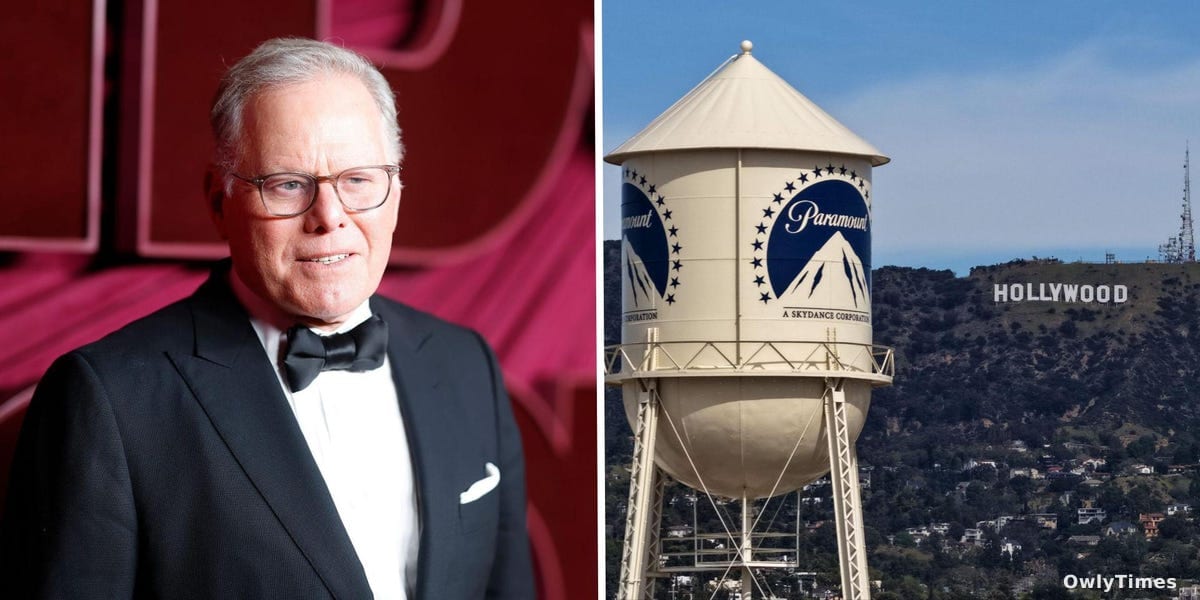

$81 billion is the price tag attached to a media merger that feels less like strategic positioning and more like a frantic scramble for relevance. Warner Bros. Discovery (WBD) is now poised to be acquired by Paramount Global, a deal initially dismissed as a secondary bid, but one that ultimately trumped a previously favored agreement with Netflix. Follow the money, and a clear picture emerges: the streaming wars are escalating, and scale is rapidly becoming the sole determinant of survival, even if that means a jarring shift in strategy for David Zaslav and his team.
The speed of the reversal is what’s truly striking. Just months ago, WBD had tentatively agreed to sell its studio and HBO assets to Netflix for $27.75 per share. Then, in December, Ellison’s Paramount launched a counter-offer of $30 per share for the entire company, including its cable networks, sweetened with a “ticking fee” of 25 cents per share per quarter until the deal closed – a financial pressure tactic that ultimately worked. Now, Paramount’s final bid stands at $31 a share, valuing WBD at $81 billion. This isn’t organic growth; it’s a forced consolidation driven by the realization that individual streamers are losing ground to the giants. Consider the numbers: YouTube, backed by Alphabet’s $402 billion in revenue, now commands 12.5% of US TV streaming viewership, dwarfing WBD’s 1.4% and Paramount’s 2.3% as of January. Even combined, the two represent a fraction of the market share held by Netflix (8.8%).
Reporting from Business Insider informs this analysis.
Zaslav himself acknowledged the abruptness of the shift, describing the transition to the Paramount deal as “whiplash-y” during a town hall meeting with WBD employees. This candid admission isn’t just a matter of internal morale; it reveals a fundamental tension. WBD was initially seeking a strategic partner to offload assets and focus on its core content, as evidenced by the Netflix negotiations. Paramount’s bid, encompassing the entire company, represents a complete change of course, a bet on synergistic scale rather than focused streamlining. Bruce Campbell, WBD’s chief revenue and strategy officer, framed the decision as a legal obligation to maximize shareholder value, but the underlying reality is a desperate attempt to avoid being outmaneuvered in a rapidly consolidating market.
The implications extend beyond subscriber numbers and revenue. The deal raises significant regulatory hurdles, a process Zaslav estimates could take six to 18 months. A $7 billion breakup fee awaits Paramount should regulators block the merger, a substantial risk that underscores the high stakes involved. Furthermore, the political landscape is unexpectedly turbulent. Donald Trump’s public commentary regarding Netflix board member Susan Rice, and his positive remarks about David Ellison, suggest a potential, albeit unpredictable, influence on the regulatory review process. This isn’t a purely business decision; it’s operating within a complex web of political considerations. WBD’s board also warned shareholders of potential employee departures due to planned $6 billion in cost savings under Paramount, compared to Netflix’s proposed $2-3 billion – a clear indication of the aggressive restructuring likely to follow.
What this means for your wallet is a likely increase in subscription bundling and a continued pressure on content costs. While the merger promises a broader content library – combining HBO Max and Discovery+ with Paramount+, Pluto TV, and BET+ – it also signals a future where consumers have fewer independent choices and are increasingly reliant on mega-corporations. The question now isn’t if this deal will close, but how Paramount will integrate WBD’s assets, and whether the promised synergies will outweigh the inevitable disruptions. Investors should watch closely for the details of the integration plan, particularly regarding CNN’s role within a combined news division alongside CBS News, and the extent of the promised cost savings – because those savings will almost certainly translate into fewer jobs and potentially, a less diverse content landscape.





