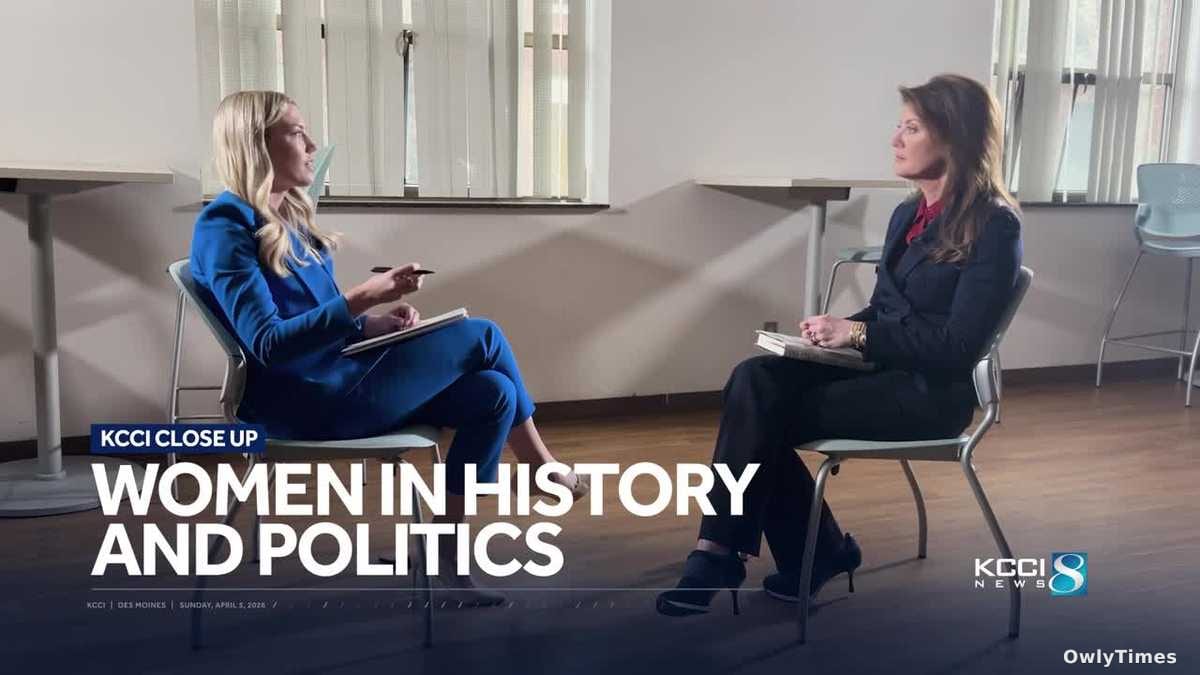

The surge in attention to women’s historical contributions, as highlighted by KCCI’s “Close Up” and Norah O’Donnell’s “We the Women,” isn’t a spontaneous awakening of civic virtue. It’s a calculated move to reshape the narrative of American power, and by extension, the calculus of future elections. The fact that only 15% of U.S. history taught in schools focuses on women isn’t a historical oversight; it’s a sustained strategic choice with clear beneficiaries and losers. For decades, a selective historical record reinforced existing power structures, and the current push to rectify that imbalance is a direct challenge to those structures.
The core tension revealed in the KCCI segment, and amplified by Kelly Winfrey of Iowa State University, is the gap between educational attainment and political representation. Women have demonstrably “crashed through the educational glass ceiling,” yet parity in politics, business, and finance remains elusive. This isn’t simply a matter of individual achievement; it’s a systemic issue. The historical underrepresentation, as O’Donnell details, creates a self-perpetuating cycle where a lack of visible role models discourages future female leadership. The benefit accrues to those who have historically held power – a demographic that has consistently benefited from a historical narrative centered on their accomplishments.
Source material: kcci.com.
The shift towards increased Republican women in Iowa politics, as Winfrey notes, is a particularly revealing development. The historical pattern of women candidates largely identifying as Democrats stemmed from voter demographics. The current increase in Republican women isn’t necessarily a wholesale ideological shift, but a strategic adaptation by the party to broaden its candidate pool and counter accusations of exclusionary practices. This mirrors a broader trend observed after the 1990s, where both parties began actively recruiting women, recognizing their potential as a voting bloc and as candidates. The beneficiaries here are the Republican party, seeking to diversify its base and appeal to a wider electorate, and the women themselves, gaining access to previously limited opportunities. The potential loser is the Democratic party, if it fails to maintain its historical advantage in attracting female candidates.
The obstacles women face when running for office, as outlined by both Winfrey and O’Donnell, aren’t merely logistical. The pervasive “qualifications gap” – where women consistently underestimate their own preparedness compared to their male counterparts – is a deeply ingrained psychological barrier. This is compounded by the documented sexism and harassment experienced by female candidates, particularly at higher levels of competition. This dynamic echoes historical precedents. Throughout American history, women challenging established norms have faced systemic opposition, from the suffragists battling for the right to vote to contemporary female politicians navigating a hostile political climate. The parallel is stark: the tactics may evolve, but the underlying resistance to female leadership remains. The historical precedent of the 1913 protest, as highlighted by O’Donnell, demonstrates that the fight for equal representation is a century-long struggle.
The 2026 midterm elections in Iowa, with open seats for Governor and U.S. Senate, represent a critical test of this evolving dynamic. The fact that Ashley Hinson is vying for the Republican Senate nomination signals a potential “woman-for-woman” trade, a scenario that could reshape the political landscape. However, the key question isn’t simply who runs, but how gender plays into the issues. As Winfrey points out, economic issues, childcare, and reproductive rights disproportionately impact women, and candidates who effectively address these concerns will likely gain an advantage. The political chess move to watch isn’t whether more women run, but whether the parties will strategically leverage gender dynamics to mobilize voters and frame the debate around issues that resonate with female constituents. Will the parties prioritize recruitment and support for female candidates, or will they revert to traditional strategies that perpetuate existing inequalities? The answer will reveal a great deal about the future of political power in Iowa, and beyond.





