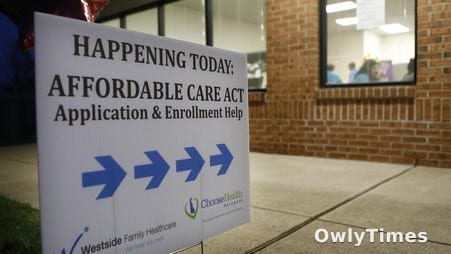

The quiet expiration of temporary federal healthcare subsidies at the end of 2023 isn’t just a matter of rising premiums; it’s creating a patchwork of financial consequences across the country, and a surprising number of Americans are facing a penalty for simply going without insurance. While the Affordable Care Act’s individual mandate was effectively neutered at the federal level in 2019, five states – California, Massachusetts, New Jersey, Rhode Island, and Washington, D.C. – continue to enforce financial penalties for lacking health coverage. This isn’t a resurgence of the ACA as it was originally conceived, but a localized attempt to maintain a stable insurance pool, and the implications are far-reaching for individuals and state budgets alike.
The Logic Behind the Penalties: Risk Pools and Costs
The core principle driving these state-level penalties is the concept of “shared responsibility.” The idea, as articulated by many proponents of the ACA, is that a broad and diverse insurance pool – including healthy individuals – is essential to keeping healthcare costs manageable for everyone. When healthy people opt out, the risk is concentrated among those with pre-existing conditions or chronic illnesses, driving up premiums. These penalties are designed to incentivize participation, even if the cost of insurance itself feels prohibitive. Kiersten DeFluri, a Medicare specialist at Daniel A. White & Associates, succinctly puts it: “The penalties can be pretty steep.” But the actual cost varies dramatically depending on where you live.
Reporting from USA Today informs this analysis.
A State-by-State Breakdown of Financial Burdens
The penalties aren’t uniform. California, for example, will assess a penalty of $950 per adult or 2.5% of gross income – whichever is higher – for each month an individual lacks coverage in 2025. For a family of four, this could easily exceed $2,850 annually. New Jersey’s penalties are income-based, ranging from a minimum of $695 per adult to a maximum of $4,908 per month, depending on income. Massachusetts and Washington, D.C., also employ complex formulas tied to income and the cost of available plans. Rhode Island offers a flat fee of $57 per month per adult. It’s crucial to understand that these aren’t simply arbitrary fines; they’re calibrated, in each state, to approximate the cost of a basic health insurance plan.
Are Penalties Cheaper Than Coverage? A Complex Calculation
The question on many minds is whether simply paying the penalty is cheaper than purchasing insurance. While headlines might suggest a clear cost advantage to going without coverage, the reality is far more nuanced. Miklos Ringbauer, founder of MiklosCPA Inc. in Southern California, points out that “a doctor’s visit plus the penalty is probably more than very basic health insurance.” Even a catastrophic illness or unexpected injury could quickly dwarf the annual penalty amount. DeFluri suggests that adding just $100 to the penalty cost might secure a reasonably comprehensive bronze-level plan. The calculation depends heavily on individual health status, income, and the specific plans available in each state. In New Jersey, a minimum penalty of $695 could be less than some bronze plans, which can range from $350 to $1,400 per month. However, this comparison overlooks the financial protection insurance provides against major medical expenses.
Navigating Exemptions and Subsidies: A Path Forward
Fortunately, penalties aren’t unavoidable. States generally offer exemptions for individuals experiencing financial hardship, those whose income falls below a certain threshold, or those with short gaps in coverage. Moreover, many states have established their own health insurance exchanges, offering subsidies to help offset the cost of premiums. Medora Lee of USA TODAY highlights that over 20 states have robust exchanges capable of providing financial assistance, filling the gap left by the expired federal subsidies. These state-level subsidies are critical, and individuals should actively explore their eligibility. The key takeaway isn’t simply to avoid the penalty, but to secure affordable, adequate health coverage.
Looking ahead, the crucial question is whether these state-level penalties will be sufficient to counteract the effects of reduced federal subsidies and maintain healthy risk pools. Will we see a significant increase in uninsured rates in these five states, and will that ultimately lead to higher premiums for everyone? The data from tax filings in early 2025 will be the first real indicator of whether this experiment in localized healthcare enforcement is succeeding – or whether a broader federal solution is still needed.





