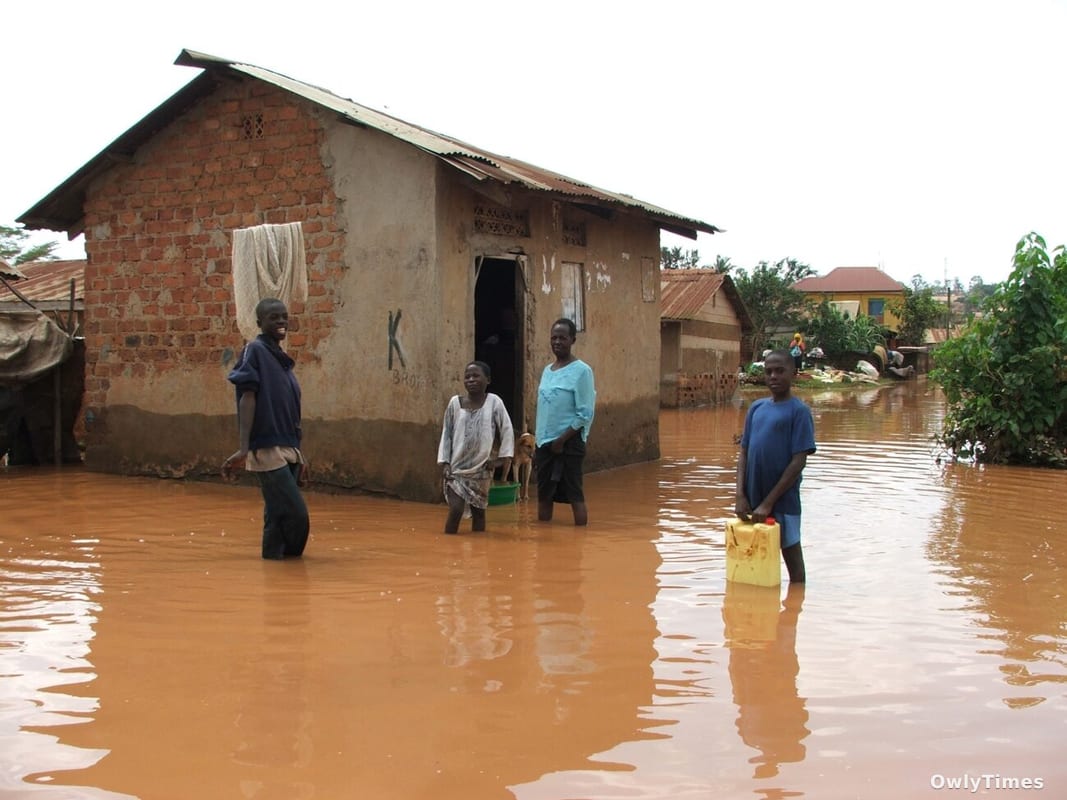

The escalating frequency and intensity of extreme weather events across Africa are no longer distant warnings, but stark realities reshaping lives and economies. From the devastating floods in Uganda’s Mukono District – starkly captured in images circulating online – to prolonged droughts and relentless heatwaves, the continent is bearing the brunt of a climate crisis it did little to create. While headlines often focus on the immediate disaster relief, a deeper, more systemic failure is unfolding: the global financial architecture is actively hindering Africa’s ability to both adapt to the changes already locked in and mitigate future warming, creating a dangerous feedback loop of vulnerability and escalating risk. This isn’t simply a matter of insufficient aid; it’s a fundamental misalignment of incentives and a perpetuation of economic structures that disadvantage the very nations most in need of support.
The core issue isn’t a lack of awareness, but a critical gap between stated commitments and actual financial flows. Despite repeated pledges to mobilize $100 billion annually for climate adaptation in developing countries, Africa currently receives less than $14 billion per year – a shortfall exceeding $86 billion. Crucially, over half of this funding arrives as loans, saddling nations with further debt and diverting resources from essential development priorities. This dynamic is often misrepresented as “climate finance,” but Lisa Sachs, director of the Columbia Center on Sustainable Investment, and her colleagues emphasize that it’s a system that simultaneously demands adaptation and limits the capacity to pay for it. The narrative often presented is one of aid falling short, but the reality is a system designed to maintain financial control, even as the climate crisis intensifies.
See the original news.climate.columbia.edu story for the full account.
This imbalance isn’t occurring in a vacuum. The increased focus on adaptation, while necessary, has inadvertently overshadowed the equally urgent need for deep decarbonization. Investing in resilience – building stronger infrastructure, developing drought-resistant crops, and fortifying coastal defenses – buys time, but it doesn’t address the root cause of the problem. As global temperatures creep closer to and surpass the 1.5°C threshold, with emissions continuing to rise, the effectiveness of adaptation measures diminishes. Resilience becomes increasingly ineffective as the underlying hazard – a warming planet – continues to escalate. We are approaching a point where adaptation alone will be insufficient, and the consequences of inaction will be irreversible, impacting food systems, livelihoods, and public health in ways that cannot be fully mitigated.
The most insidious aspect of this crisis is the systemic nature of the financial barriers facing African nations. Access to long-term, affordable capital – essential for investing in decarbonized energy systems, resilient infrastructure, and sustainable agriculture – remains elusive. Africa is trapped in a cycle of perceived risk, leading to limited and expensive financing options. This isn’t a reflection of genuine investment risk, but rather a consequence of deeply flawed global financial mechanisms. Credit rating systems, debt sustainability frameworks implemented by institutions like the IMF and World Bank, and multilateral lending practices all reinforce each other, effectively penalizing African countries for their economic circumstances. As of late 2025, only three of 34 rated African countries hold investment-grade status, and not a single low-income nation has achieved this benchmark.
Recent research from the European Central Bank (ECB) underscores the severity of the problem. The ECB analysis demonstrates that climate disasters directly increase sovereign borrowing costs, with emerging economies experiencing a significantly larger impact – a bond yield increase of over 140 basis points compared to roughly 66 in advanced economies. This means that countries are forced to pay more to borrow precisely when they need resources most urgently. Furthermore, the ECB found that countries with slow energy transitions face a growing “transition risk premium,” effectively penalizing them for not rapidly decarbonizing – a situation exacerbated by the very lack of affordable financing needed to facilitate that transition. This creates a perverse incentive structure where nations are punished for the consequences of a crisis they did not create and lack the resources to address.
The solution, according to Sachs and her team at Columbia University, lies in a fundamental overhaul of the global financial architecture. This includes reforming debt sustainability frameworks to allow for long-term public borrowing for climate-related investments, establishing liquidity mechanisms to provide immediate financial support in the wake of climate disasters, and revising credit rating methodologies to stop treating poverty as a proxy for default risk. Equally important is the need for coherent, rigorous energy system modeling to identify least-cost pathways to decarbonization and coordinated risk-sharing mechanisms to attract private capital. Africa holds 60% of the world’s best solar resources, yet receives only 2% of global clean energy investment – a glaring disparity that highlights the bias of the current system.
The current emphasis on net-zero pledges and mitigation targets, while well-intentioned, obscures the transformative potential of optimized energy systems. Instead, a focus on rigorous technical analyses, technological diffusion, and coordinated action is needed to unlock efficiencies and reduce costs. The cost of borrowing in Africa’s power sector averages 15%-18%, compared to 2%-5% in Europe and the United States, rendering clean energy infrastructure financially unviable. This disparity isn’t a reflection of genuine risk, but a consequence of structural constraints and misperceived vulnerabilities.
Looking ahead, the critical question isn’t whether Africa will be impacted by climate change – that reality is already here. The crucial question is whether the international community will address the systemic financial barriers preventing the continent from building a resilient and sustainable future. Will we see a genuine shift towards equitable financing mechanisms, or will Africa continue to be trapped in a cycle of debt, vulnerability, and escalating risk? The answer will determine not only the fate of the continent, but the trajectory of the global climate crisis itself. We must watch for concrete changes in debt restructuring policies, specifically whether they prioritize climate-resilient investments, and track the flow of clean energy financing to Africa to see if the promised 2% increases significantly in the coming years.




