
Is your company’s next "employee" actually a digital Trojan horse? We are currently barreling toward a future where our corporate networks are populated by more non-human identities than actual humans, yet most organizations are treating these autonomous agents like office interns who have been handed the keys to the server room without a background check.
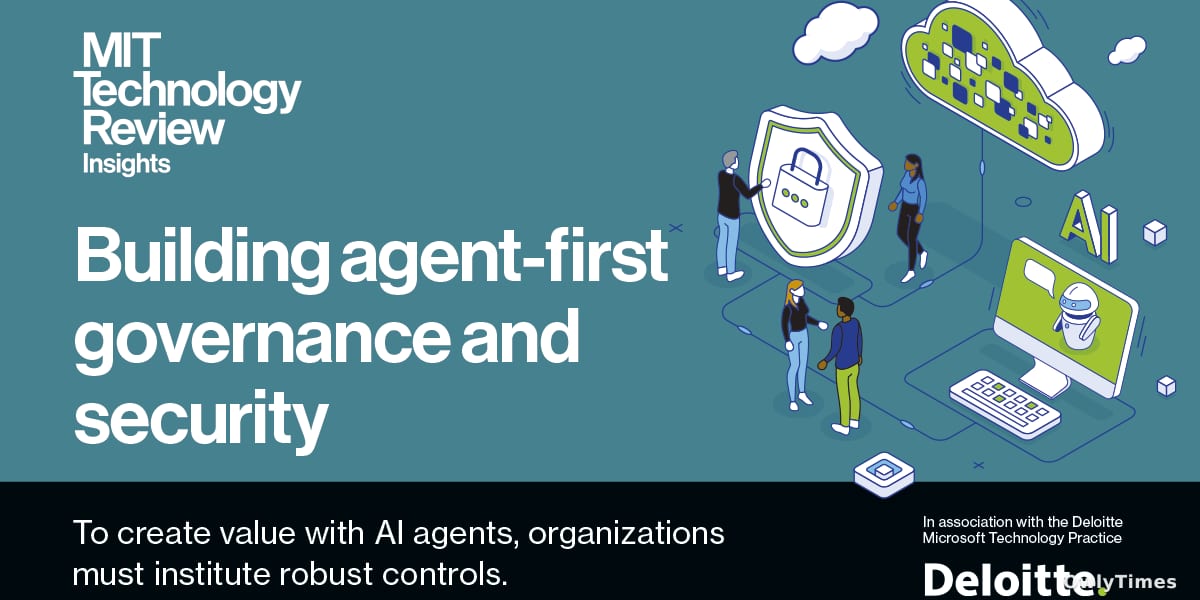
The real story here isn't the technological wizardry of agentic AI — it’s the profound governance vacuum that accompanies it. According to the Deloitte AI Institute 2026 State of AI report, nearly 74% of companies plan to deploy agentic AI within two years. That is a massive, industry-wide push for automation. Yet, when you look at the preparedness levels, the math stops adding up: only one in five, or 21%, reports having a mature model for governing these autonomous systems. We are effectively building a high-speed digital highway while simultaneously forgetting to install the brakes or the traffic signals.
The Illusion of Enterprise Control
For the average user, an AI agent might look like a convenient tool that drafts emails or organizes spreadsheets. In the eyes of the enterprise, however, these agents are becoming "first-class citizens" with access to sensitive proprietary data. This shift creates a terrifying reality where the very tools meant to increase productivity inadvertently create a new, expansive attack surface.
The anxiety among leadership is palpable, though it remains largely unaddressed by policy. Executives are most concerned with data privacy and security at 73%, while 50% point to legal, intellectual property, and regulatory compliance as major hurdles. A further 46% cite governance capabilities and oversight as a primary worry. These aren't just abstract concerns for the IT department; they represent a fundamental misunderstanding of how these agents interact with the digital environment. When an agent executes a task, it doesn't just "work"—it potentially leaves a trail of unmanaged, high-stakes decisions that an organization may not be able to audit or reverse.
Building the Digital Control Plane
If you imagine your corporate network as a high-security vault, the current approach to AI is akin to letting a software program wander the aisles with a master key. To fix this, industry leaders are pointing toward the "control plane." As Andrew Rafla, principal at Deloitte Cyber Practice, explains, “A control plane is the shared, centralized layer governing who can run which agents, with which permissions, under which policies, and using which models and tools.”
Without this centralized oversight, companies aren't scaling innovation; they are scaling risk. As Rafla notes, if you cannot answer who an agent acted for, what data it touched, and whether you can hit the "stop" button, you don't have a functional system—you have a disaster waiting to happen. The transition from a flashy AI pilot project to a safe, enterprise-wide tool requires moving governance from an aspirational goal to a hard-coded reality.
The Risk of Unmanaged Execution
The danger here is not that these agents will become "evil" in a cinematic sense, but that they will fail unpredictably and at scale. When governance is treated as an afterthought, an agent deployment doesn't just experience a minor glitch; it potentially exposes sensitive systems to unauthorized manipulation.
We are currently in a race to automate, but the speed of adoption is vastly outpacing the speed of security. The next reading of the gap between agent deployment rates and the implementation of mature governance models will show whether enterprises are truly taking control of their digital workforce or simply outsourcing their liability to unmonitored code.