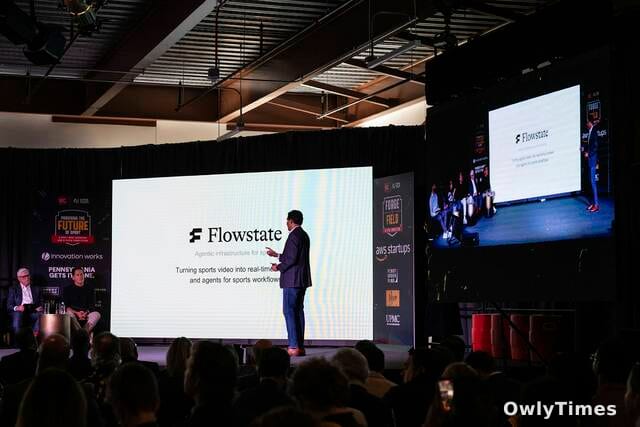

The hum of innovation at the Robotics Innovation Center at Hazelwood Green felt less like a classroom project and more like the high-stakes atmosphere of a professional scouting combine. As Pittsburgh prepares to host the NFL Draft, an event expected to draw upwards of 500,000 people to the city, a different kind of draft was already underway on Wednesday. Inside the venue, the "Forge to Field AI Pitch Competition" saw a wave of student entrepreneurs looking to turn laboratory prototypes into household names, proving that the future of athletics may lie in the hands of engineers rather than just traditional scouts.
Bridging the Gap in Athletic Mastery
For the more than 68 million Americans who play a racquet sport, the path to improvement is often blocked by a wall of high costs and generic advice. David Hershenson, a 22-year-old senior at Carnegie Mellon University, is looking to dismantle that barrier. Alongside fellow students Geronimo Carom and Mario Cruz, Hershenson introduced ServeSense, a compact sensor designed to nestle directly into a racquet handle.
The device does more than just track movement; it captures acceleration, timing, shot selection, and contact angles, feeding that raw data into an artificial intelligence model to provide a personalized critique of a player’s swing. For Hershenson, the experience of pitching to a panel of heavy-hitting investors was a reality check that shifted his perspective from academia to the boardroom. "I didn’t go in there with too many expectations, just excitement and ready to pitch my project and sell it to people," he noted.
The Pittsburgh Sports-Tech Ecosystem
The competition drew significant attention from high-profile figures, including billionaire Mark Cuban, a Mt. Lebanon native who has long championed the intersection of data and performance. Cuban was joined on the panel of "sharks" by Ed Stack, executive chairman of Dick’s Sporting Goods and Foot Locker; Deap Ubhi of Amazon Web Services; Jeanne Cunicelli of UPMC; Will Allen of MVP; and Troy Demmer of Gecko Robotics.
The scale of the investment interest was substantial, with a total of $1.8 million offered to the various startups. The showcase featured more than 16 CMU-related ventures, ranging from human-like football-throwing robots to advanced exoskeletons. This gathering highlights a shift in the sports landscape where the demand for granular, objective performance data has created a lucrative market for startups like Peachy Day, Flowstate, SensiFit, Perforated AI, and MyoVerse.
Precision at the Professional Level
The tangible impact of this technology is best illustrated by the margins that define professional success. Izzy Hunter, founder and CEO of SensiFit, recently tested her sensor-based performance system on offensive linemen training for the NFL Combine. By identifying exactly where an athlete lost momentum during agility drills, her team was able to help players shave 0.5 seconds off their drill times.
While that half-second might seem negligible to the casual fan, in the ruthless economy of professional sports, it represents the thin line between a lucrative career and obscurity. As the industry continues to integrate these data-driven tools, the next reading of total capital investment and subsequent commercial partnerships will determine whether these campus innovations can scale to meet the needs of millions of recreational and professional athletes alike. For now, the focus remains on refinement, with Cuban offering the budding entrepreneurs a crucial piece of advice: ensure these technologies act as a force multiplier for human coaches rather than a replacement for them.

