
$1,000 Seed Funding Signals Broader Trend in Collegiate Entrepreneurship
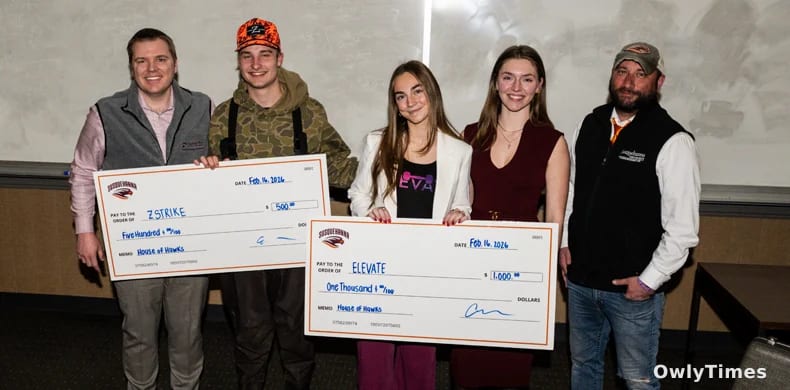
$6,000. That’s the total capital injected into five student ventures at Susquehanna University’s recent House of Hawks pitch competition, a figure that, while modest in absolute terms, reflects a significant upswing in collegiate entrepreneurship and a strategic bet on localized economic development. The competition, funded by the Jameson ’02 and Jennifer Engerer ’02 Troutman Susquehanna Entrepreneurship Fund, isn’t just about awarding prize money; it’s a microcosm of how universities are increasingly becoming incubators for small businesses, particularly in regions seeking to bolster their economies from the ground up. This isn’t simply altruism – it’s a calculated investment in future tax revenue and job creation, and a response to a national trend of declining small business applications offset by a surge in Gen Z entrepreneurship.
Reporting from susqu.edu informs this analysis.
Elevate’s Win Reflects a Shift in Wellness Market Focus
Alexis Kane ’26’s victory with “Elevate,” a women’s gym brand focused on holistic well-being, is particularly telling. Kane secured the $1,000 top prize, demonstrating a clear understanding of a rapidly evolving market. While the fitness industry saw a 2.8% growth in 2023, reaching $96.7 billion according to IBISWorld, the fastest-growing segment isn’t traditional gym memberships, but rather boutique fitness experiences and wellness programs emphasizing mental health. Kane’s plan to use the funding for equipment, a webpage, and online marketing directly addresses this demand, positioning Elevate to capitalize on the increasing consumer willingness to pay a premium for personalized wellness solutions. The judges, including Jameson Troutman, explicitly linked this support to the broader economic impact of small businesses, stating, “Small business powers what we do every day.” This suggests a deliberate focus on ventures with demonstrable local impact.
Beyond the Winner: Diversification of Student Ventures
The competition’s diversity – ranging from Jacob Rodkey ’27’s Z-Strike Lures LLC, specializing in custom fishing lures, to Patricia Onoja ’27’s globally-inspired food business, Crave – highlights a key characteristic of this generation of entrepreneurs: multifaceted interests and a willingness to tackle niche markets. Rodkey’s $500 People’s Choice win, determined by audience vote, underscores the power of direct consumer engagement. His focus on personalized lures taps into a growing demand for customization, a trend seen across industries from apparel to automobiles. The remaining $250 awards to Jonathan Ulicny ’27 (Ulicny Lawn) and Raphael Wolf ’27 (ZNS Volare) further demonstrate this breadth. Ulicny’s landscaping business addresses a consistent local need, while Wolf’s purpose-driven clothing accessory brand speaks to the increasing consumer preference for socially conscious brands. This isn’t a group solely focused on tech disruption; it’s a cohort identifying and serving specific, often localized, needs.
The Troutman Fund: A Model for Targeted University Investment
The Troutman Susquehanna Entrepreneurship Fund itself deserves scrutiny. Established by alumni Jameson Troutman and Jennifer Engerer Troutman, the fund isn’t a massive endowment, but its strategic allocation – seed funding for capstone projects and continued venture growth – is noteworthy. Many university entrepreneurship programs focus solely on initial concept development, leaving students stranded after graduation. The Troutman Fund’s commitment to ongoing support addresses this critical gap, increasing the likelihood of successful business launches. This model, prioritizing both education and sustained development, could serve as a blueprint for other universities seeking to maximize the impact of their entrepreneurship initiatives. The involvement of Annie McCarty, Susquehanna’s Entrepreneur in Residence, providing one-on-one mentoring, further strengthens this support system.
What This Means for Your Wallet
The success of Susquehanna’s program, and the broader trend of collegiate entrepreneurship, isn’t just about inspiring students. It’s about the future of local economies. Expect to see more universities actively fostering small business creation, particularly in areas struggling with economic stagnation. For consumers, this translates to increased competition, potentially lower prices, and a greater availability of unique, locally-sourced products and services. The key question now is whether these ventures can scale beyond the university bubble. Will Elevate expand beyond the Susquehanna campus? Will Z-Strike Lures become a regional or national brand? The next 12-18 months will be crucial in determining whether this initial seed funding blossoms into sustainable businesses – and whether the Troutman Fund’s model will be replicated elsewhere.





