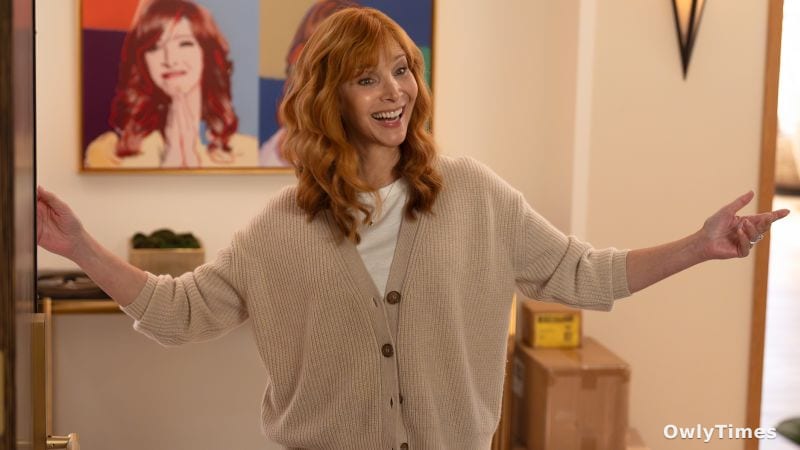

The air smelled faintly of desperation and hairspray, even through the screen. That’s always been the signature scent of “The Comeback,” and it’s particularly potent now, as Lisa Kudrow’s Valerie Cherish prepares for her final act. Not on a stage, not in a critically acclaimed drama, but potentially as the star of a sitcom…written by artificial intelligence. The show, returning Sunday to HBO Max after a decade off the air, isn’t just a comedy; it’s a remarkably prescient warning about a Hollywood hurtling toward an uncertain future, and a surprisingly tender portrait of a woman perpetually chasing relevance in a town that chews up and spits out dreams.
The Echo of Self-Absorption in a Changing Industry
“The Comeback” debuted in 2005, a time when reality television was perceived as an existential threat to scripted programming. It wasn’t the first show to satirize the entertainment industry – “Entourage” was already well underway – but it distinguished itself with a uniquely uncomfortable honesty. Valerie Cherish wasn’t glamorous or particularly talented; she was relentlessly, almost painfully, trying to be. That vulnerability, coupled with Michael Patrick King’s sharp writing, struck a chord, earning the show a cult following. Now, 21 years after its initial premiere, “The Comeback” finds itself in a crowded landscape of Hollywood satire. Shows like “Hacks” and Seth Rogen’s “The Studio” – filmed on the very same Warner Bros. lot – have achieved mainstream success with similarly cynical takes. Kudrow and King acknowledge the shift, even admitting to subtly adjusting the final season to avoid feeling derivative, specifically dialing back on the frantic golf cart chases that define Rogen’s series. But the core of “The Comeback” – its focus on ego, not just the industry – remains untouched.
This article draws on reporting from CNN.
Racing Against the Algorithm
The speed with which Season 3 came together speaks volumes about the urgency of its premise. King describes the approval process as “as-fast-as-you-can,” driven by a desire to air before a studio publicly admitted to utilizing AI-generated scripts. This isn’t hyperbole. In 2023, the Writers Guild of America strike brought the industry to a standstill, largely fueled by concerns about the potential for AI to devalue writers’ work. The show doesn’t just address the strike; it incorporates the aftermath, framing AI as the latest “almost-extinction event” for scripted television, echoing the anxieties surrounding reality TV two decades ago. The entertainment industry generated $91.9 billion in revenue in 2023, according to SelectUSA, but that figure feels precarious when the very foundation of content creation is being questioned. The fear isn’t just about job losses; it’s about the potential loss of originality, of the human element that makes storytelling compelling.
Beyond the Headlines: The Fear of Irrelevance
King succinctly captures the show’s enduring appeal: “The comedy comes from the fear.” It’s a fear that resonates far beyond Hollywood. Valerie Cherish’s desperate attempts to stay relevant, to prove her worth in a constantly shifting landscape, are a microcosm of the anxieties many feel in a world dominated by algorithms and fleeting attention spans. The show’s brilliance lies in its refusal to offer easy answers or moral judgments. Valerie isn’t a villain; she’s a flawed, often frustrating, but ultimately sympathetic character. Her willingness to embrace AI, despite its potential implications, isn’t portrayed as a betrayal of artistic integrity, but as a desperate act of survival. This nuance is what sets “The Comeback” apart. It doesn’t simply mock Hollywood; it examines the psychological toll of a system that prioritizes image over substance.
A Legacy of Navel-Gazing and a Question for the Future
“The Comeback” isn’t just a show about Hollywood; it’s a show of Hollywood – a product of its anxieties, its ambitions, and its relentless self-promotion. Kudrow herself acknowledges that returning to the role required a compelling premise, something that felt like “the ultimate battle” for Valerie. The show’s legacy isn’t just in its comedic timing or its satirical edge, but in its ability to hold a funhouse mirror up to an industry obsessed with its own reflection. As AI continues to reshape the entertainment landscape, and as the lines between human creativity and algorithmic generation become increasingly blurred, the question isn’t whether shows like “The Comeback” will remain relevant, but whether Hollywood itself will recognize the cautionary tale it’s been telling all along. Will the industry prioritize the fear – the fear of losing its soul – or will it succumb to the allure of efficiency and automation? That’s the real final act we should all be watching.