
The Hype Cycle is Real – But AI’s Quiet Revolution is Happening Anyway
We’ve all been bombarded with breathless predictions about artificial intelligence: sentient robots, automated everything, the end of work as we know it. It’s easy to dismiss it all as Silicon Valley hype, another iteration of the “internet will change everything” narrative that’s repeatedly overpromised and underdelivered. But dismissing AI entirely would be a mistake. The real story here isn't about Skynet or mass unemployment—it's about a subtle but profound shift in how we work, and the surprisingly human skills that will be most valuable in the age of algorithms.
See the original kdhnews.com story for the full account.
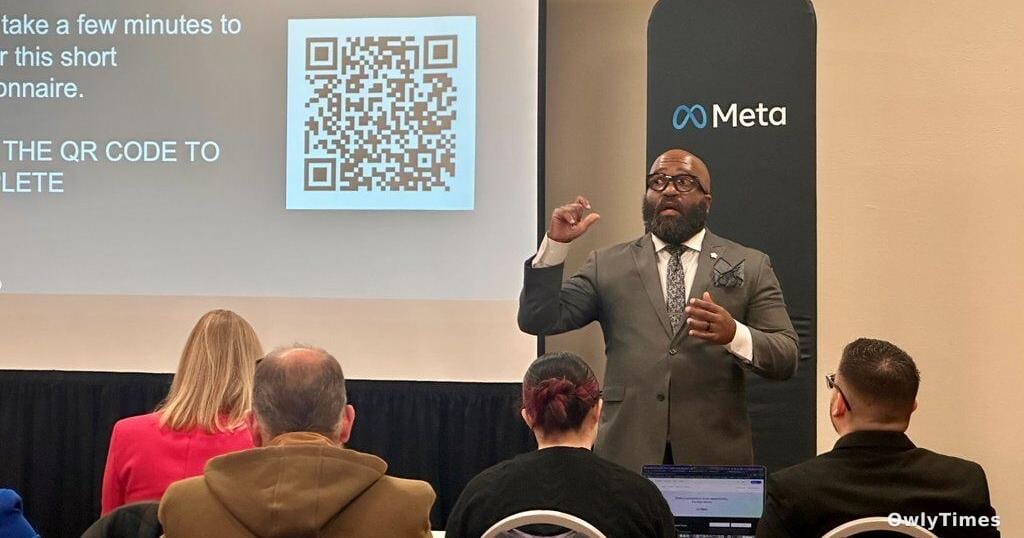
That’s the takeaway from a recent conversation with Gibran Jones, a digital strategist and trainer based in Harrisburg, Pennsylvania. Jones, who’s a Meta-certified lead trainer and social media strategist for Crimson Square, has been observing and utilizing AI’s evolution firsthand. He sees it not as a replacement for human workers, but as a powerful tool for enhancing human capability—a perspective that cuts through much of the current panic. “I use it for everything from strategy to content creation,” Jones explained, comparing AI’s current role to that of a souped-up search engine.
The shift is already underway. Jones notes that businesses across industries are rapidly adopting AI to streamline workflows and accelerate research. He anticipates a transformation of the workforce, not a wholesale elimination of jobs. “Different workers,” he stated plainly when asked about potential job losses. This echoes earlier industrial revolutions—the move from manual labor to mechanization, and then to automation—and Jones positions AI as the next logical step in that ongoing progression. Think of it like this: the printing press didn’t eliminate writers; it changed what writers did and how they reached an audience. AI is likely to do the same for a vast range of professions.
The tasks most vulnerable to automation, according to Jones, are the repetitive, administrative ones—the data organization, the routine spreadsheet work that drains time and energy without requiring significant judgment. But here’s the crucial point: even in these automated processes, human oversight remains essential. AI, Jones emphasizes, is excellent at helping users start projects, breaking through the inertia of a blank page, but it still requires human judgment to verify accuracy and relevance. It’s a powerful assistant, not a replacement for critical thinking.
And what about creativity? This is where the hype often goes off the rails, with visions of AI composing symphonies and writing novels. Jones is unequivocal: “I don’t think creativity can be automated.” He points to the fundamental truth that humans created AI in the first place, and that we’ll continue to be the driving force behind innovation. This isn’t just about artistic expression; it’s about the nuanced judgment, interpretation, and emotional understanding that underpin so many aspects of our work and lives—qualities that algorithms simply can’t replicate.
The ethical considerations surrounding AI are, understandably, a major focus. Jones recently participated in a panel discussion at the AI Icon conference, where concerns about job displacement and responsible implementation were paramount. While he acknowledges the uncertainty surrounding regulation—"My gut says yes, but I don’t have a definitive answer on the how or the who"—he stresses the need for constant ethical scrutiny. The danger, he warns, isn’t AI itself, but “when people rely on it too much and stop trusting their instincts.” Treating AI’s output as gospel truth, rather than a starting point for human inquiry, is a recipe for error and stagnation.
The current frenzy around AI certification programs is also worth a skeptical eye. Jones advises prioritizing reputable institutions recognized by employers, emphasizing that hands-on experimentation remains the most effective way to grasp AI’s practical value. He wryly recalls the early days of the internet, when many dismissed it as a passing fad. The lesson? Get involved, explore, and learn—but don’t blindly follow the latest trend.
Looking ahead, Jones predicts a coexistence of human interaction and AI-assisted services, shaped by generational preferences. Some will embrace the efficiency of AI, while others will continue to value the human touch. Both, he believes, will thrive. The key, he concludes, is curiosity. “There’s a huge opportunity for all generations,” he said, “if they’re just curious enough to get involved now.”
Here’s what to watch: In the next six months, I expect to see a significant increase in companies offering “AI literacy” training programs—not just for tech workers, but for everyone from marketing managers to customer service representatives. These programs won’t be about becoming AI engineers, but about understanding how to effectively leverage AI tools to enhance existing skills. The companies that prioritize this kind of training—and empower their employees to experiment—will be the ones who truly benefit from the quiet revolution already underway.