
Beyond Diagnosis: A New Textbook Reflects Shifting Understandings of Mental Health
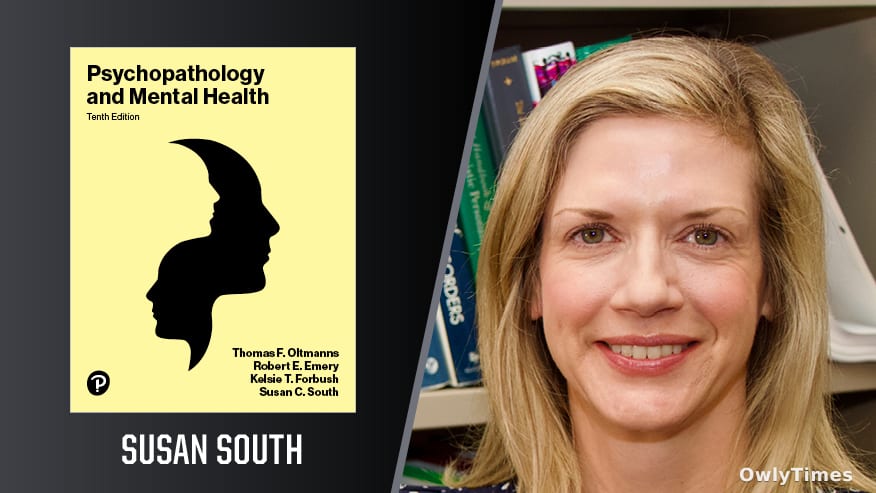
The release of the 10th edition of “Psychopathology and Mental Health” on December 19, 2024, isn’t simply another textbook update; it signals a quiet but significant recalibration within the field of clinical psychology. While headlines often focus on breakthroughs in brain imaging or pharmaceutical interventions, the core of progress lies in how we understand mental illness – and this new edition, co-authored by Susan South, professor of clinical psychology at Purdue University, alongside Thomas Oltmanns, Robert Emery, and Kelsie Forbush, reflects a move away from rigid categorization toward a more nuanced, contextual approach. The book’s timing is particularly relevant, as public discourse around mental health expands, yet often remains tethered to outdated diagnostic frameworks.
The publisher, Pearson, highlights the book’s aim to bridge the “science and the personal aspects” of psychopathology. But what does that actually mean in practice? Previous editions, like the 9th, largely adhered to the Diagnostic and Statistical Manual of Mental Disorders (DSM) as the definitive guide. This 10th edition doesn’t abandon the DSM, but actively explores “alternatives to the traditional categorical diagnostic system.” This is a crucial distinction. For decades, the DSM has been criticized for its tendency to label individuals, potentially obscuring the complex interplay of biological, psychological, and social factors that contribute to mental distress. The inclusion of alternative frameworks – such as dimensional approaches that view mental health on a spectrum – acknowledges that mental illness isn’t always a clear-cut “yes” or “no” diagnosis. This shift is particularly important given the increasing recognition of co-occurring conditions and the limitations of treating symptoms in isolation.
Susan South’s own research, focusing on the interplay between personality, psychopathology, and relationships, directly informs this contextual approach. Her work demonstrates how interpersonal dynamics, particularly within marriage, can either exacerbate or mitigate the development of mental disorders. This isn’t simply a matter of adding a “relationship problems” checkbox to a diagnostic form; it’s about recognizing that an individual’s environment is integral to their mental wellbeing. The book’s expanded discussion of mood disorder prevalence, for example, isn’t just a recitation of statistics, but an exploration of the social and environmental factors that contribute to these conditions. This is a departure from earlier editions, which tended to prioritize biological explanations. The inclusion of hundreds of new studies further underscores this commitment to integrating the latest research, a necessity in a field evolving as rapidly as mental health.
This piece references the purdue.edu report.
However, it’s important to acknowledge the limitations of any textbook, even one as comprehensive as this. While the book explores alternatives to the DSM, it doesn’t offer a replacement. The DSM remains the dominant diagnostic language in clinical practice, insurance billing, and research. A textbook can introduce new perspectives, but systemic change requires broader adoption within the healthcare system. Furthermore, the book’s focus, while broad, is still largely Western-centric. Cultural variations in the expression and experience of mental illness are acknowledged, but a truly global perspective requires ongoing research and collaboration with clinicians and communities worldwide. The Association for Psychological Science fellowship awarded to Susan South speaks to her commitment to rigorous research, but even the most robust studies are limited by sample size and methodological constraints.
Looking ahead, the critical next step isn’t simply to disseminate this information to students and clinicians, but to translate these nuanced understandings into more effective and accessible mental healthcare. Will insurance companies begin to reimburse for therapies that address the social determinants of mental health? Will diagnostic tools evolve to incorporate dimensional assessments alongside categorical diagnoses? The success of this book, and the broader shift it represents, will ultimately be measured not by its sales figures, but by its impact on the lives of individuals struggling with mental illness. We should watch for emerging research that attempts to validate and refine these alternative diagnostic frameworks, and, crucially, for studies that demonstrate the clinical effectiveness of interventions informed by a more holistic, contextual understanding of psychopathology.