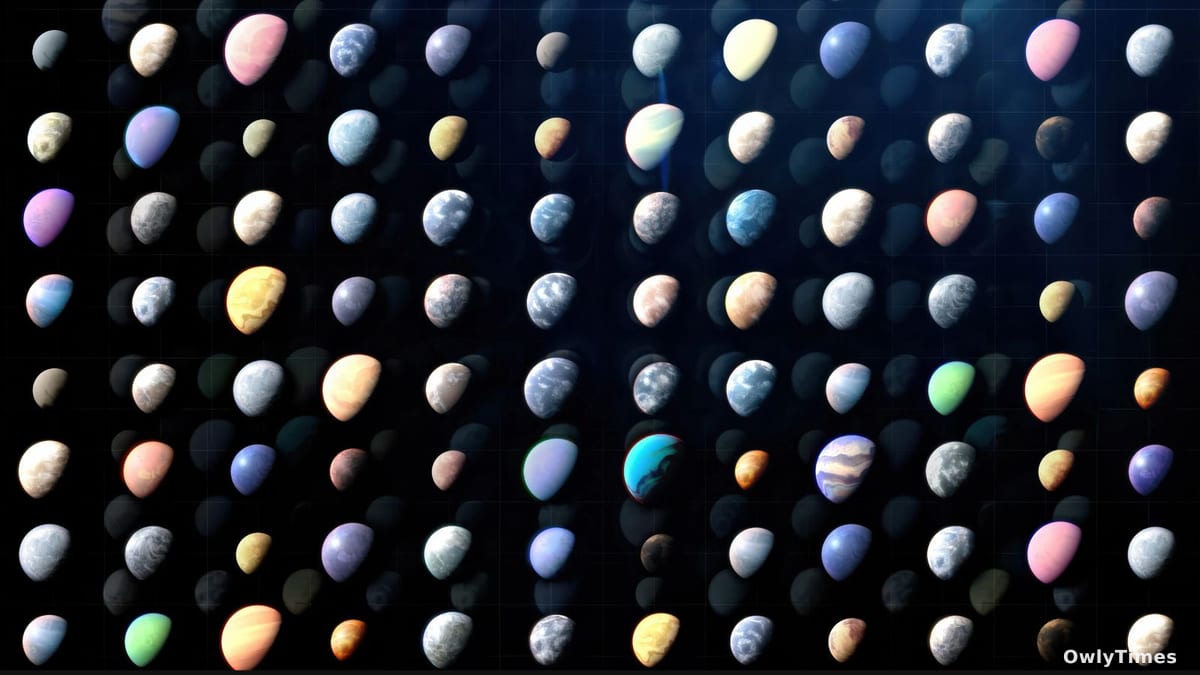

How do we identify worlds that are effectively hiding in plain sight? For decades, the hunt for exoplanets has relied on the brightest, most accessible targets, leaving the vast majority of the stellar neighborhood largely ignored. A new study published in The Astrophysical Journal Supplement Series shifts this paradigm by proving that our most valuable data has been sitting in our archives all along, waiting for a more sophisticated lens.
By applying a machine learning algorithm to the massive archive of the Transiting Exoplanet Survey Satellite (TESS), researchers have potentially tripled the number of known alien worlds. The survey identified 10,052 previously unseen exoplanet candidates, a staggering figure when compared to the 6,000 confirmed exoplanets that have been cataloged since 1995. While headlines are hailing this as the discovery of 10,000 new planets, it is more accurate to describe these as high-probability candidates. They represent the first time we have successfully sifted through the "noise" of the faintest stars in our galaxy.
The T16 Project: Mining the Data Graveyard
The core of this discovery lies in the T16 project, which targeted stars up to 16 magnitudes dimmer than the standard threshold used in most transit studies. TESS, a car-sized space telescope orbiting Earth since 2018, captures light curves—or fluctuations in brightness—that can indicate a planet passing in front of a star. Historically, astronomers have focused on the brightest stars because their data is cleaner and easier to verify.
However, the team analyzed precisely 83,717,159 stars from the mission’s first wide-field image. By training a machine learning algorithm to recognize the faint, subtle signatures of a transit in these dim stars, the researchers performed a task that would be, by their own assessment, "impossible" for human analysts. According to StellarCatalog.com, roughly 87% of these candidates were observed transiting at least twice, allowing the team to calculate orbital periods ranging from 0.5 to 27 days.
Limitations to Consider
While the scale of this finding is revolutionary, it is crucial to temper expectations regarding these worlds. The short orbital periods identified suggest these planets are huddled extremely close to their host stars. This proximity makes them unlikely candidates for life as we know it, as these planets are often scorched by their parent suns.
Furthermore, these 10,052 candidates are not yet officially confirmed. The process of verification requires follow-up observations from ground-based telescopes to rule out other stellar phenomena that might mimic the transit of a planet. The team did conduct a successful "ground-truth" test by using a 21-foot (6.5 meters) Magellan telescope in Chile's Atacama Desert. They were able to confirm a "hot Jupiter" dubbed TIC 183374187 b, located approximately 3,950 light-years away, right where the algorithm predicted. This success provides a strong proof-of-concept, but it remains a single data point in a sea of thousands that now require independent verification.
Next Steps for the Census of Stars
The path forward involves a rigorous, time-consuming verification process. Because independent surveys must study these candidates in greater detail, it could take months or even years to move these objects from the "candidate" list to the "confirmed" list. The immediate next phase of research will depend on the rate of verification for these candidates; the success of the T16 project suggests that our census of the galaxy is about to grow significantly, but the reliability of that growth will be measured by the next wave of follow-up observations using high-resolution ground-based instrumentation.





