
Can a feature that generates beautiful avatars really move the needle for a company as massive as OpenAI?
The real story here isn’t the technical prowess of ChatGPT Images 2.0—which boasts impressive multi-language text rendering—it’s the stark geography of how these tools are actually being adopted. While Silicon Valley obsesses over productivity metrics and enterprise integration, the actual data suggests that for the average global user, the latest AI revolution looks a lot more like a digital art studio than a workplace assistant.
The Indian Market Takes the Lead
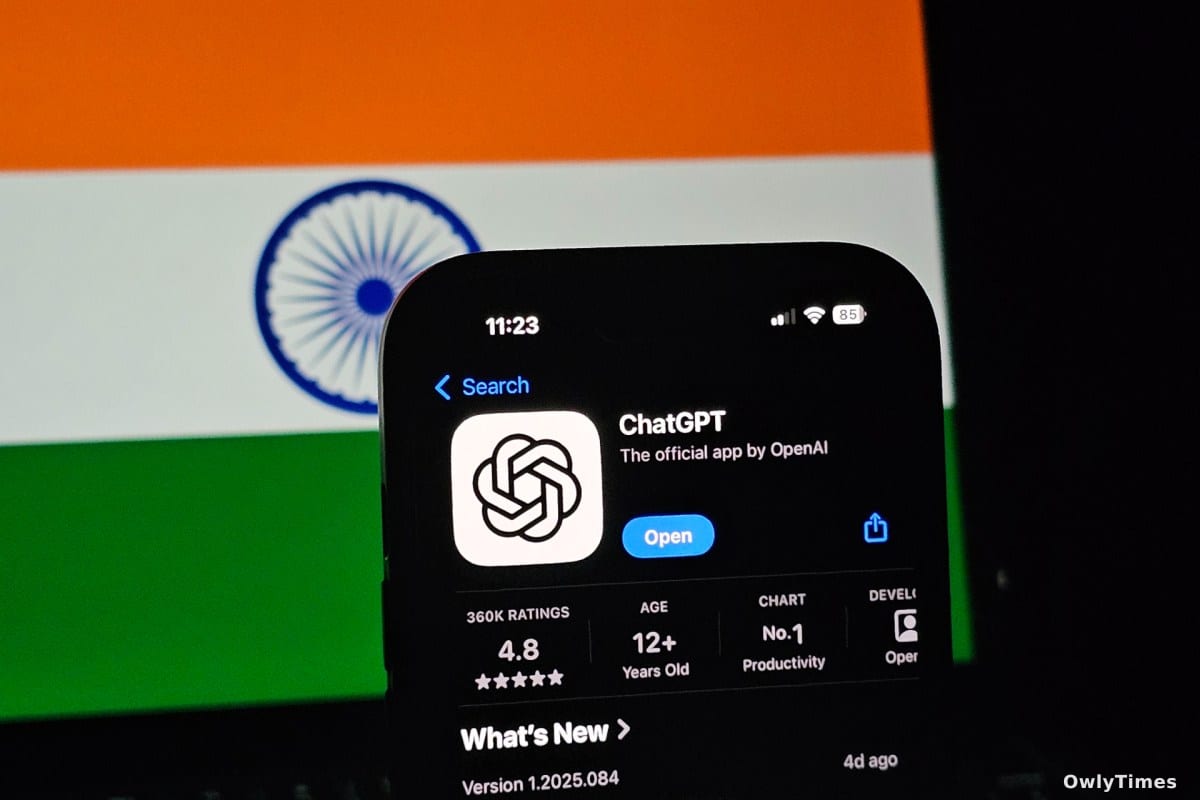
When OpenAI launched their latest upgrade last week, India emerged as the single largest user base for the new image-generation capabilities. According to Sensor Tower estimates, the app was downloaded approximately 5 million times in India during the launch week, dwarfing the roughly 2 million downloads seen in the U.S.
This isn't just about raw numbers; it’s about intent. In India, users are gravitating toward self-expression, churning out stylized portraits, fantasy-themed images, and social media-ready visuals. Whether it’s creating a tarot-style card or a fashion moodboard, the tool is being treated as a creative playground rather than a professional utility. This mirrors the trajectory of Google’s Nano Banana, which also found early, aggressive traction in the Indian market, solidifying the nation's role as a critical testing ground for consumer-facing AI.
Global Engagement vs. Localized Spikes
If you look at the global aggregate, the launch looks more like a ripple than a tidal wave. Per data shared with TechCrunch by Sensor Tower and Similarweb, ChatGPT’s app downloads rose 11% week-over-week. However, that growth didn’t translate into a massive habit-forming shift: daily active users and sessions grew by only about 1%. Similarly, global web traffic saw a modest bump of about 1.6%.
The narrative changes, however, when you zoom in on specific emerging markets. Pakistan, Vietnam, and Indonesia recorded significant interest, with app downloads spiking by up to 79% week-over-week. While the developed world seems to be playing with AI as a novel toy, these regions are showing a more sudden, intense wave of new-user adoption. For these users, the ability to manipulate images—including support for non-Latin scripts like Hindi and Bengali—is clearly hitting a specific, unmet demand.
The Reality of Feature Adoption
We often hear that AI is destined to replace our workflows, but the current engagement data tells a different story. Even in India, where the user base is most active, the uptick in daily active users remained at a relatively limited 3.4% week-over-week. It suggests that while the "wow" factor of generating a cinematic portrait or restoring an old photo is enough to trigger a download, it isn't necessarily turning users into "power users" overnight.
The tension here is obvious: OpenAI is building a complex machine capable of "thinking" through multiple prompt variations, yet the most popular use case is arguably the most superficial one—the avatar. For the average user, the utility of AI is currently measured by how well it can reflect their own image back at them in a stylized format.
The next reading of global daily active user growth will show whether this wave of creative experimentation turns into long-term retention, or if users move on to the next viral filter once their avatar collection is complete.