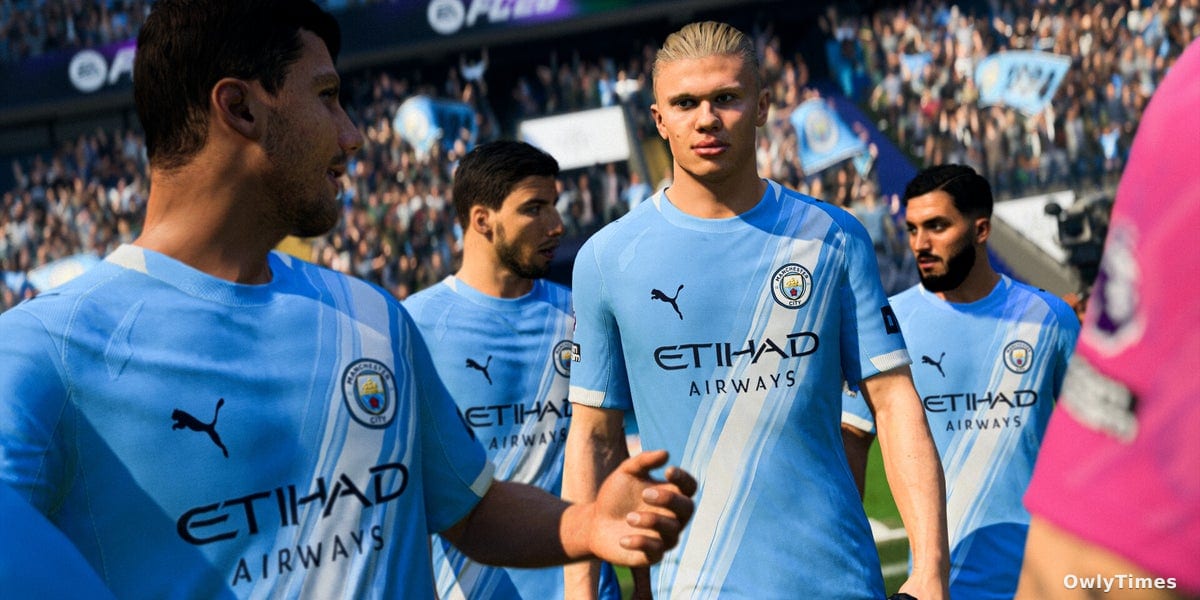

The roar of the crowd is a carefully constructed illusion. For decades, video game immersion hinged on convincing details – the swish of a net, the crunch of a tackle, and, crucially, the human voice calling the action. But what happens when that voice isn’t entirely human? This week, Guy Mowbray, the veteran football commentator whose voice is synonymous with EA Sports FC (formerly FIFA), publicly revealed he’s given Electronic Arts permission to clone his voice using AI. It’s a pragmatic solution to a logistical nightmare – accurately pronouncing the names of over 20,000 footballers in a constantly shifting landscape of transfers and rising stars. But Mowbray’s consent doesn’t erase the growing unease rippling through the voice acting community, a tension that exposes a fundamental shift in how creative labor is valued – and potentially exploited – in the digital age.
The Scale of the Challenge: Beyond Pronunciation
The sheer scale of Mowbray’s task is what makes his decision understandable. He explained to the BBC that he records each player’s name “about five different” times, modulating his delivery to account for varying in-game scenarios. This isn’t simply about getting the pronunciation right; it’s about creating the feeling of a live broadcast, where a commentator’s inflection changes based on the player’s position, action, and the momentum of the game. “It takes so long because for every single facet of the game that you could think of, we have to cover every scenario,” Mowbray said. The demand is relentless, requiring his input “pretty much every week from November all the way to the start of July.” Compared to the industry average of $500-$1000 for a single voice-over session, the cumulative value of Mowbray’s work for EA is substantial. AI offers a way to manage this ever-expanding workload, ensuring the game’s “authenticity” – a key selling point for a franchise that generates billions in revenue. In 2023, EA reported a net revenue of $7.4 billion, with EA Sports FC being a major contributor.
This article draws on reporting from gamesindustry.biz.
A Divided Voice: Consent vs. Control
Mowbray’s willingness to collaborate stands in stark contrast to recent battles fought by other voice actors. Just last September, Françoise Cadol, the iconic French voice of Lara Croft, accused publisher Aspyr of using AI to replicate her voice in Tomb Raider 4-6 Remastered without her consent. Cadol issued a formal notice, highlighting the ethical and legal implications of unauthorized voice cloning. Similarly, the French voice talent team for Apex Legends collectively refused to sign contracts granting permission for their voices to be used for AI training last year. These cases reveal a critical distinction: Mowbray chose to participate, while Cadol felt her rights were violated. EA is keen to emphasize this difference, stating, “When it comes to commentary and content, it's always a collaboration with our talent – not a replacement.” But the line between collaboration and exploitation blurs when the technology allows for near-perfect replication without ongoing compensation or creative control.
The Evolving Role of AI in Game Development
This isn’t a sudden development. EA acknowledges that AI has been “long been part of our development pipeline – from animation to gameplay systems.” The use of AI to enhance game development is widespread, automating tasks and improving efficiency. However, the application of AI to voice acting represents a new frontier, one that directly impacts the livelihoods of performers. The concern isn’t necessarily about AI replacing commentators or actors entirely – at least, not yet. It’s about diminishing their bargaining power and potentially devaluing their unique skills. If a company can create a convincing AI replica of a voice, why pay a premium for the original? The potential for cost savings is enormous, and the industry’s history suggests a strong incentive to pursue those savings.
What Happens When Every Voice Can Be Copied?
Mowbray’s case is a calculated risk, a bet that collaboration will yield continued opportunities. But the broader implications are unsettling. The current legal framework surrounding voice cloning is still evolving, leaving performers vulnerable. While some jurisdictions are beginning to address the issue, the pace of technological advancement far outstrips the speed of legislation. The question isn’t simply whether AI can replicate a voice, but whether performers will have the agency to control how their voices are used – and to be fairly compensated when they are. As AI-powered voice cloning becomes more accessible and sophisticated, the industry needs to grapple with a fundamental question: what does it mean to own your voice in a digital world? Will we reach a point where every voice is a commodity, freely available for replication, or will performers be able to protect their creative property and secure a sustainable future in the age of artificial intelligence?

