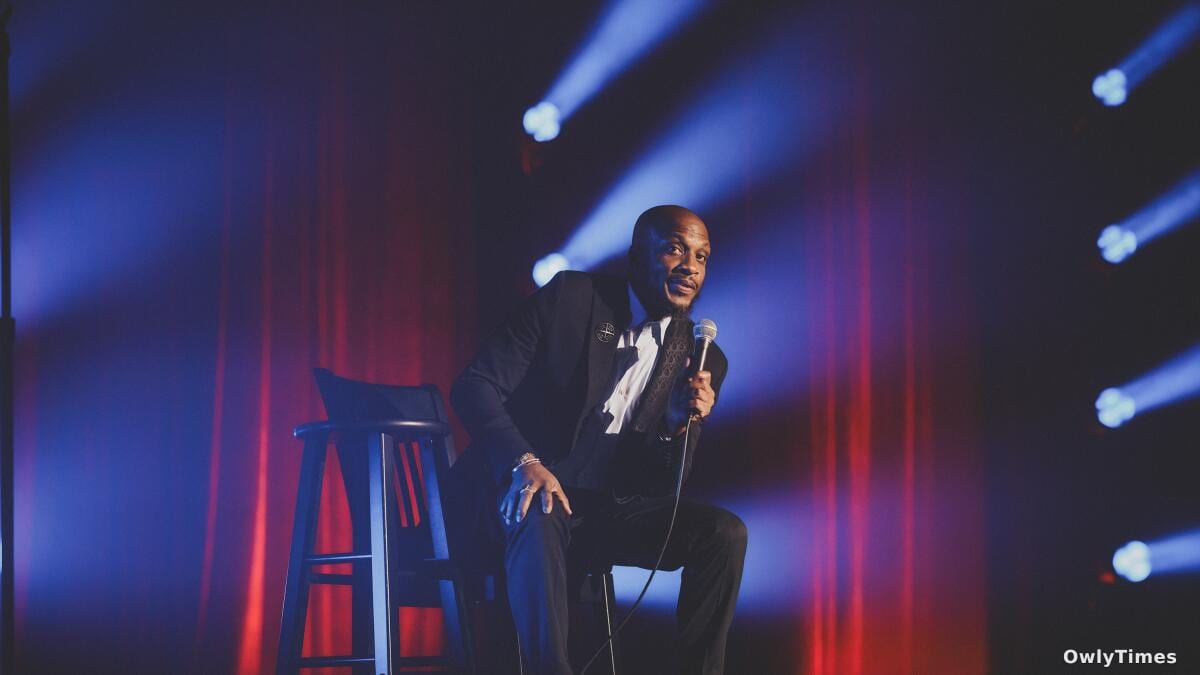

The air in Houston hangs thick and humid, even for a February night. But inside the House of Blues, the energy is electric, a palpable buzz building as Ali Siddiq takes the stage. He doesn’t stride, doesn’t command – he settles onto the stage, sometimes even choosing a chair, and begins to talk. Not to perform, not to “do” comedy, but to talk. And in that deceptively casual delivery lies the secret to his quietly revolutionary ascent in a comedy landscape obsessed with spectacle. Siddiq isn’t chasing viral clips or Netflix deals; he’s building a legacy on authenticity, and that legacy is now earning recognition from the highest echelons of the industry.
For over 25 years, the Houston native has been honing a style that feels less like stand-up and more like a conversation with a particularly insightful friend. His YouTube specials – “Mondays,” “Rugged,” and the groundbreaking four-part “Domino Effect” – have amassed millions of views, a testament to his ability to connect with audiences on a deeply personal level. But it’s his 2025 special, “My Two Sons,” that’s truly breaking barriers, earning a nomination for the 2026 NAACP Image Award for Variety Series or Special – a historic first for an independent comedy release. This isn’t just about a nomination; it’s a crack in the established order, a signal that the gatekeepers are starting to listen to voices outside the traditional Hollywood system.
Source material: the Los Angeles Times.
The industry has long operated on a model of scarcity, where access to platforms and awards are controlled by a select few. Siddiq’s success challenges that model, proving that a comedian can build a massive following and critical acclaim without sacrificing creative control. While major networks and streaming services are locked in a content arms race, Siddiq has cultivated a direct relationship with his audience, bypassing the traditional intermediaries. “I’m pretty cool with where I am,” he tells me, a characteristic understatement. “The only thing they hold the power over is, they have the in on the awards.” He’s not seeking a “network deal,” but he is using the NAACP nomination as leverage, a “shot in the arm” to push for greater recognition of independent artists. The fact that he almost stopped submitting for awards before receiving this nomination speaks volumes about the systemic hurdles facing those who choose to forge their own path.
What sets Siddiq apart isn’t just what he talks about, but how he talks about it. His comedy isn’t built on rapid-fire punchlines, but on carefully constructed stories, delivered at a deliberate pace. He doesn’t chase what will “resonate” with the audience; he simply tells the truth as he experiences it. He recounts a moment at a funeral where a friend lamented his father’s sock choice, a seemingly trivial detail that unlocked a universal feeling of familial frustration and the bittersweet realization that parents often rewrite history. “People have funny things happen to them throughout the day, and they just never really talk about it,” he explains. “So in my life, what I tend to say is, ‘OK, this story can probably lighten somebody’s ideology on what happened at this particular place.’” It’s a subtle but profound approach, one that invites empathy and connection rather than cheap laughs.
This commitment to authenticity extends to his family life, a recurring theme in his work, particularly in “My Two Sons.” He intentionally incorporates his children into his material, not as props, but as integral parts of his narrative. “I always wanted to make them feel included and special within my life because I’m gone so much in my career,” he says. It’s a conscious effort to balance the demands of his profession with the responsibilities of fatherhood, a struggle many working parents can relate to. He even anticipates, with a wry smile, the future mortification his sons will experience when revisiting his stand-up routines.
But Siddiq’s ambition extends beyond personal success. He’s acutely aware of his role as a representative for his city, Houston, a vibrant cultural hub often overlooked by the national comedy scene. He wants to be “the iconic voice for my city,” following in the footsteps of comedy legends like Steve Harvey (Cleveland), Bruce Bruce (Atlanta), and Dave Chappelle (D.C.). He’s already paving the way for a new generation of Houston-based comedians, like Marcus D. Wiley and Ashton Womack, demonstrating that talent can flourish outside the traditional comedy capitals. He’s not just building a career; he’s building a community.
The NAACP Image Award nomination isn’t just a personal triumph for Ali Siddiq; it’s a watershed moment for independent comedy. It forces the industry to confront its biases and consider the value of voices that don’t fit neatly into pre-defined boxes. Will this open the floodgates for other independent artists? Will the Emmys, Grammys, and even the Oscars follow suit, recognizing the power of unfiltered, authentic storytelling? The question isn’t whether Ali Siddiq deserves recognition – he undeniably does – but whether the industry is ready to redefine what “special” truly means. And as he sets his sights on those bigger awards, one thing is clear: the comedy landscape is shifting, and Ali Siddiq is leading the charge.