
$18.4 Million Bet: Amazon’s Baton Rouge Drone Hub Signals Shift in Last-Mile Economics
$18.4 million. That’s the capital Amazon is deploying with the construction of its 18,400-square-foot drone hub in Baton Rouge, a figure that quietly reveals a critical inflection point in the economics of e-commerce delivery. While framed as an expansion of the Prime Air service – already operating in College Station, Texas, West Valley, Arizona, the United Kingdom and Italy – this isn’t simply about faster shipping; it’s about circumventing escalating costs in the “last mile,” the most expensive leg of the delivery process. Follow the money, and you’ll see Amazon isn’t just building a drone port, it’s building a hedge against a future where traditional delivery becomes prohibitively expensive.
FAA Approvals Unlock a New Phase of Investment
Amazon first launched its drone delivery program, Prime Air, in 2016, but its rollout has been deliberately paced, constrained by regulatory hurdles. The expansion to Baton Rouge, confirmed by Daniel Martin, an Amazon spokesperson, isn’t a sudden impulse, but the result of incremental gains in securing approvals from the Federal Aviation Administration (FAA). These approvals are the key that unlocks the financial viability of drone delivery. Until recently, the operational limitations imposed by the FAA – restrictions on flight range, visual line-of-sight requirements, and payload capacity – made widespread drone deployment uneconomical. The Baton Rouge hub, breaking ground this month with an expected completion date in May, demonstrates Amazon’s confidence that these constraints are easing enough to justify significant infrastructure investment.
See the original theadvocate.com story for the full account.
Beyond Speed: The Cost Equation of Drone Delivery
The narrative around Prime Air often focuses on speed – delivering packages weighing up to five pounds in under an hour. However, the real story lies in cost reduction. Traditional last-mile delivery, reliant on a network of drivers and vehicles, faces mounting pressures. Labor costs are rising, fuel prices are volatile, and urban congestion adds significant delays and expenses. According to a 2023 report by the American Transportation Research Institute, the average cost per mile for trucking increased by 12.7% year-over-year. Drones, while requiring upfront investment in infrastructure and technology, offer the potential to significantly lower per-package delivery costs, particularly for densely populated areas within a limited radius of fulfillment centers. The 2,000 square feet dedicated to maintenance and office space within the Baton Rouge hub underscores this commitment to long-term operational efficiency, suggesting Amazon anticipates a substantial and sustained drone delivery volume.
Louisiana’s Logistics Landscape and Amazon’s Strategic Positioning
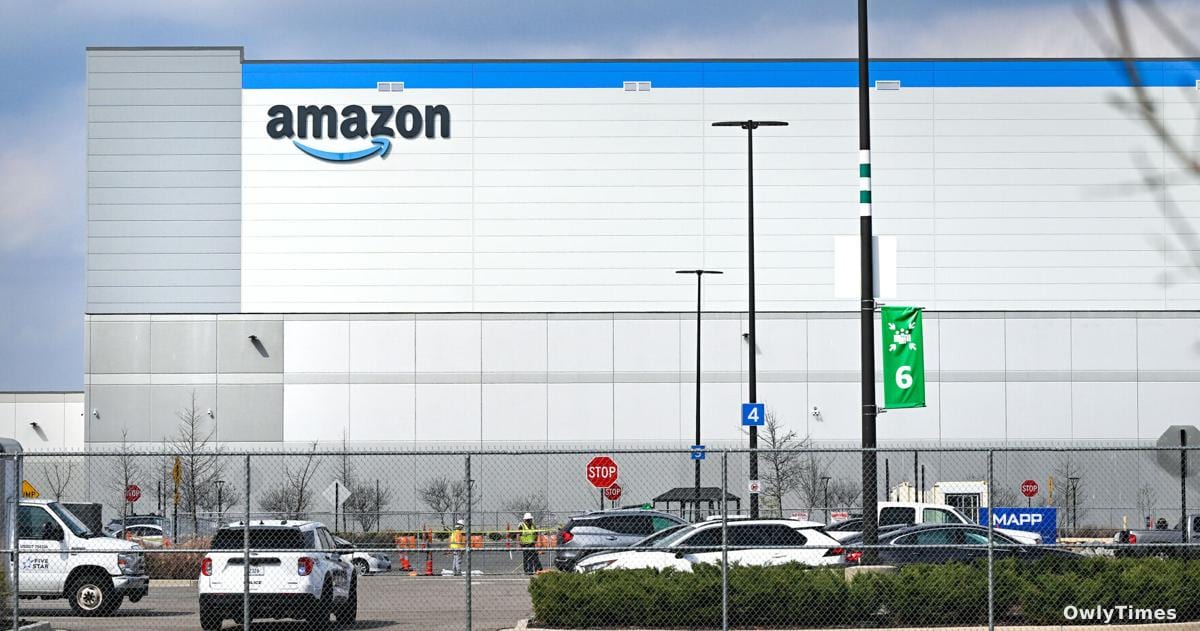
Baton Rouge’s selection as a Prime Air location isn’t arbitrary. Louisiana benefits from a relatively favorable regulatory environment for drone operations and a strategic geographic position within Amazon’s logistics network. The 9001 Cortana Place fulfillment center already serves a substantial customer base, making it an ideal launchpad for drone delivery. This move also positions Amazon to compete more effectively with regional delivery services and potentially influence the development of drone-specific infrastructure within the state. The “great working relationship” with local officials, as highlighted by Daniel Martin, is a crucial element, signaling a collaborative approach to navigating the complexities of integrating drone technology into urban airspace.
What this means for your wallet
The immediate impact for Baton Rouge consumers will be limited to those living within a few miles of the Cortana Place fulfillment center. However, the broader implications are significant. Amazon’s investment in drone delivery is a bellwether for the future of e-commerce. If successful, we can expect to see wider adoption of drone technology, leading to faster, cheaper, and more convenient delivery options. But here’s the question to watch: will Amazon pass these cost savings onto consumers, or will they be absorbed as increased profit margins? The answer will reveal whether this is truly a consumer-driven innovation, or simply a strategic move to solidify Amazon’s dominance in the increasingly competitive world of online retail.