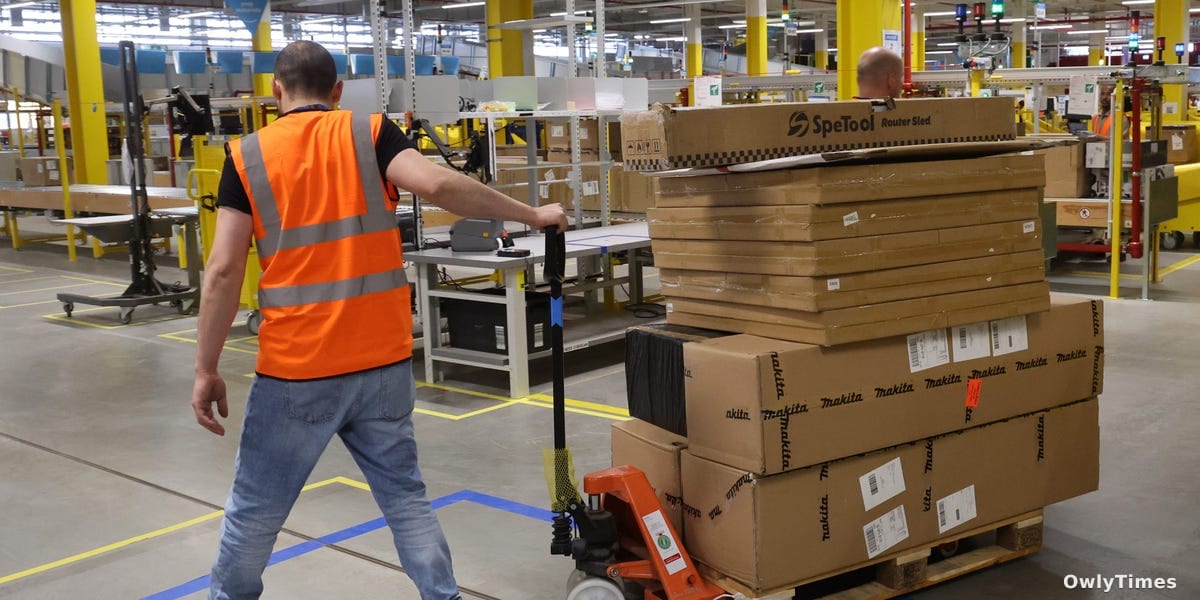

$600 million – that’s the figure representing Amazon’s 2017 acquisition of Souq.com, a move intended to solidify the e-commerce giant’s foothold in the rapidly growing Middle Eastern market. Now, that investment is facing a significant stress test as Amazon shutters fulfillment centers and halts deliveries across Abu Dhabi, a direct response to escalating regional instability. This isn’t simply a logistical hiccup; it’s a stark illustration of how geopolitical risk is translating into concrete financial disruption for a company that has aggressively pursued international expansion. Follow the money, and you’ll see this isn’t just about delayed packages – it’s about a potentially significant erosion of future revenue projections in a key growth region.
The Ripple Effect of Regional Tension
The decision to suspend operations in Abu Dhabi, and advise employees in Saudi Arabia and Jordan to shelter in place, wasn’t taken lightly. While Amazon cites employee safety as the primary concern – a statement echoed by a company spokesperson in an email to Business Insider – the speed of the response indicates a pre-calculated risk assessment. Blocking business travel to Israel and Lebanon alongside the warehouse closures suggests a proactive attempt to mitigate potential liabilities, not merely react to an unfolding crisis. This contrasts with typical supply chain disruptions, like weather events, where companies often attempt to maintain some level of operation even under duress. The complete halt points to a perceived level of threat that overrides short-term revenue loss.
Reporting from Business Insider informs this analysis.
Impact on Amazon’s Middle East Network
The UAE, and specifically Abu Dhabi, functions as a critical hub within Amazon’s Middle Eastern logistics network, which also includes marketplaces in Saudi Arabia, Egypt, and Turkey. The shutdown is expected to reduce overall network capacity, according to the internal memo obtained by Business Insider. This isn’t a localized problem; it’s a systemic constraint. Consider that in 2023, the Middle East and North Africa (MENA) region accounted for roughly 2.3% of Amazon’s total net sales – a figure that, while seemingly small, represented a 35% year-over-year growth rate. A prolonged disruption in Abu Dhabi could easily stall that momentum, impacting quarterly earnings reports and potentially forcing a downward revision of long-term growth forecasts for the region. The company’s placement of “additional operational support on standby” is a tacit acknowledgement of the severity of the situation, and the likely need for costly workarounds.
The Third-Party Seller Squeeze
The impact extends far beyond Amazon’s direct operations. Approximately 300,000 third-party sellers in the region rely on Amazon’s fulfillment and cross-border shipping infrastructure. These businesses, many of which are small and medium-sized enterprises (SMEs), are now facing shipment delays and potential order cancellations. This is particularly damaging as these sellers often lack the resources to independently navigate complex international logistics. The disruption isn’t just about lost sales; it’s about potential damage to brand reputation and customer relationships. While Amazon hasn’t specified a timeline for resuming operations, the uncertainty itself is a significant cost for these sellers, forcing them to consider alternative, and likely more expensive, distribution channels.
Beyond Logistics: Data Center Vulnerabilities
The situation is further complicated by a separate incident: a power outage at one of Amazon’s data centers, reportedly caused by the US-Iran conflict. While the company anticipates repairs within 24 hours, this highlights a broader vulnerability – the susceptibility of critical digital infrastructure to geopolitical instability. Data centers are the backbone of modern e-commerce, and any disruption to their operation translates directly into lost revenue and compromised customer service. This incident, coupled with the Abu Dhabi closures, underscores the interconnectedness of Amazon’s global operations and the potential for cascading failures in a volatile geopolitical landscape.
What this means for your wallet: Expect higher prices and longer delivery times for goods sourced from, or destined for, the Middle East. The increased logistical costs associated with rerouting shipments and securing alternative infrastructure will inevitably be passed on to consumers. More importantly, this situation raises a critical question for investors: at what point does the escalating geopolitical risk in the Middle East outweigh the potential for growth in this key market? Watch closely for any further downgrades to Amazon’s regional revenue projections – they will be a clear signal of the long-term financial impact of this unfolding crisis.





