
The air in Los Angeles hung thick with anticipation last week, not just for the approaching World Cup, but with a growing dread. While fans debated potential lineups and bracket predictions, a far more ominous conversation was unfolding: could Iran even participate? The question, unthinkable just days prior, was thrust into the spotlight after the United States launched attacks within Iran, escalating a conflict that has simmered for decades. Mehdi Taj, head of Iran’s Football Federation, reportedly voiced the anxieties echoing across the nation, stating, “With what happened… and with that attack by the United States, it is unlikely that we can look forward to the World Cup, but the sports chiefs are the ones who must decide on that.” This isn’t simply about a team’s potential absence; it’s a stark illustration of how deeply intertwined global sport has become with volatile geopolitical realities, and the impossible position it places governing bodies like FIFA in.
The immediate fallout is a swirling vortex of uncertainty. The timing is particularly fraught, coming in the wake of the killing of Iran’s Supreme Leader Ayatollah Ali Khamenei and amidst a period of intense political instability within the country. As Dr. Sanam Vakil of Chatham House succinctly put it, “For Tehran, this is not a short 12-day war or a contained round of escalation that can be paused and reset. This new stage of conflict is existential and clearly about regime survival.” Predicting a decision on World Cup participation, or even who would make that decision, feels almost absurd. FIFA, predictably, is attempting a tightrope walk, with general secretary Mattias Grafstrom publicly stating their “focus is to have a safe World Cup with everybody participating.” Privately, however, officials reportedly anticipate Iran’s presence, bracing for the logistical and security nightmares that could accompany it.
Drawn from the BBC.
The implications extend far beyond the field. Should Iran withdraw, FIFA rules dictate a replacement from the Asian Football Confederation (AFC), with Iraq or the UAE as frontrunners. But this isn’t a simple substitution. It’s a symbolic act, a potential concession to escalating tensions, and a precedent that could haunt future tournaments. The situation is further complicated by the fact that Iran’s women’s team is actively preparing for the Asia Cup in Australia, training as planned despite the turmoil. Marziyeh Jafari, the team’s coach, is attempting to maintain a semblance of normalcy, framing the tournament as an opportunity to “show the potential of Iranian women.” This juxtaposition – a women’s team striving for visibility amidst a backdrop of international conflict – highlights the complex layers of this crisis. The AFC, for its part, is offering “full support and assistance” to the team, but the shadow of the escalating conflict looms large.
This isn’t a new dilemma for FIFA. The 2022 World Cup in Qatar was already shadowed by mass anti-government protests in Iran, leading to increased security and even confrontations between fans. The current situation, however, feels qualitatively different. The direct military involvement of a host nation – the United States – adds a level of intensity and political risk previously unseen. The timing also coincides with the 250th anniversary of the US Declaration of Independence, promising a highly visible presence for Donald Trump, who has openly expressed support for regime change in Iran. The former president’s past actions, including a travel ban targeting Iranian nationals (with exemptions for World Cup players and staff), underscore the inherent contradictions at play. Even seemingly innocuous praise for strikes on Iran from White House World Cup taskforce head Andrew Giuliani – “We’ll deal with soccer games tomorrow” – reveals a clear prioritization of geopolitical objectives over sporting ideals.
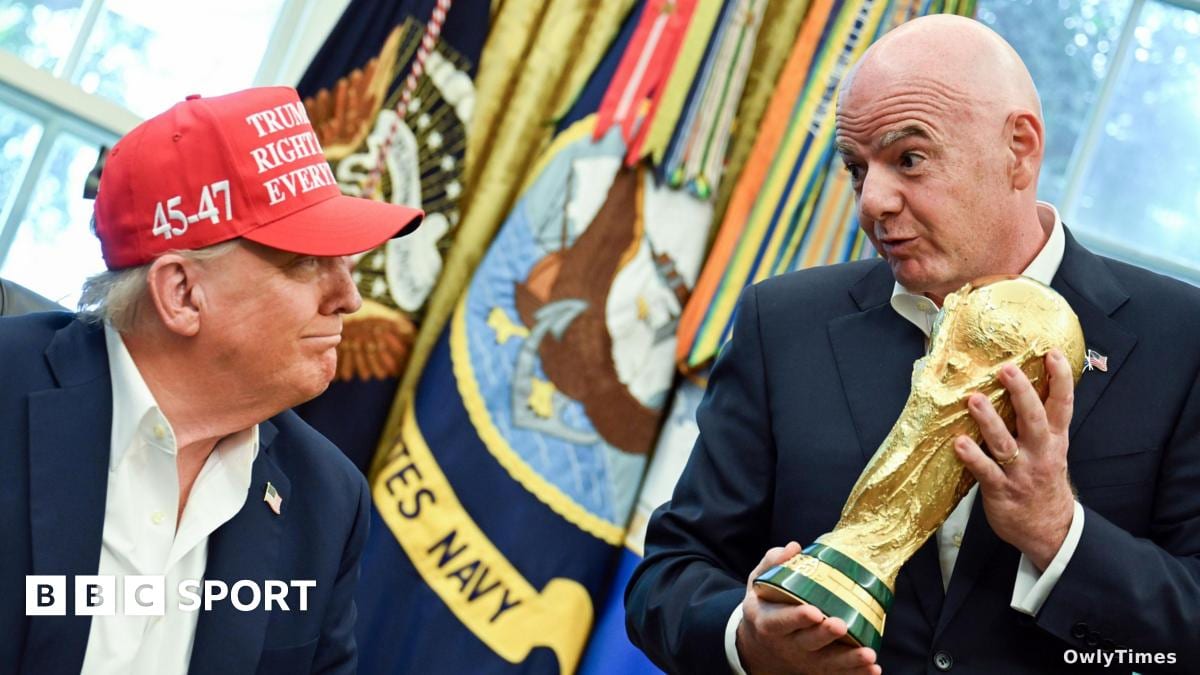
The controversy surrounding FIFA president Gianni Infantino’s close relationship with Trump further muddies the waters. Awarding Trump a “Peace Prize” just months before these events, and Infantino’s subsequent appearance wearing a Trump-branded cap, has drawn fierce criticism, raising questions about FIFA’s neutrality and its willingness to prioritize political alignment over its stated principles. Calls for the US to be expelled from future competitions, echoing similar demands made during Russia’s invasion of Ukraine, are already gaining traction. The question isn’t simply whether Iran will participate in the World Cup; it’s whether FIFA can navigate this crisis without irreparably damaging its credibility and further politicizing the world’s most popular sport. Will FIFA strengthen its rules to respond to serious geopolitical events, or will it continue to prioritize maintaining the status quo, even at the cost of its own integrity? That’s the challenge facing the organization now, and the answer will define its role in a world where sport and politics are increasingly, and dangerously, intertwined.