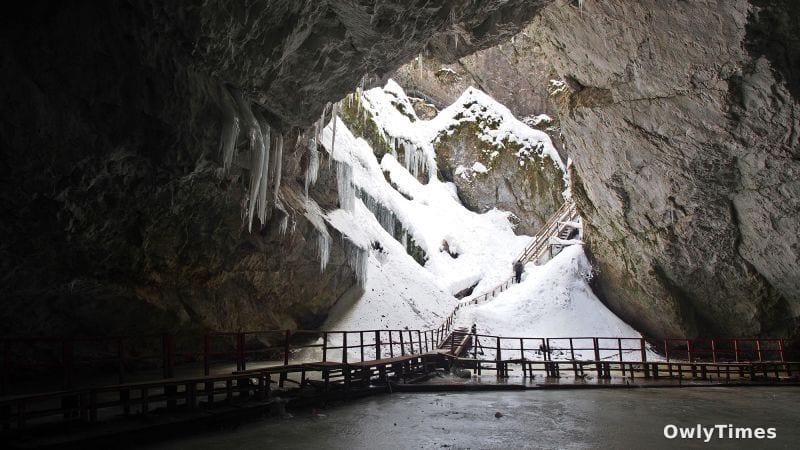

The narrative surrounding antibiotic resistance often frames it as a modern crisis, a consequence of overuse in medicine and agriculture. But a new study emerging from the depths of Romania’s Scarisoara ice cave challenges that assumption, revealing that the mechanisms allowing bacteria to survive antibiotic exposure aren’t created by modern medicine – they’ve existed for millennia, honed by natural selection in environments untouched by human intervention. This isn’t a story about a looming, futuristic threat; it’s a rediscovery of the ancient history of microbial warfare, and a potential roadmap for future solutions.
Scarisoara cave harbors one of the world’s largest underground glaciers, a frozen archive dating back roughly 13,000 years. A team led by Cristina Purcarea, a senior scientist at the Institute of Biology Bucharest of the Romanian Academy, drilled a 25-meter core from the cave’s “Great Hall,” extracting a timeline of frozen material. Analyzing a sample from 5,000-year-old ice, they isolated and sequenced the genome of a bacterial strain, Psychrobacter SC65A.3, revealing a surprising level of antibiotic resistance. While headlines might suggest a newly awakened superbug, the study’s core finding is far more nuanced: this bacterium exhibits resistance to 10 commonly used antibiotics – including trimethoprim, clindamycin, and metronidazole – not because it adapted to them, but because the genetic basis for that resistance predates the antibiotics themselves.
Reporting from CNN informs this analysis.
Purcarea explains that “ancient bacteria can resist modern antibiotics because antibiotic resistance is an ancient evolutionary characteristic that was shaped over millions of years by competition between microbes.” Bacteria, even across species, constantly exchange genetic material, sharing advantageous traits in a continuous evolutionary arms race. Antibiotics, she argues, didn’t cause resistance; they simply created a selective pressure that favored bacteria already possessing these pre-existing defense mechanisms. This is particularly common in extreme environments, where microbial competition is fierce. The study suggests that modern antibiotic use may be accelerating the spread of resistance, but not necessarily the origin of it.
The Psychrobacter SC65A.3 strain itself poses no direct threat to human health. As a “psychrophile” – a cold-loving organism – it’s adapted to icy environments and isn’t equipped to infect warm-blooded hosts. Most Psychrobacter species are commonly found in refrigerated settings, including food. However, the broader implications of this research are significant, especially as climate change accelerates glacial melt and releases previously frozen microbes into the environment. Purcarea cautions that while most released microbes will be harmless, some could carry antibiotic resistance genes or other unknown biomolecules with unpredictable effects on existing ecosystems. This echoes concerns raised by other researchers, who have revived 48,000-year-old viruses from permafrost, highlighting the low but real risk of re-emerging pathogens.
But the study isn’t solely a cautionary tale. The genomic analysis of Psychrobacter SC65A.3 revealed 11 genes with the potential to inhibit the growth of other bacteria, fungi, and viruses. This offers a glimmer of hope in the escalating fight against antibiotic-resistant “superbugs,” which currently contribute to nearly 5 million deaths globally each year, according to the World Health Organization. Matthew Holland, a postdoctoral researcher at the University of Oxford not involved in the study, emphasizes the importance of exploring extreme environments like ice caves and the seafloor for novel biomolecules with antibiotic potential. He notes that the Romanian team’s discovery of a bacterium resistant to 10 advanced antibiotics, and capable of producing compounds that kill resistant bacteria, is particularly promising.
The next crucial step isn’t simply to isolate more ancient bacteria, but to understand the specific mechanisms behind the 11 potentially antimicrobial genes identified in Psychrobacter SC65A.3. Can these mechanisms be replicated or adapted to create new classes of antibiotics? Will these ancient compounds prove effective against the most resilient superbugs? And, critically, how can we balance the need for new antibiotics with responsible stewardship of existing ones to prevent further accelerating the spread of resistance? As glaciers continue to melt, releasing microbial time capsules, the answers to these questions will become increasingly urgent. We should be watching for a shift in pharmaceutical research, a move towards bio-prospecting in extreme environments, and a renewed focus on understanding the fundamental evolutionary history of antibiotic resistance – not as a modern problem, but as an ancient, ongoing battle.





