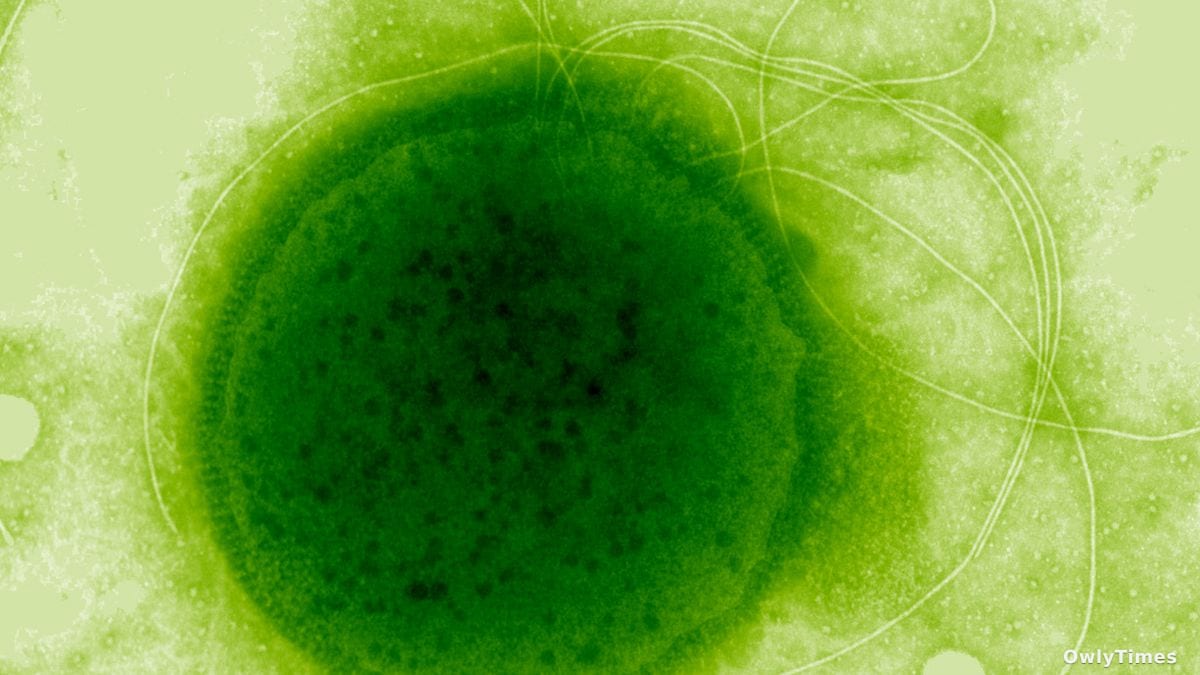

The search for life’s resilience often leads us to places scarred by catastrophe – Chernobyl, Fukushima, the high-altitude peaks exposed to intense UV radiation. But a recent discovery flips that expectation, revealing an organism with astonishing radiation resistance thriving in one of Earth’s most consistently extreme, yet naturally occurring, environments. The archaeon Thermococcus gammatolerans, plucked from the superheated, mineral-rich depths of the Guaymas Basin hydrothermal vents, can withstand 30,000 grays of radiation – a dose 6,000 times higher than what would prove fatal to a human. This isn’t a story of adaptation to radiation, but rather a compelling example of how evolutionary pressures for survival in one extreme environment can yield unexpected benefits in another.
A Deep-Sea Anomaly: Life Beyond the Reactor
The Guaymas Basin, located in the Gulf of California at a depth of 2,600 meters, is a geological hotspot. Here, the ocean floor is fractured, allowing volcanic heat and chemicals to erupt into the surrounding water. It’s a world of crushing pressure, perpetual darkness, and temperatures reaching 88 degrees Celsius (190 degrees Fahrenheit) – conditions seemingly hostile to life as we know it. Yet, life flourishes, and T. gammatolerans is a prime example. First discovered decades ago through submersible sampling, the archaeon initially drew attention for its thermophilic nature, thriving on sulfur compounds in this volcanic landscape. However, its true potential was revealed in the laboratory of Edmond Jolivet at the French National Center for Scientific Research. Jolivet’s team subjected enrichment cultures to intense gamma radiation from a cesium-137 source, and remarkably, T. gammatolerans not only survived but continued to grow even at a staggering 30,000 grays. To put that in perspective, a full-body dose of 5 grays is considered lethal to humans within weeks.
Source material: ScienceAlert.
The Genome Doesn’t Tell the Whole Story
Initial investigations naturally focused on the archaeon’s genome, searching for an abundance of DNA repair mechanisms. The assumption was logical: an organism so resistant to radiation must possess a robust toolkit for fixing damaged DNA. However, a 2009 study led by Fabrice Confalonieri at the University of Paris-Saclay yielded a surprising result. The genome of T. gammatolerans didn’t reveal any significant overrepresentation of DNA repair genes. Its genetic machinery for repair was, in fact, surprisingly normal. This finding challenged the prevailing hypothesis and forced scientists to reconsider how T. gammatolerans achieves its extraordinary resilience. The narrative shifted from “specialized radiation resistance” to something far more nuanced – a case of pre-existing survival mechanisms providing incidental protection.
Oxidative Stress and Rapid Repair
Further research, published in 2016 by a team led by chemical biologist Jean Breton at Grenoble Alpes University, began to unravel the mystery. While gamma radiation does damage the DNA of T. gammatolerans, the resulting oxidative damage – caused by free radicals released during irradiation – was significantly lower than anticipated. Crucially, the damage that did occur was repaired with remarkable speed, often within an hour, thanks to readily available repair enzymes. This suggests that T. gammatolerans isn’t necessarily preventing DNA damage, but rather minimizing its impact and swiftly correcting it. The key isn’t invincibility, but efficient damage control.
The Byproduct of Extreme Adaptation
The prevailing theory now centers on the idea that the archaeon’s radiation resistance is a byproduct of its adaptation to the extreme conditions of the hydrothermal vents. Life in this environment demands resilience to intense heat, chemical stress, and reactive molecules – all of which can also inflict DNA damage. The systems T. gammatolerans evolved to cope with these challenges – boiling temperatures, lack of oxygen, and a chemically hostile environment – coincidentally provide a degree of protection against ionizing radiation. This aligns with the evolutionary principle of “survival of the good enough.” The archaeon didn’t evolve to withstand radiation; it evolved to survive in a volcanic vent, and that survival strategy happened to include a remarkable tolerance for a different kind of stress. It’s a powerful reminder that evolution doesn’t always optimize for specific threats, but rather selects for robust solutions to fundamental challenges.
What remains to be seen is whether the specific mechanisms driving this rapid DNA repair in T. gammatolerans can be harnessed for applications in human health. Could understanding how this archaeon mitigates oxidative stress inform strategies for protecting astronauts during long-duration space travel, or for improving radiation therapy for cancer patients? The deep sea has yielded a surprising lesson in resilience, and the next step is to translate that knowledge into tangible benefits for life beyond the hydrothermal vent.





