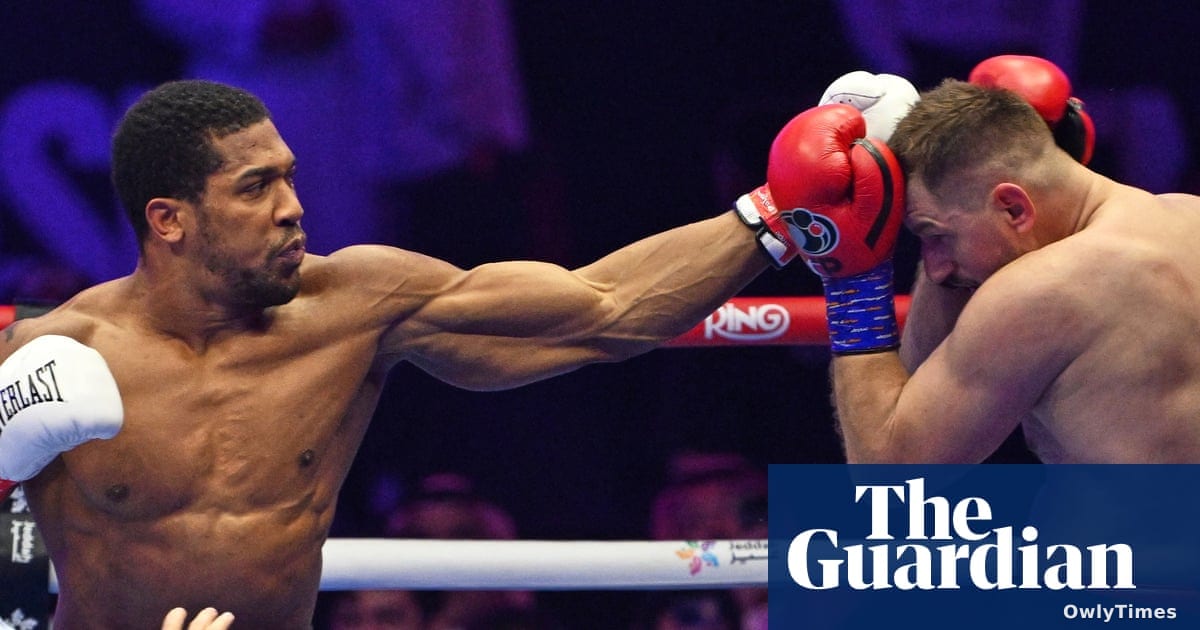

The silence that descended upon the arena in Jeddah after the first round was not merely a reaction to a shocking knockdown; it was the sound of a decade-long promotional narrative fracturing in real-time. Anthony Joshua, a man once synonymous with invincible, sculpted dominance, spent the first five minutes and 43 seconds of his weekend looking like a stranger to the sport he helped modernize. According to The Guardian, Joshua was sent to the canvas twice by the previously obscure Kristian Prenga before managing a second-round stoppage. For those watching, the spectacle served as a brutal reminder that even the most carefully managed athletic trajectories are subject to the unforgiving erosion of time and trauma.
Beyond the headlines of the victory, the human drama surrounding Joshua’s return has become the defining story of this fight cycle. Both The Guardian and the BBC report that Joshua’s performance was deeply colored by his return from a seven-month hiatus following a car accident that claimed the lives of his close friends and camp members, Sina Ghami and Latif “Latz” Ayodele. Promoter Eddie Hearn emphasized that the training camp served as a necessary sanctuary for Joshua’s grief, noting that the fighter kept his internal struggles largely private. When asked about his recovery from the early knockdowns, Joshua himself claimed, “It’s more than punch power. That was spirit.”
While Joshua struggled in Saudi Arabia, the other half of this long-awaited blockbuster equation was failing to inspire elsewhere. The Guardian notes that Tyson Fury delivered an “uninspiring” performance against 46-year-old Mariusz Wach in Thailand on Friday night, laboring through seven one-sided rounds. While Sky Sports frames both results as the necessary hurdles cleared to keep the pair on a collision course, the consensus from the ring suggests that neither man is currently the elite force they once were. The "Gypsy King" is no longer the elusive technician of his prime, and Joshua’s punch resistance has become a glaring, public liability.
The business side of this collision remains as chaotic as the action in the ring. While Hearn insists that the contract for a November bout is signed, the location remains a moving target. Although the existing agreements stipulate a UK venue, The Guardian reports that it is widely expected the fight will shift to the United States, a move that could potentially trigger a new round of contract negotiations and further delay the event. This echoes the history of the matchup, which has collapsed twice before—in August 2021 and December 2022—without a single punch being thrown, according to Sky Sports.
Ultimately, this weekend proved that the industry is still chasing a ghost of a fight that may have already passed its expiration date. The BBC notes that boxing history is littered with champions who chased that one final night too long, yet the cultural gravity of a Fury-Joshua bout remains undeniable. As these two faded stars prepare to face one another, the industry faces a precarious choice between the colossal financial promise of the event and the sobering reality that the fighters themselves are no longer the men who signed those original contracts years ago. Whether this serves as a grand finale or a cautionary tale will depend on the final location and the pen-to-paper movement regarding the November date.