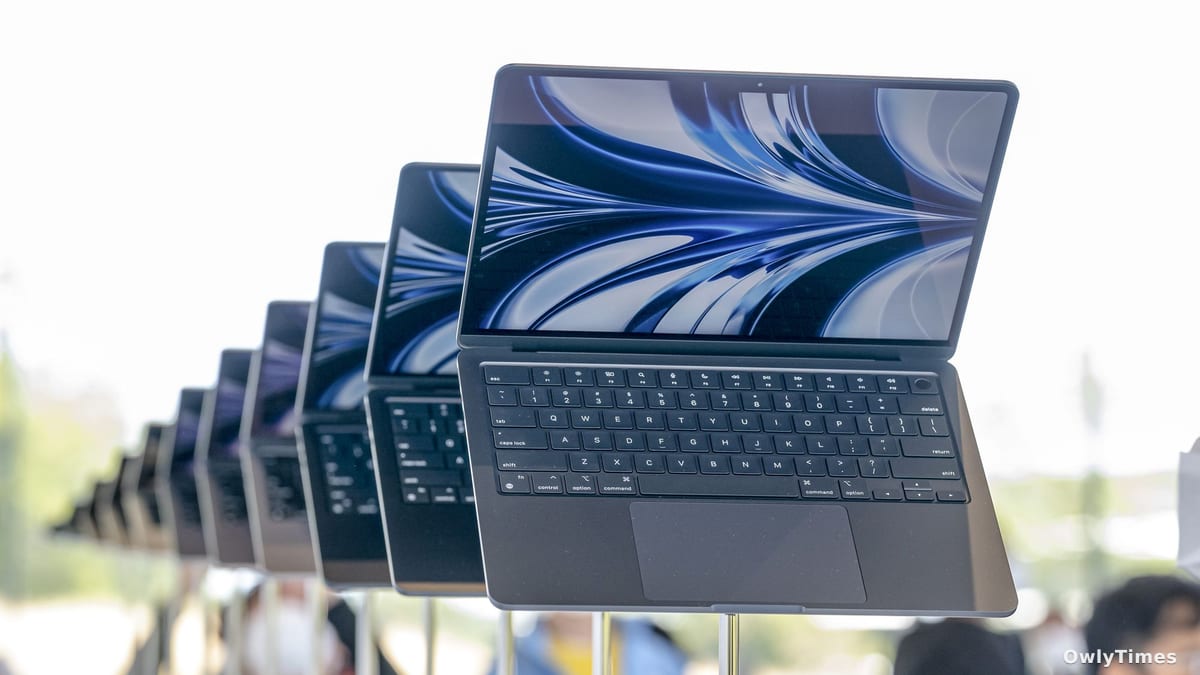

Is Apple about to admit the Mac isn’t for everyone? For years, the company has cultivated an image of premium exclusivity, a walled garden accessible only to those willing to pay a premium. But next week’s expected unveiling of a sub-$700 MacBook signals a dramatic shift – a tacit acknowledgement that to truly dominate the laptop market, Apple needs to appeal to the masses, not just the creative class. The real story here isn't a cheaper MacBook — it's Apple finally playing the volume game, and the compromises they’re willing to make to get there.
Since 2019, Apple’s laptop strategy has been elegantly simple: MacBook Air for portability, MacBook Pro for power. Both, however, started at prices that effectively excluded students, casual users, and anyone accustomed to the sub-$700 world of Chromebooks and entry-level Windows machines. Mark Gurman of Bloomberg first reported the potential price point, estimating the new model will begin at either $599 or $699 for a configuration with 8GB of RAM and a 256GB SSD. This is a significant departure. To put that in perspective, even a refurbished MacBook Air often struggles to dip below $699, and finding genuine “deals” is notoriously difficult. Meanwhile, a top-rated Chromebook like the Lenovo Chromebook Plus 14 can be had for $649, complete with a vibrant OLED display.
The price cut isn’t happening in a vacuum. Apple is facing increasing pressure from Google and Microsoft, both aggressively pushing affordable, cloud-connected devices into schools and homes. The Chromebook, in particular, has become a dominant force in education, offering a secure, manageable, and – crucially – inexpensive computing experience. Apple’s attempt to crack this market isn’t just about market share; it’s about ecosystem lock-in. Getting a young user onto a MacBook, even a stripped-down one, increases the likelihood they’ll stay within the Apple universe for years to come, purchasing iPhones, iPads, and services along the way.
See the original tomsguide.com story for the full account.
But this affordability comes at a cost, and it’s a big one. Rumors suggest Apple will ditch its signature M-series silicon in favor of an iPhone chip – specifically, the A18 Pro destined for the iPhone 16 Pro. This is a jarring downgrade. The M-series chips have been a cornerstone of Apple’s laptop success, delivering industry-leading performance and efficiency. Using an iPhone chip, while cheaper, means sacrificing significant processing power. It’s akin to putting a motorcycle engine in a truck – it’ll work, but it won’t be pretty. The screen will also be smaller than the current 13.6-inch MacBook Air, and will utilize an LCD panel instead of the Air’s superior Retina display. These aren’t incremental changes; they’re fundamental compromises designed to hit a price point.
This isn’t just a story about specs and pricing, though. It’s about Apple’s evolving understanding of its customer base. For years, the company has dictated what people want, assuming they’ll pay for it. This new MacBook suggests a willingness to listen, to acknowledge that not everyone needs a powerhouse machine. However, it also raises a critical question: how much of the “Mac experience” is Apple willing to dilute in the pursuit of affordability? Will this cheaper MacBook feel like a true Mac, or a compromised imitation? Alyse Stanley at Tom’s Guide notes the potential for this device to “usher in a new wave of Apple users,” but that wave will only materialize if the experience is compelling enough.
The March 4th Apple event will be a fascinating test. Alongside the expected iPhone 17e, new iPads, and Mac displays, this budget MacBook will reveal whether Apple is truly committed to democratizing access to its ecosystem, or simply dabbling in a new market segment. My prediction? Apple will sell a lot of these cheaper MacBooks, but the real challenge will begin six months later. Users who bought in based on price will quickly discover the limitations of the A18 Pro chip and the smaller screen. The question isn’t whether Apple can make a $600 MacBook, but whether they can make a $600 MacBook that doesn’t make people regret not spending a little more. Watch for a surge in returns and forum complaints six months after launch – that’s where the true story of this budget MacBook will be written.