
Let’s be honest: the entire foldable phone market feels like a beautifully engineered solution in search of a problem. We’ve spent years chasing bigger, bendier screens, but the real story here isn't about innovation – it’s about Apple’s gravitational pull on the rest of the tech industry. As the inevitable “iPhone Fold” approaches, Apple is poised to resurrect a foldable design Android manufacturers quietly abandoned, and the reason why reveals a fundamental truth about the mobile ecosystem: hardware follows software, and Apple is the software.
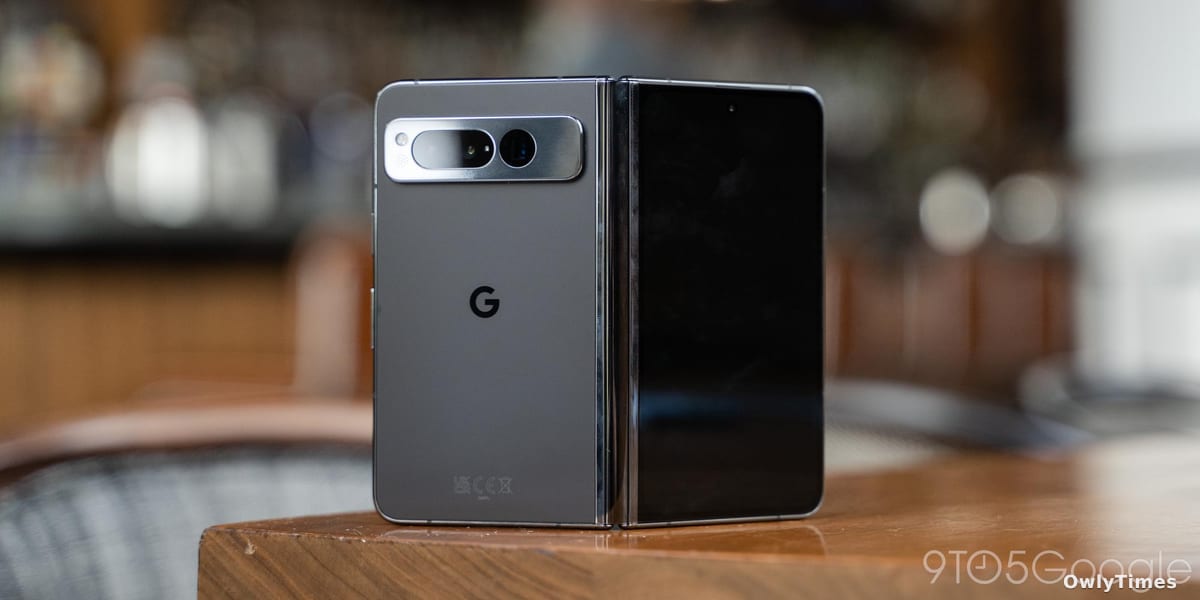
In the early days of foldable experimentation, a variety of approaches emerged. Samsung’s initial Galaxy Fold opted for a tall, narrow outer display that opened to reveal a vertically-oriented inner screen. Others, like Huawei, explored wider, book-like designs. But Oppo took a different tack with its Find N, and later the Find N2 – a squat, booklet-like device with a wider aspect ratio that felt genuinely different. It wasn’t perfect for traditional media consumption, but it opened up interesting possibilities for multitasking and app layouts. Then came Google’s Pixel Fold, essentially a slightly larger version of the Oppo design, promising a tablet-in-your-pocket experience.
The Pixel Fold delivered a surprisingly good experience, despite its flaws, and it highlighted the potential of that wider canvas. It offered a better media viewing experience than the taller Galaxy Z Folds of the time, and provided more horizontal space for apps to utilize tablet-optimized layouts. But the promise remained largely unfulfilled. As I pointed out in 2022, the core issue wasn’t the hardware – it was the apps. Despite Android’s open nature, a surprising number of apps simply didn’t adapt well to the wider aspect ratio, rendering them awkward or even unusable.
Original reporting: 9to5Google.
Samsung continued refining its taller, narrower Galaxy Z Fold design, arguably because it offered a more consistently functional experience given the state of the Android app ecosystem. Google attempted to optimize its own apps for the Pixel Fold’s wider display, but third-party apps remained a significant weak point. A wider canvas is only useful if the software can actually use it. Android apps, on average, are more forgiving with portrait-oriented displays, and that’s why the Galaxy Z Fold format persisted.
Google has since made significant strides in improving app adaptability across Android, recognizing the importance of supporting diverse form factors – glasses, desktops, and, yes, foldables. Had that push happened five years ago, before the Pixel Fold launched, the shift back to the wider form factor might not have been necessary. In fact, Google explicitly told 9to5Google that the change in design was driven by app compatibility on both displays. They conceded that Android apps simply weren’t ready for the original Pixel Fold design.
Now, Apple is stepping in, and the industry is scrambling to follow. Leaks suggest the iPhone Fold will revive the wider aspect ratio – a 5.3-inch outer display and a 7.7-inch inner display, comparable to the original Pixel Fold. This isn’t about Apple reinventing the wheel; it’s about Apple’s unique ability to dictate terms to developers. Where Google struggles to implement sweeping changes to the Android ecosystem, Apple enjoys near-instant adoption. Developers prioritize optimizing for iOS, and a new form factor is generally taken seriously. The script is flipped: on iOS, apps adapt to the devices, not the other way around.
The irony is almost comical. Android brands experimented with this form factor, deemed it unviable, and then are now rushing to develop their own versions simply because Apple is entering the market. Samsung is reportedly working on a “Wide Fold,” Honor is developing a similar device, and even Oppo, the originator of the design, is expected to launch a Find N7 with a wider aspect ratio.
Will it work this time? Perhaps. Android apps have improved since the Oppo Find N2 and Pixel Fold era. But the fundamental issue remains: the foldable market is still niche, and sustaining two distinct form factors will be challenging. In the long run, I suspect we’ll see a consolidation, with some brands focusing on the traditional tall-and-narrow design while others embrace the wider format.
This isn’t about innovation; it’s about the power of the Apple ecosystem. It’s a familiar pattern: Samsung rushed out the Galaxy S25 Edge to beat Apple to market, only for it to flop, and now the Galaxy S26 series is reportedly sacrificing planned upgrades to match iPhone 17 pricing. The industry doesn’t lead; it reacts.
Here’s what to watch for: over the next six months, pay attention to how quickly and comprehensively Android developers update their apps to support the wider foldable form factor. If we see a sluggish response, the “wide” foldables will likely fade away, proving that even the best hardware can’t overcome a software deficit. If, however, the Android ecosystem rises to the challenge, we’ll be looking at a genuinely competitive foldable landscape – one driven not by innovation, but by imitation.