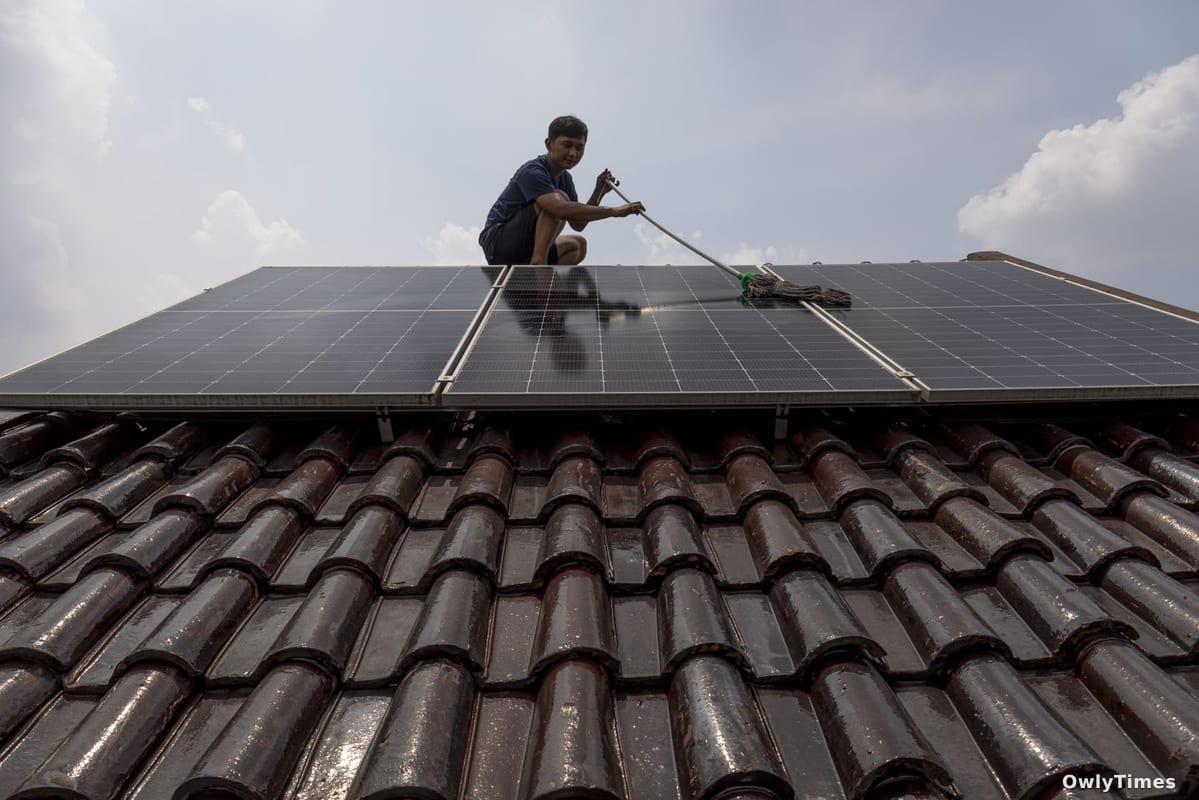

The narrative around climate finance often focuses on mitigation – reducing emissions – but a new report from the Institute for Energy Economics and Financial Analysis (IEEFA) reveals a critical, and largely overlooked, bottleneck: adaptation. It’s not simply that Asia needs more money to prepare for the inevitable impacts of climate change, though it undeniably does. The core issue, as IEEFA’s analysis demonstrates, is that the very frameworks designed to channel investment into resilience are riddled with inconsistencies and a lack of clear standards, effectively stifling the flow of capital when it’s needed most. This isn’t a story about insufficient funds; it’s a story about funds unable to find credible, quantifiable projects to support.
The headlines proclaiming a climate finance crisis are, in a sense, misleading. While the Climate Policy Initiative estimates Asia requires $431 billion annually for climate resilience, and only 8% of that – roughly $34.5 billion – was met between 2021 and 2022, the problem isn’t solely a shortfall in available capital. IEEFA’s report highlights that even recognizing and classifying what counts as adaptation is proving remarkably difficult. Most Asian taxonomies acknowledge adaptation as an environmental objective, but rely on vague, qualitative guidelines. This contrasts sharply with mitigation, which benefits from detailed technical screening criteria and measurable thresholds. The ambiguity, as the report states, reflects “the inherent challenge of developing quantitative, context-specific adaptation metrics,” but the consequence is a chilling effect on investment.
This uneven approach to adaptation taxonomies is strikingly visible across the region. Hong Kong is emerging as a pioneer, having integrated adaptation into its taxonomy last month, beginning with the water sector. Their initial strategy employs a “whitelist” approach – automatically approving adaptation measures without stringent criteria – with plans to incorporate more robust technical specifications aligned with the Climate Bonds Initiative’s resilience taxonomy. Meanwhile, China and Vietnam, two nations acutely vulnerable to climate impacts, currently make no reference to climate adaptation activities within their national frameworks. This disparity isn’t merely academic; it directly impacts investor confidence and the ability to scale effective resilience projects. Countries like Singapore, Malaysia, Philippines, and Indonesia take a slightly more nuanced approach, qualifying activities based on benefits extended to other stakeholders, but even this relies on assessing broader impacts rather than concrete, measurable outcomes.
This piece references the greencentralbanking.com report.
The implications extend beyond national borders. The Association of Southeast Nations (Asean) is actively developing a regional taxonomy, aiming to harmonize standards and facilitate cross-border investment. Last November, they released a white paper outlining six principles for science-based, context-specific adaptation criteria. If successful, this could serve as a model for other regions. However, the report cautions that a poorly designed taxonomy could simply perpetuate existing ambiguities. Assessments by Bloomberg New Energy Finance further illustrate the varying levels of adaptation readiness, ranking Singapore, South Korea, and Japan relatively high, while Thailand and Cambodia lag significantly behind. This highlights the need for tailored solutions and capacity building, rather than a one-size-fits-all approach.
Recognizing the limitations of traditional funding sources, IEEFA proposes exploring innovative capital market solutions. Resilience bonds – exemplified by the €300 million issuance by the Tokyo Metropolitan Government last year, which was oversubscribed sevenfold – offer a promising avenue for attracting private capital. Similarly, debt-for-nature swaps, where a country’s debt is restructured in exchange for commitments to conservation and climate adaptation, are gaining traction. Indonesia and the Philippines have already secured $30 million and $40 million respectively through such swaps, largely facilitated by the US government. However, these instruments aren’t without their critics. The Climate Action Network and researchers have pointed out that past debt-for-nature swaps, like the one in Seychelles, haven’t always delivered on promised debt reduction or environmental protections, raising concerns about their effectiveness as a long-term solution.
The core tension here is between the urgent need for adaptation finance and the difficulty of demonstrating tangible returns on investment. The perception that adaptation benefits are “hard to measure” continues to hinder progress, despite evidence suggesting that well-designed adaptation projects can yield significant economic benefits. As we move forward, the critical question isn’t simply if we can mobilize more capital for adaptation, but how we can create a system that accurately values resilience and incentivizes investment in a future increasingly defined by climate risk. Will the upcoming Asean taxonomy provide the clarity needed to unlock private finance, or will Asia continue to grapple with a widening climate financing gap, leaving its most vulnerable populations exposed to escalating climate shocks?