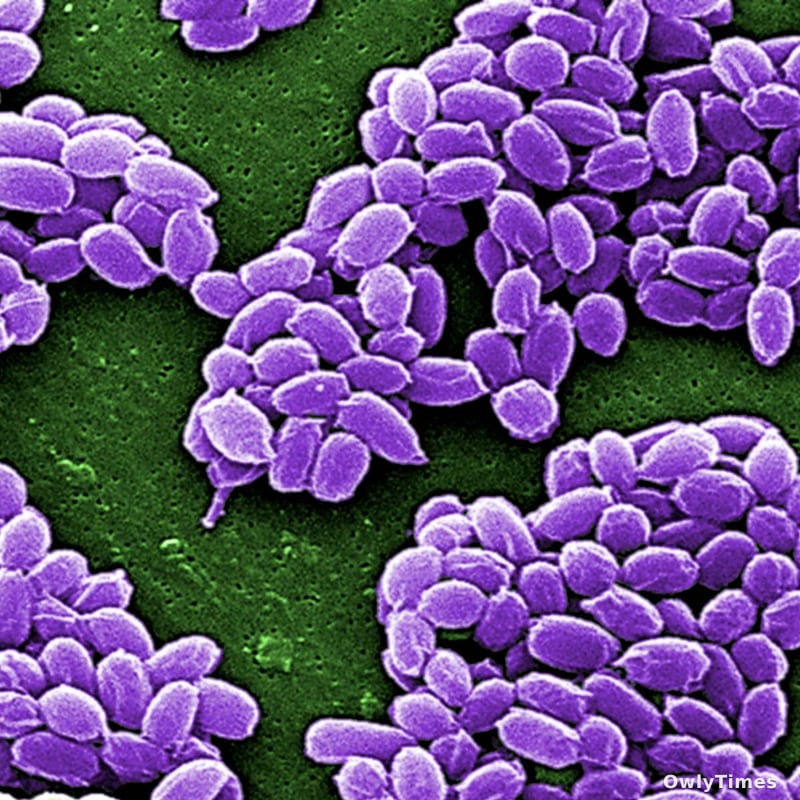

The recent surge in public conversation about the value of “un-glamorous” science – sparked by a Guardian article questioning the future of taxonomy – isn’t simply a lament for a fading academic pursuit. It’s a critical moment to re-evaluate how we define scientific impact, and to recognize the often-invisible infrastructure of knowledge that underpins everything from public health to environmental remediation. The article, prompted by the passing of Niall Logan, a professor of bacterial systematics at Glasgow Caledonian University, highlighted the perceived lack of appeal in meticulously classifying life. But framing taxonomy as lacking practical application misses a crucial point: its foundational role in responding to real-world challenges, a point powerfully illustrated by the breadth of Logan’s own work.
Beyond Classification: The Unexpected Applications of Microbial Taxonomy
The core of taxonomy, the science of naming and classifying organisms, is often presented as an exercise in intellectual organization. While accurate, this depiction obscures the tangible benefits derived from a deep understanding of microbial life. Logan’s research focused on the genus Bacillus, a group of bacteria with surprisingly diverse ecological roles. His work wasn’t confined to a laboratory or academic debate; it extended to the extreme environment of the Antarctic, where he studied Bacillus species thriving in geothermal soils. This research, while seemingly esoteric, contributes to our understanding of life’s limits and potential for adaptation – knowledge increasingly relevant as climate change reshapes global ecosystems. The Guardian article touched on this disconnect between public perception and practical application, but didn’t fully explore the extent to which seemingly “dry” taxonomic work directly informs solutions to pressing problems.
See the original The Guardian story for the full account.
The practical implications of Logan’s expertise extended far beyond polar exploration. His skills were specifically requested when redeveloping old tannery sites, a task requiring the assessment and mitigation of potential Bacillus anthracis contamination – the bacteria responsible for anthrax. This isn’t a historical concern; soil contamination from industrial processes remains a significant public health issue globally. Similarly, the food industry routinely relies on taxonomic expertise to identify the microbial culprits behind food spoilage, preventing widespread outbreaks and economic losses. In 2023, foodborne illness outbreaks cost the US economy an estimated $15.6 billion, according to the CDC – a figure that underscores the economic value of rapid and accurate microbial identification, a process fundamentally reliant on a robust taxonomic framework.
The Human Element in a Data-Driven World
The advent of computational tools has undeniably revolutionized taxonomy. DNA sequencing and bioinformatics have accelerated the process of species identification and phylogenetic analysis. However, as Jane Logan, Niall’s widow, rightly points out, computers cannot replace the essential “legwork” of sample collection and the intuitive insights gained from direct observation. A database of species is only as good as the quality and diversity of the samples it contains, and predicting the future utility of taxonomic research requires a level of scientific foresight that algorithms currently lack. This isn’t a rejection of technology, but a reminder that taxonomy remains, at its heart, a human endeavor. Logan’s ability to inspire students, fostering a passion for his subject, speaks to the importance of mentorship and the cultivation of curiosity – qualities that are difficult to replicate in a purely automated system.
Limitations to Consider: Funding and Visibility
Despite the clear benefits, taxonomy faces ongoing challenges. Securing funding for taxonomic research has historically been difficult, as it often lacks the immediate “sex appeal” of more applied fields like drug discovery or cancer research. This funding disparity isn’t necessarily a reflection of scientific merit, but rather a consequence of how research priorities are shaped by political and economic pressures. Furthermore, the contributions of taxonomists are often obscured within larger research projects, making it difficult to quantify their impact and advocate for increased support. The Guardian article’s very existence – a mainstream media outlet questioning the viability of a core scientific discipline – highlights this issue of visibility.
Looking ahead, the crucial next step is to integrate taxonomic research more explicitly into broader scientific initiatives. For example, understanding the microbial diversity of soil ecosystems is essential for developing sustainable agricultural practices and mitigating climate change. Similarly, a comprehensive understanding of bacterial genomes is critical for combating antibiotic resistance, a growing global health threat. We need to ask ourselves: what happens to our ability to respond to emerging infectious diseases if we allow the foundational knowledge of microbial diversity to erode? The future of taxonomy isn’t simply about preserving a historical discipline; it’s about safeguarding our ability to understand and navigate an increasingly complex world.





