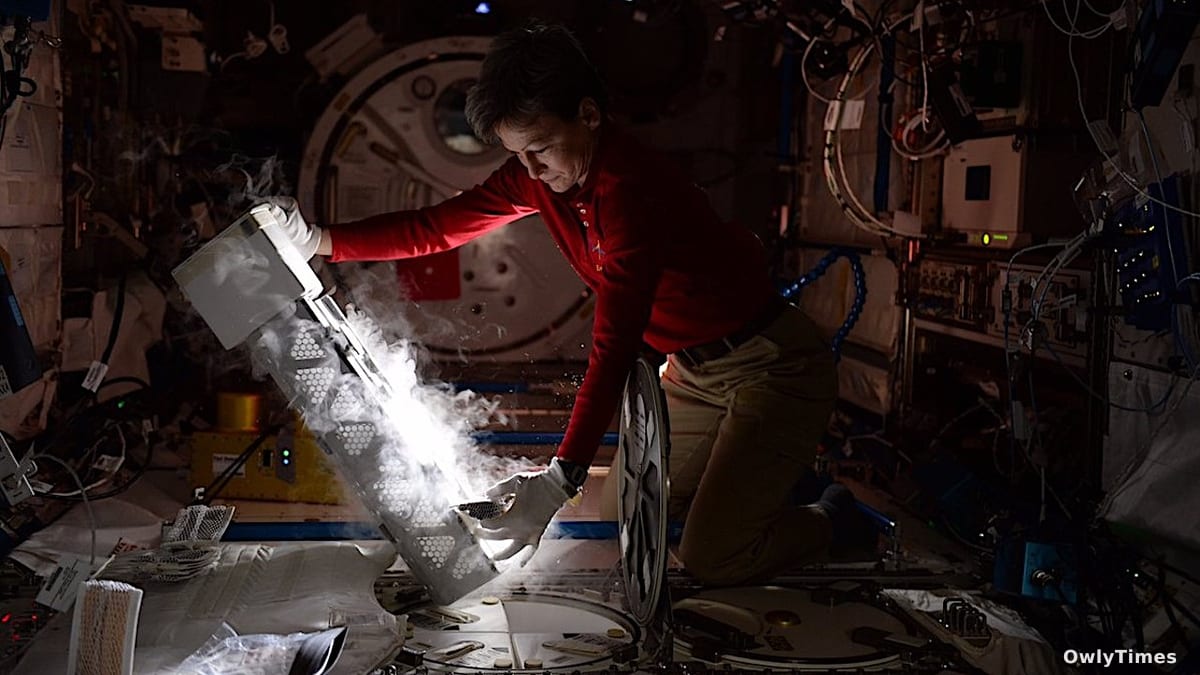

The persistent trickle, the frustrating burn – for many, excessive tearing is a minor annoyance associated with dry eyes or allergies. But for astronauts, it’s a surprisingly common and complex physiological challenge. A recent surge in research, culminating in a review published in Aerosp Med Hum Perform this April, isn’t simply documenting this phenomenon of “spaceflight-associated epiphora,” as it’s formally known. It’s attempting to unravel why tears flow more freely in space, and what that tells us about the broader impact of microgravity on the human body. The focus isn’t just about comfort; understanding this seemingly small issue could be critical for long-duration missions, including the ambitious goals of lunar and Martian colonization.
The initial observation – that astronauts experience a higher incidence of excessive tearing both during Space Shuttle missions and aboard the International Space Station – isn’t new. What’s shifting is the depth of investigation. Dr. Brandon Katsev and colleagues’ review synthesizes existing knowledge, pointing to a confluence of factors. The core issue, they argue, isn’t necessarily more tear production, but a disruption in tear film dynamics. On Earth, gravity assists in tear drainage through the nasolacrimal duct. In microgravity, this natural process is impaired, leading to fluid buildup. This is compounded by fluid shifts within the body itself, a well-documented effect of spaceflight where fluids redistribute towards the head, increasing pressure and potentially impacting tear production and drainage. Headlines often simplify this to “astronauts cry more in space,” but the reality is a far more nuanced interplay of biomechanics and physiology.
This research builds on a broader wave of studies examining the effects of altered gravity on various bodily systems. Just this March, a study in J Appl Physiol led by Dr. Alberto Diaz-Artiles detailed the dose-dependent response of the internal jugular vein to lower body negative pressure in microgravity, utilizing a novel “flow directionality index” to quantify changes. While seemingly unrelated, this work highlights the systemic cardiovascular adjustments astronauts undergo, adjustments that directly influence fluid distribution and, consequently, tear film stability. Simultaneously, Dr. Christian Gibson, affiliated with NASA Johnson Space Center and involved in multiple studies, is leading research into anterior segment biomechanics and intraocular pressure in microgravity, published in npj Microgravity. This work suggests that changes in eye pressure itself could contribute to tear production and drainage issues. The convergence of these investigations – cardiovascular, ocular, and tear film dynamics – paints a picture of a body struggling to maintain homeostasis in an alien environment.
However, it’s crucial to acknowledge the limitations inherent in studying human physiology in space. Sample sizes are inherently small, dictated by the logistical constraints of space travel. The studies rely heavily on analog environments – like dry immersion and bed rest – to simulate microgravity, but these analogs don’t perfectly replicate the complex conditions of actual spaceflight. The recent meta-analysis by Prokopidis et al. in Exp Physiol underscores this point, demonstrating the significant impact of bed rest on cardiometabolic health, but also acknowledging the limitations of extrapolating these findings directly to the space environment. Furthermore, individual variability among astronauts – age, genetics, pre-existing conditions – introduces another layer of complexity. The data from Goncharova et al., assessing cardiac markers in cosmonauts after spaceflight, exemplifies this, revealing significant individual differences in response to the stresses of space travel.
Reporting from astrobiology.com informs this analysis.
The funding landscape also warrants attention. While NASA’s Human Research Program (Grant Number: 80NSSC25K7363) supports much of this work, as noted in several publications, the reliance on a single funding source could potentially influence research priorities. The collaborative efforts with the European Space Agency (ESA) and Novespace, as acknowledged by the researchers, are vital for diversifying perspectives and expanding the scope of investigation. The fact that several journals offer articles online without charge, including J Appl Physiol and npj Microgravity, suggests a commitment to open access and wider dissemination of these critical findings, but doesn’t negate the need for sustained and diversified funding.
Looking ahead, the next crucial step is developing and testing effective countermeasures. Current strategies focus on artificial tear solutions and specialized eyewear, but these are largely palliative. Researchers are now exploring more targeted interventions, such as pharmacological agents to modulate tear production or drainage, and advanced exercise protocols designed to improve cardiovascular function and fluid regulation. The work of Winther Nielsen et al. on the European Enhanced Exploration Exercise Device (E4D) is particularly promising, demonstrating the potential for optimizing exercise regimens to mitigate the physiological effects of microgravity. But perhaps the most intriguing avenue of research lies in understanding the long-term consequences of these physiological changes. Will repeated exposure to microgravity lead to permanent alterations in tear film function, potentially increasing the risk of dry eye syndrome or other ocular complications? And, crucially, how will these changes interact with the effects of space radiation, another significant health risk for astronauts? The answer to these questions will determine not only the comfort of future space explorers, but also their long-term vision for a future among the stars.